—Sylvester Loving, B1Daily
For much of the past five years, relations between the United States and Ethiopia were defined by tension, sanctions, and sharp disagreements over the devastating war in Ethiopia’s northern Tigray region. Diplomatic engagement slowed, security cooperation weakened, and Washington imposed measures against Ethiopian officials while criticizing the conduct of the conflict.
Now, both governments appear to be turning the page.
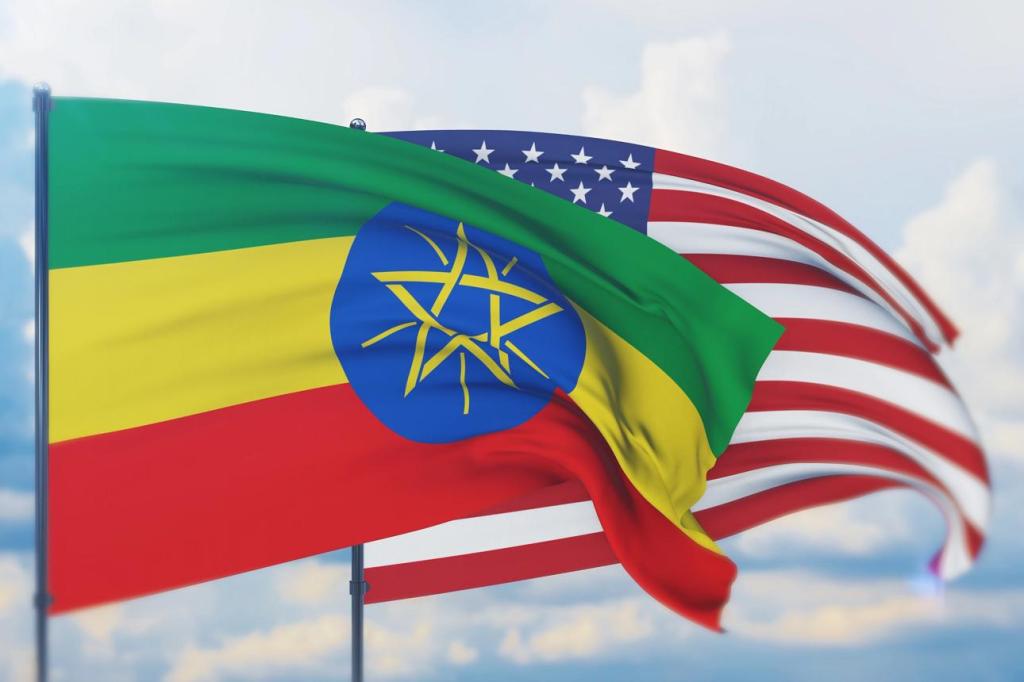
Senior officials from the United States and Ethiopia have signed a new bilateral structured dialogue framework that lays the foundation for expanded cooperation in trade, investment, defense, and regional security. The agreement marks one of the clearest signs yet that Washington is attempting to rebuild its relationship with one of Africa’s most strategically important nations after years of diplomatic strain.
The framework centers on three broad priorities: strengthening economic ties, expanding defense and security cooperation, and coordinating efforts to reduce tensions across the Horn of Africa. According to public statements from both governments, the agreement is intended to create regular high-level dialogue while encouraging greater commercial investment and collaboration on regional peace initiatives.
The timing is significant.
Ethiopia remains one of Africa’s largest economies and one of the continent’s most influential geopolitical actors. Bordering Eritrea, Sudan, South Sudan, Somalia, Djibouti, and Kenya, the country sits at the crossroads of some of Africa’s most complex security challenges. Instability in Ethiopia has implications far beyond its borders, affecting migration, counterterrorism operations, Red Sea security, and international trade routes.
For Washington, rebuilding ties with Addis Ababa represents more than repairing a damaged diplomatic relationship. It is also part of a broader effort to maintain influence in a region where global powers, including China, Russia, Turkey, and Gulf states, have expanded their economic and military presence over the past decade.
One of the more notable aspects of the discussions involves reported proposals to ease restrictions imposed during the northern conflict. According to reporting from The Reporter Ethiopia, the dialogue includes consideration of lifting certain travel restrictions and the arms embargo imposed on Ethiopia during the Tigray war, although no final decisions have been publicly announced.
The renewed engagement also arrives as Ethiopia continues rebuilding after years of conflict. While the 2022 peace agreement significantly reduced large-scale fighting in Tigray, challenges remain, including humanitarian recovery, political reconciliation, economic pressures, and localized security concerns in several regions.
Economically, Ethiopia is also pursuing major reforms. The government has worked to restructure its international debt, liberalize portions of its economy, and attract greater foreign investment as it attempts to stabilize growth following years of war and financial strain. Improved relations with Washington could encourage additional American investment and strengthen confidence among international financial institutions.
The agreement may also reflect changing priorities within U.S. foreign policy. Rather than focusing primarily on punitive measures, the structured dialogue suggests a greater emphasis on sustained diplomatic engagement while maintaining cooperation on mutual security and economic interests.
Still, important questions remain unanswered.
Human rights organizations continue to monitor accountability efforts related to the Tigray conflict and ongoing violence in parts of Ethiopia. Regional disputes involving neighboring Eritrea and instability in surrounding countries also continue to complicate the Horn of Africa’s security environment.
Whether this diplomatic reset produces lasting results will depend on more than signed agreements. It will require continued political commitment, meaningful economic cooperation, and measurable progress toward peace and stability inside Ethiopia and throughout the region.
For now, however, the framework agreement represents a notable shift in tone. After years marked by sanctions, diplomatic friction, and conflict, Washington and Addis Ababa are once again choosing engagement over isolation, opening what both governments hope will become a new chapter in one of Africa’s most consequential international partnerships.
—Sylvester Loving, B1Daily






Leave a comment