—Barrington Williams, B1Daily
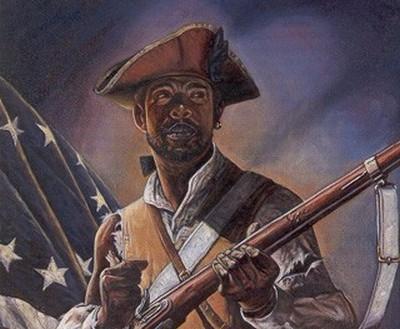
When Americans celebrate the Fourth of July, the story usually begins with the Declaration of Independence, the Founding Fathers, and the famous cry for liberty against the British Crown. Yet one of the first people to die for that cause was not a wealthy landowner, a colonial politician, or a celebrated military officer. He was a Black man named Crispus Attucks.
His death in the Boston Massacre on March 5, 1770, became one of the defining moments that ignited colonial outrage and accelerated the movement toward revolution. While it would take another five years before the first shots of the Revolutionary War were fired at Lexington and Concord, many historians regard the Boston Massacre as a pivotal turning point in the colonies’ march toward independence.
The First to Fall
Crispus Attucks is widely recognized as the first person killed in the Boston Massacre. Historical accounts generally describe him as a sailor and dockworker of African and Native American ancestry. As tensions between Boston residents and British soldiers escalated that evening, Attucks was among the crowd confronting the troops.
When British soldiers opened fire, Attucks was struck and killed almost instantly.
His death transformed him into a powerful symbol. Colonial leaders used the Boston Massacre to demonstrate what they viewed as British tyranny, publishing engravings, pamphlets, and speeches that galvanized resistance throughout the colonies.
Although five colonists died that night, Attucks became the face of the tragedy, his body serving as one of the earliest sacrifices in what would become America’s struggle for independence.
Black Americans Were Present From the Beginning
The Revolutionary War is often remembered through the actions of famous white patriots such as George Washington, Thomas Jefferson, Patrick Henry, and Paul Revere. But thousands of Black Americans also participated in the conflict.
Historians estimate that approximately 5,000 Black soldiers served in the Continental Army during the Revolutionary War, while thousands more fought for the British after promises of freedom were extended to enslaved people willing to join the Crown’s forces.
Whether fighting for independence or for emancipation, Black people were deeply involved in shaping the outcome of the Revolution.
Catalysts for a Revolution
Calling Black Americans the sole catalyst for the Revolutionary War would oversimplify a complex historical process. The Revolution was driven by numerous factors, including disputes over taxation, colonial representation, British military occupation, trade restrictions, and growing political tensions between Britain and its American colonies.
However, the death of Crispus Attucks undeniably became one of the Revolution’s most powerful early symbols.
The Boston Massacre provided colonial leaders with a compelling narrative that united public opinion against British rule. Attucks’ death gave that narrative a human face.
Without the outrage generated by events such as the Boston Massacre, the political momentum that ultimately produced the Declaration of Independence might have developed differently.
Fighting for Freedom While Living Without It
One of the great paradoxes of the American Revolution is that many Black Americans fought for principles of liberty and equality while being denied those same rights.
Enslaved and free Black men served in militias, worked as sailors, carried supplies, built fortifications, and fought in numerous battles throughout the war.
Yet when independence was secured, slavery remained legal in much of the newly formed United States.
The contradiction between America’s founding ideals and the lived reality of many Black Americans would continue to shape the nation’s history for generations.
Attucks’ Legacy
In the decades following the Revolution, Crispus Attucks became an important figure in abolitionist movements and later in the struggle for civil rights.
Black leaders pointed to Attucks as evidence that African Americans had sacrificed for the nation since its earliest days. His story challenged narratives that overlooked Black contributions to American history and reminded the country that patriotism has never belonged to one race alone.
Schools, parks, monuments, and community organizations across the United States now bear his name, honoring his place in the nation’s founding story.
Remembering the Whole Story
The American Revolution was not created by one man or one group. Farmers, merchants, politicians, laborers, Native Americans, enslaved Africans, free Black citizens, and immigrants all played roles in the nation’s birth.
Crispus Attucks remains one of the Revolution’s most enduring figures because his death captured both the promise and the contradictions of America’s founding. He became a symbol of resistance against oppression while representing a community that would continue to fight for full equality long after independence was won.
Understanding Attucks’ legacy does not diminish the contributions of other patriots. Instead, it broadens the historical record, reminding us that the struggle for American independence was shaped by people from many backgrounds whose sacrifices collectively helped forge a new nation.
—Barrington Williams, B1Daily




Leave a comment