—Kerry Hill, B1Daily
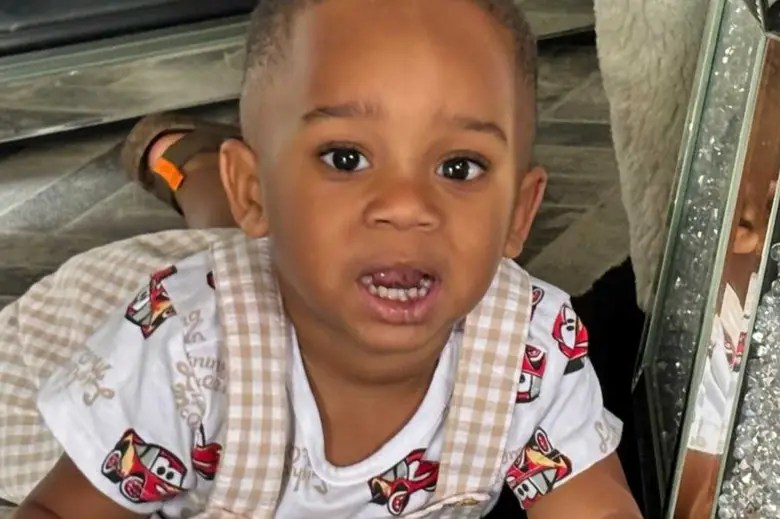
The death of 1-year-old Kohen Wiley has shaken communities far beyond Mississippi. Whenever a child dies during a police encounter, the questions extend beyond one family or one town. They become questions about accountability, transparency, and the public’s confidence in the justice system.
That is why the available body-camera footage, dash-camera recordings, and relevant surveillance video should be released as soon as investigators determine that doing so would not materially compromise the ongoing investigation.
The public has already heard competing narratives.
Law enforcement officials have stated that officers fired after a vehicle allegedly posed an immediate threat to an officer. Kohen’s family disputes that account, arguing that the vehicle was driving away when shots were fired. Those are profoundly different versions of the same event, and each carries significant legal and moral implications.
In situations like these, trust cannot be built through press releases alone.
Video evidence has become one of the most important tools for establishing public confidence after controversial police encounters. While video does not always answer every question, it often provides critical context that witness statements alone cannot.
Across the country, many police agencies have adopted policies recognizing that timely video releases can reduce speculation, counter misinformation, and demonstrate that investigators have nothing to hide. Delaying disclosure for months without explanation can have the opposite effect, fueling suspicion regardless of what the evidence ultimately shows.
Transparency is not about assuming guilt.
Releasing footage should not be viewed as a declaration that an officer acted unlawfully. Nor should it be interpreted as proof that the family’s account is correct. The purpose is to allow the public to evaluate objective evidence while investigators continue their work and before rumors fill the information vacuum.
There are, of course, legitimate concerns.
Investigators may need to protect witness interviews, preserve the integrity of evidence, or comply with legal restrictions. Those interests deserve careful consideration. But once those concerns can be reasonably addressed, transparency should become the default rather than the exception.
The tragedy of Kohen Wiley’s death also highlights a broader issue facing law enforcement nationwide. Public confidence depends not only on fair investigations but on the appearance of fairness. When evidence exists but remains hidden, even justified uses of force can become clouded by doubt. Conversely, if wrongdoing occurred, withholding video only delays accountability.
Neither outcome serves the public.
For Kohen’s family, the footage may provide answers that no press conference ever could. For the officer involved, it could either support or challenge the official account based on what the camera captured rather than what competing narratives claim. For the community, it offers an opportunity to replace speculation with evidence.
Justice is strongest when it is visible.
The investigation should continue independently and without political pressure. Any charging decision should be based on all available evidence, not public opinion. But transparency and due process are not opposing values. They can and should exist together.
The death of a one-year-old child deserves the highest level of public accountability. If video exists that documents the encounter, it should be released at the earliest appropriate opportunity consistent with protecting the integrity of the investigation.
When confidence in public institutions is fragile, openness is not a weakness. It is one of the strongest tools available to preserve trust.
The truth should not remain behind closed doors any longer than necessary.
—Kerry Hill, B1Daily





Leave a comment