—Kerry Hill, B1Daily
In 2013, George Zimmerman stood before a courtroom as a man who believed he had successfully defended his perimeter. He had walked away from a trial that fractured a nation, emboldened by a verdict that suggested his version of “suspicion” was a legal shield. But justice, unlike a court verdict, rarely operates on a linear timeline. It tends to circle back, often arriving when the world has stopped watching.
By 2026, the perimeter has finally closed in on him.
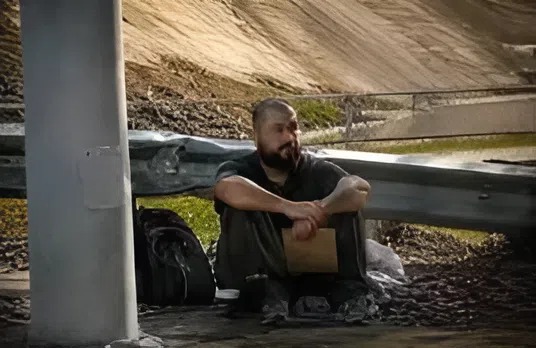
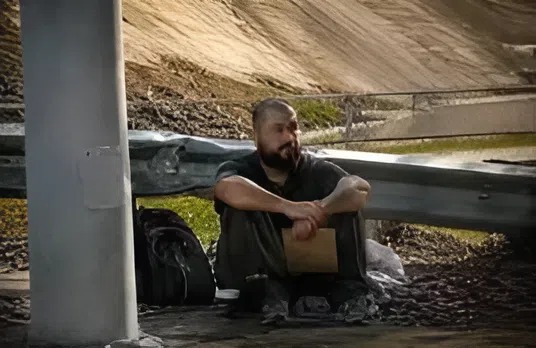
Recent reports and sightings in the South Florida area paint a stark picture of a man stripped of the prestige and security he once clung to. The man who once claimed the right to police his own neighborhood now finds himself with no neighborhood to call his own. George Zimmerman is, by all available accounts, homeless and broke.
To some, this is merely a tragic slide into poverty. To others, it is the inevitable physics of karma.
The story of Trayvon Martin and George Zimmerman was never just about a neighborhood watch or a tragic encounter in the dark. It was a diagnostic test for American racism, and the results were devastating. Zimmerman’s actions were rooted in a specific, virulent brand of anti-Black racism: the belief that a Black boy in a hoodie is a natural suspect, a trespasser in his own skin, and a threat simply by existing in a space Zimmerman deemed “his.”
For years, Zimmerman lived in the bubble of that perceived superiority. He navigated a world where his prejudice was validated by a legal system that too often views Black life as disposable. But prejudice is a fragile foundation. When you build your identity on the exclusion and devaluation of others, you eventually find yourself excluded from the very structures of stability you sought to protect.
The trajectory from the courtroom to the street corner is a lesson in the fragility of the “vigilante” mindset. The same suspicion and aggression that Zimmerman used to justify the killing of a child eventually alienate the allies, the resources, and the social capital required to maintain a middle-class existence. Racism is a lonely game; it isolates the practitioner until they are standing alone in the wreckage of their own making.
There is a poetic, if grim, symmetry in his current state. The man who saw a teenager as an intruder is now an intruder in the city he once sought to “purify.” He who lived by the sword of suspicion now finds himself viewed with the same suspicion and disdain he once weaponized against Trayvon Martin.
The “karma” here isn’t just about financial loss; it is about the erasure of the narrative. Zimmerman spent years trying to frame himself as a protector, a man of order. But as the years passed, the world saw him for what he truly was: a man whose fear was actually hatred, and whose “defense” was actually a crime of prejudice.
As he navigates the streets of Florida in 2026, stripped of the armor of his perceived superiority, Zimmerman serves as a living monument to a simple truth: Anti-Black racism is not just a moral failing, it is a spiritual debt. And eventually, the debt always comes due.
—Kerry Hill, B1Daily


Leave a comment