—Michael Lyles, B1Daily
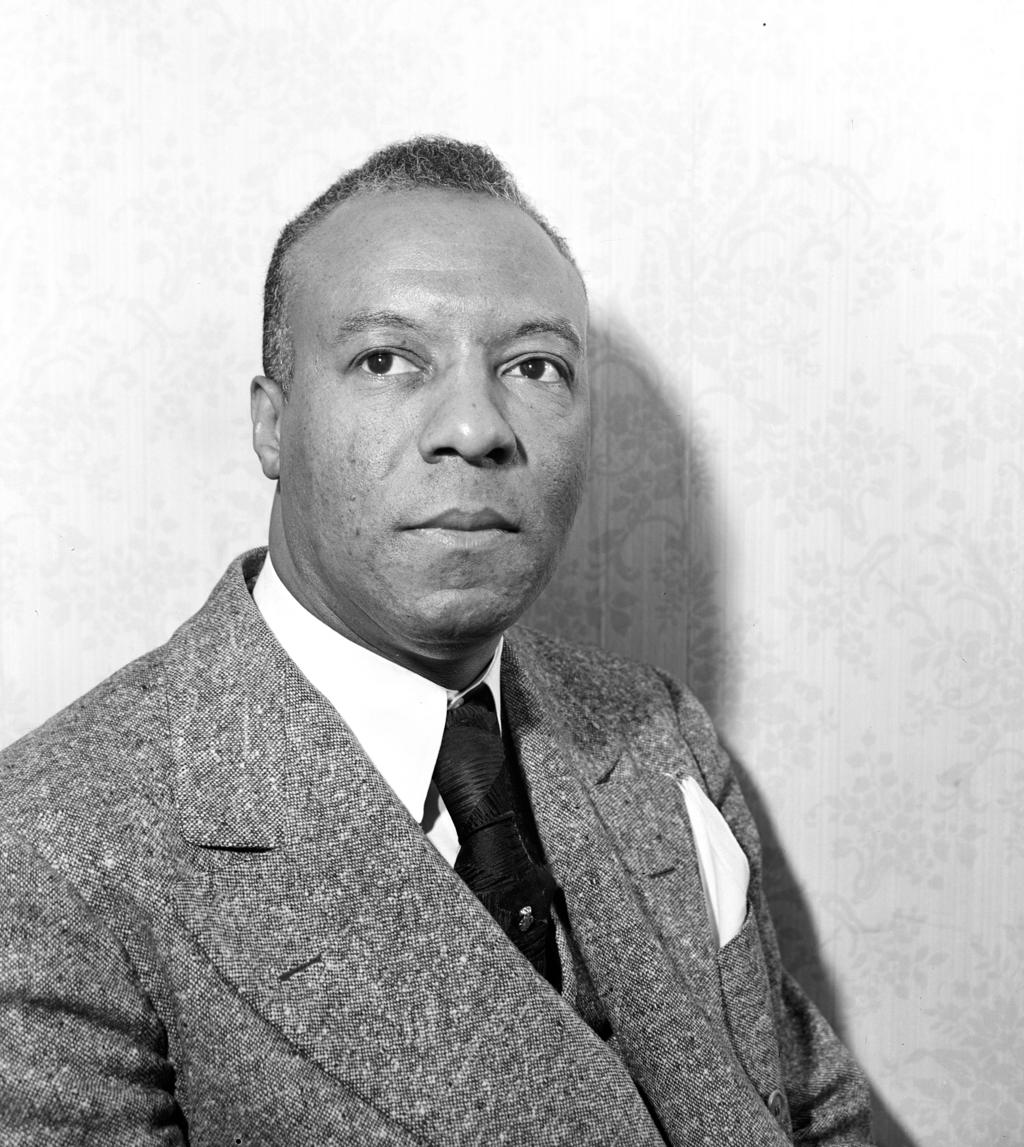
A. Philip Randolph understood something about American power that many civil rights leaders would later master: moral arguments become much harder for politicians to ignore when they are backed by organized economic and political pressure.
Born Asa Philip Randolph in Crescent City, Florida, in 1889, Randolph became one of the most influential Black labor organizers and civil rights strategists of the 20th century. Long before the March on Washington became synonymous with Martin Luther King Jr., Randolph was organizing Black workers, challenging discrimination inside the labor movement, and threatening mass demonstrations against the federal government.

His career connected two struggles that American history sometimes treats separately: the fight for workers’ rights and the fight for Black civil rights. Randolph recognized that political equality meant little if Black Americans remained locked out of good jobs, unions, defense industries, and the economic machinery of the country.
The Brotherhood of Sleeping Car Porters
Randolph’s defining labor battle began in the 1920s with the Brotherhood of Sleeping Car Porters.
Pullman porters occupied a complicated place in Black American life. Working aboard luxury railroad sleeping cars provided employment and a degree of prestige at a time when discrimination severely restricted opportunities for Black men. But behind the polished uniforms and attentive service were long hours, low wages, uncertain working conditions, and an enormous imbalance of power between the workers and the Pullman Company.
Randolph became the Brotherhood’s leader in 1925.
Organizing the porters was extraordinarily difficult. Workers risked losing their livelihoods for supporting unionization, while the Pullman Company resisted efforts to establish an independent union. Randolph nevertheless continued organizing and campaigning for years.
The breakthrough eventually came when the Brotherhood gained recognition as the porters’ bargaining representative. In 1937, it secured a collective bargaining agreement with Pullman.
That victory carried significance far beyond railroad cars. The Brotherhood became a powerful demonstration that Black workers could organize collectively and confront one of America’s largest corporations.
Randolph Takes the Fight to Washington
Randolph did not intend to stop with Pullman.
As the United States prepared for World War II, defense production expanded rapidly. Yet Black Americans continued encountering discrimination in defense employment and segregation within the armed forces.
Randolph recognized the contradiction immediately: America was preparing to defend democracy abroad while tolerating racial discrimination at home.
So he reached for a weapon politicians could understand: mass mobilization.
In 1941, Randolph proposed a massive march on Washington demanding equal access to defense employment and an end to discrimination.
The prospect of tens of thousands of Black Americans descending on the nation’s capital created a political headache for President Franklin D. Roosevelt’s administration. Randolph refused to abandon the demonstration without meaningful action.
Roosevelt ultimately issued Executive Order 8802 in June 1941, declaring that there should be no discrimination in defense industries or government because of race, creed, color, or national origin. The order also established the Fair Employment Practice Committee.
Randolph called off the march.
It was an extraordinary demonstration of leverage. Randolph had shown that organized Black political pressure could force the White House to act.
Then He Pressured Truman
Randolph applied similar pressure after World War II.
The American military remained segregated, and Randolph became a leading voice demanding its desegregation. He helped organize resistance to segregation in the armed forces and pushed President Harry Truman’s administration toward federal action.
In 1948, Truman issued Executive Order 9981, declaring equality of treatment and opportunity for members of the armed services regardless of race, color, religion, or national origin.
Randolph had again demonstrated his central political philosophy: Black Americans could not depend solely upon powerful institutions voluntarily correcting injustice. They needed organization capable of creating consequences for ignoring their demands.
The Labor Movement’s Racial Contradiction
Randolph’s activism also exposed an uncomfortable problem within organized labor.
Unions could be powerful instruments for working-class advancement, but portions of the American labor movement had histories of excluding or discriminating against Black workers.
Randolph refused to accept the idea that workers’ solidarity could coexist comfortably with racial exclusion.
His career challenged organized labor to confront that contradiction. If unions claimed to represent workers against concentrated corporate power, then Black workers could not be treated as an expendable second class.
That argument remains important because employment was one of the central battlegrounds of the civil rights struggle. Access to unionized jobs, fair wages, promotions, skilled trades, government employment, and economic security could determine whether legal equality translated into meaningful improvements in people’s lives.
Randolph understood that civil rights without economic opportunity could produce equality on paper while leaving inequality embedded in everyday life.
The March That Finally Happened
Randolph’s proposed 1941 march was canceled after Roosevelt acted, but the idea of bringing a massive Black-led demonstration to Washington never disappeared.
Twenty-two years later, Randolph became a principal organizer of the 1963 March on Washington for Jobs and Freedom.
The full name matters.
Popular memory understandably centers on King’s monumental “I Have a Dream” speech, but the demonstration was explicitly about both racial justice and economic justice.
The march demanded civil rights protections while also highlighting employment, wages, discrimination, and economic opportunity.
Randolph, by then in his 70s, stood at the center of a movement whose tactics reflected strategies he had spent decades developing.

5
The Strategy Behind Randolph’s Success
Randolph’s importance cannot be measured only by the executive orders he helped inspire or the organizations he led.
His larger contribution was strategic.
He understood the difference between possessing a grievance and possessing leverage.
A community could be morally correct and still be politically ignored. Randolph therefore concentrated on building organizations, mobilizing workers, threatening demonstrations, cultivating alliances, and turning economic grievances into political pressure.
That philosophy helped establish a template later used throughout the civil rights era.
Boycotts created economic pressure.
Marches created political pressure.
Unions created workplace pressure.
Mass organizations created electoral and institutional pressure.
Randolph’s genius was recognizing that these were not separate weapons. They belonged in the same toolbox.
Why A. Philip Randolph Still Matters
Modern discussions of Black economic advancement frequently revolve around entrepreneurship, education, investing, and individual financial decisions. Randolph’s career offers another dimension: collective bargaining power matters too.
A worker negotiating alone generally possesses limited leverage against a large employer. Thousands of organized workers can fundamentally change that equation.
Randolph also demonstrated why Black participation in organized labor could have implications beyond wages. Workplace organization could become infrastructure for political participation, leadership development, civil rights advocacy, and community organization.
His story therefore belongs in both labor history and civil rights history.
Randolph spent much of his career demanding that America reconcile the promises it made with the conditions Black citizens actually experienced. When corporations resisted, he organized workers. When labor organizations tolerated discrimination, he challenged them. When presidents hesitated, he threatened mobilization.
He did not merely ask Washington to listen.
He helped organize enough power that Washington had a reason to.
—Michael Lyles, B1Daily





Leave a Reply