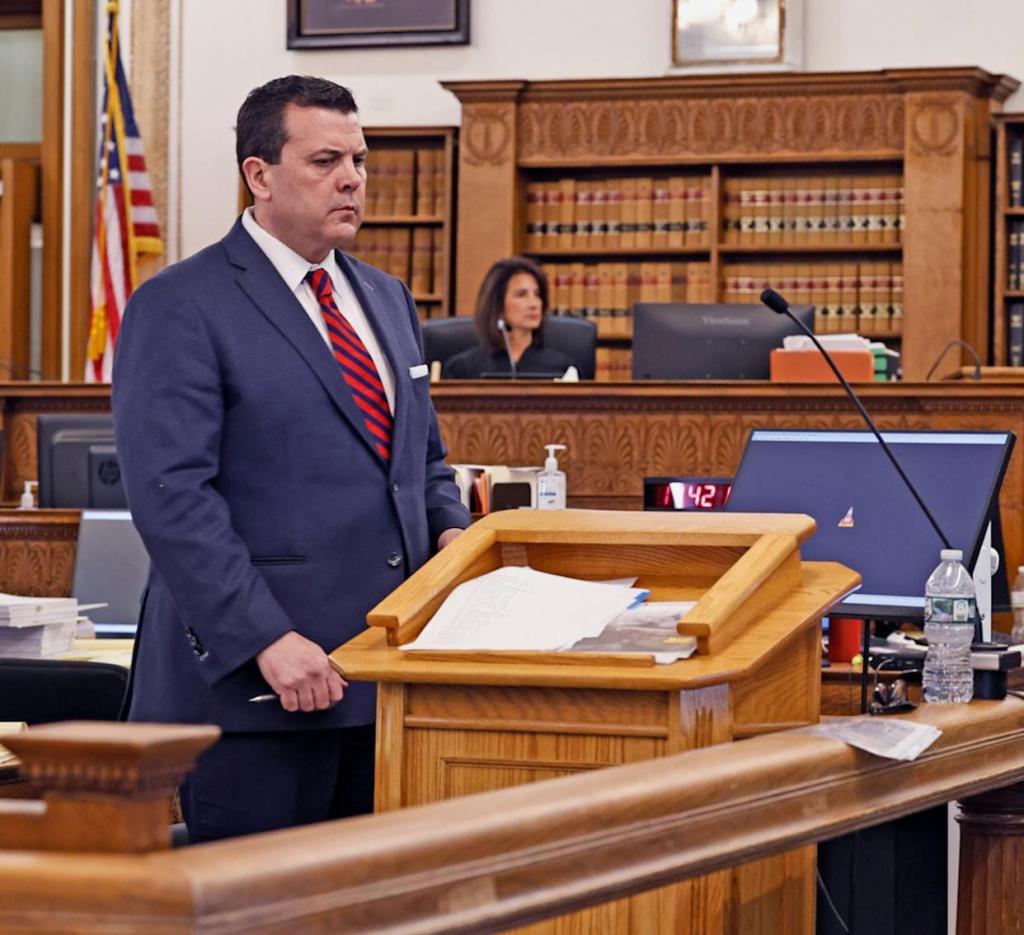
—Barrington Williams, B1Daily
A judge may pronounce the sentence, but long before a defendant stands before that judge, another government official has already made decisions capable of transforming the case.
The prosecutor.
Whether someone gets charged. What charges they face. Whether charges are reduced. Whether diversion is offered. What plea agreement appears on the table. What position the government takes on detention. What sentence prosecutors recommend.
These decisions make prosecutors among the most consequential figures in American criminal justice, yet many voters could probably name their governor before identifying their local district attorney.
That imbalance deserves scrutiny.
The Power Before the Courtroom
Prosecutorial discretion is extraordinarily broad.
Cornell Law School’s Legal Information Institute explains that prosecutors generally possess discretion over whether to file charges and how to proceed, including decisions involving plea agreements, diversion, immunity and sentencing recommendations. That discretion remains constrained by constitutional protections, including prohibitions against discriminatory or vindictive prosecution.
Federal policy provides a revealing illustration. The Justice Department’s current principles explicitly identify prosecutorial discretion over initiating or declining prosecution, selecting charges, detention positions, plea agreements and sentencing participation.
Local prosecutors possess similarly consequential powers under state law.
A 2026 study in the American Journal of Criminal Justice describes county district attorneys as gatekeepers whose decisions can determine whether cases are charged, how serious those charges are, and whether dismissals may be offered through plea agreements.
That means two cases involving similar conduct can potentially travel very different roads depending upon evidence, local law, office policy and prosecutorial judgment.
Discretion is unavoidable.
The question is how much transparency should accompany it.
Elections Are Supposed to Provide Accountability
Many local prosecutors are elected.
In theory, that creates a straightforward accountability mechanism. Citizens dislike the direction of the prosecutor’s office, and they elect somebody else.
Reality is more complicated.
Most citizens do not spend their evenings reading charging documents and plea agreements. Prosecutorial policies can be technical. Individual cases may involve confidential evidence. Media attention concentrates on unusual cases rather than the thousands quietly processed through the courthouse.
This can create a peculiar democratic arrangement: an official possesses tremendous discretionary authority while much of the electorate sees only fragments of how that authority is exercised.
Charging Decisions Matter
Recent research provides evidence that the person occupying the prosecutor’s office can measurably change criminal-justice outcomes.
A 2026 paper published by the American Economic Association examined reform-minded prosecutors and found their elections were associated with approximately a 17 percent reduction in misdemeanor convictions per capita, largely driven by reductions in misdemeanor charging, particularly drug cases. The researchers found smaller suggestive reductions in felony convictions but no robust change in felony charging.
Whatever one’s politics, that finding illustrates something important.
Prosecutorial philosophy matters.
Elect two prosecutors with different philosophies and the criminal-justice footprint of the same jurisdiction can change.
That is precisely why voters deserve to know what prosecutors are doing.
Transparency Without Political Show Trials
Accountability, however, contains a trap.
If prosecutors must be accountable, it does not follow that politicians should be able to remove them whenever they dislike a charging decision.
The American Bar Association has warned about political efforts to restrict prosecutorial discretion and argues that removal mechanisms should involve clear standards, neutral decision-makers and due process rather than mere political disagreement.
That distinction is crucial.
There is a difference between oversight and political control.
A prosecutor should not be immune from scrutiny.
But neither should a governor or legislature be able to transform every controversial prosecution or non-prosecution into an excuse for partisan retaliation.
The answer is stronger institutional transparency.
Show the Public the Numbers
Prosecutors’ offices should publish more usable data.
How many felony cases were referred?
How many were charged?
How many were declined?
How many cases ended in plea agreements?
How often were charges reduced?
How frequently was diversion offered?
What were the outcomes by offense category?
How long did cases take?
Those statistics would not explain every individual decision. Cases differ dramatically, and raw numbers can mislead when stripped of context.
But consistent reporting could allow journalists, researchers and voters to identify patterns worthy of investigation.
Sunlight does not eliminate discretion. It makes discretion easier to examine.
Prosecutorial Accountability Should Not Be Partisan
Conservatives should want to know whether prosecutors are declining cases they believe threaten public safety.
Progressives should want to know whether prosecutors are overcharging defendants or producing racial and economic disparities.
Civil libertarians should want to know whether government power is being abused.
Crime victims should want to know how cases involving them are handled.
Defendants should want consistent rules.
Taxpayers should want to know whether enormous criminal-justice budgets produce results.
There is enough reason for everyone to demand transparency.
The Office Behind the Curtain
Americans devote enormous attention to police officers, judges, legislators and presidents.
Prosecutors often operate in the quieter space between them.
Yet the decision written on a charging document can alter someone’s life before a jury is ever selected.
That authority is necessary. Someone must decide which cases the government can prove and which prosecutions serve the interests of justice.
But necessary power is still power.
And in a democracy, the more consequential the power, the stronger the argument that the public should be able to see how it is being used.
—Barrington Williams, B1Daily



Leave a Reply