—Vanessa Edwards, B1Daily
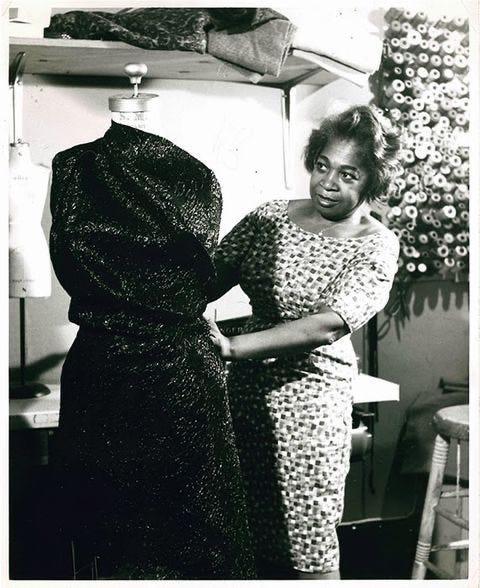
Before Black designers were routinely welcomed into America’s most prestigious fashion circles, Zelda Wynn Valdes was already dressing some of the biggest stars in entertainment.
Born in 1905 in Pennsylvania, Valdes developed her sewing skills early, learning from the women in her family before eventually entering New York’s fashion industry. Her talent carried her through an industry where Black designers faced significant racial barriers. By 1948, she had opened Zelda Wynn, one of the first Black-owned businesses on Broadway in New York City.
Her client list was extraordinary. Valdes created clothing for stars including Josephine Baker, Eartha Kitt, Ella Fitzgerald, Dorothy Dandridge and Mae West. She became particularly celebrated for understanding women’s bodies and creating glamorous, precisely fitted garments rather than forcing clients into standardized silhouettes.
But one garment has become inseparable from her modern legend: the Playboy Bunny costume.
The Bunny Suit and a Complicated Fashion History
Valdes is frequently described as the woman who invented or designed the original Playboy Bunny outfit. The story has circulated widely enough that it has become part of her popular legacy.
The historical record, however, is more complicated.
The Smithsonian’s National Museum of African American History and Culture notes that Valdes has been credited with designing the first Bunny costumes, but says evidence indicates multiple people were involved in developing the uniform. What can be established more firmly is that Valdes and her staff manufactured some of the costumes.
The Metropolitan Museum of Art similarly reports that Hugh Hefner engaged Valdes to produce a group of Playboy Bunny outfits, while the Museum at FIT has described her as having helped design the iconic costume.
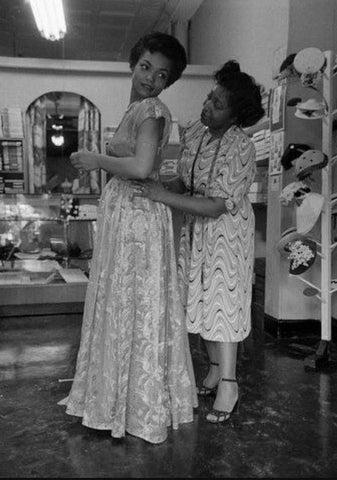
That distinction matters because Valdes’ real accomplishments are impressive enough without turning disputed history into certainty.
The famous Bunny uniform became instantly recognizable through its fitted bodice, bunny ears, collar, cuffs, bow tie and tail. An original example preserved by the Smithsonian’s National Museum of American History is made from satin and nylon and is associated with Playboy Enterprises.
Valdes’ involvement placed a Black fashion professional within the creation and production history of one of the most recognizable commercial costumes of 20th-century American popular culture.
More Than a Bunny Suit
Reducing Zelda Wynn Valdes to Playboy would itself be an injustice.
Her career represented something considerably larger.
In 1949, Valdes became president of the New York chapter of the National Association of Fashion and Accessories Designers, an organization that helped Black fashion professionals navigate an industry largely controlled by white institutions.
Later, she brought her talents into Black performing arts. Beginning around the turn of the 1970s, Valdes became the principal costume designer for Arthur Mitchell’s Dance Theatre of Harlem, beginning a relationship that lasted for decades.
She also used fashion as education. Smithsonian records describe Valdes teaching younger Black artists the techniques of fashion and costume design, passing along the skills that had carried her from a working-class Pennsylvania childhood to Broadway.
Giving Zelda Her Proper Place in Fashion History
The irony surrounding Zelda Wynn Valdes is striking.
American culture remembers the Bunny costume instantly. Far fewer Americans recognize the Black designer and dressmaker who helped produce those garments and whose relationship with Playboy was substantial enough for her to stage fashion shows at its New York club.
But her legacy shouldn’t depend upon whether she alone drew the first Bunny costume.
Her documented career is bigger than the legend.
She built a Black-owned fashion business on Broadway when segregation still shaped American commerce. She dressed legendary Black entertainers. She supported Black fashion professionals. She worked with Playboy during the emergence of its famous clubs. And she spent decades helping shape the visual identity of the Dance Theatre of Harlem.
Zelda Wynn Valdes died in 2001, but the silhouettes she helped create survived her.
America may recognize the costume first. Fashion history should make sure it remembers the woman behind the sewing machine, too.
—Vanessa Edwards, B1Daily






Leave a Reply