—Matt Gwinta, B1Daily
It’s impossible to produce a literal list of all African families involved in the trans-atlantic slave trade. Records are incomplete, names changed, political institutions disappeared, and the trade lasted centuries across a vast continent. What can be identified are several of the best-documented and most prominent African states, royal houses and merchant elites whose institutions or lineages remain recognizable today.
1. The Royal House of Dahomey
Few African states are more closely associated with the Atlantic slave trade than the Kingdom of Dahomey, centered in what is now the Republic of Benin.
Dahomey’s rulers built a highly militarized state that repeatedly conducted wars and raids that produced captives. Those captives could be retained within Dahomey or sold through coastal markets to European slave traders.
The Smithsonian notes that Dahomey’s role in the slave trade grew from the seventeenth century and continued well into the nineteenth century. UNESCO’s General History of Africa goes further in identifying rulers of powerful states such as Dahomey and Asante among major African suppliers, while emphasizing the commercial relationship connecting African rulers, dignitaries and traders with overseas buyers.
One particularly important monarch was King Ghezo, who ruled Dahomey from 1818 to 1858. His reign coincided with international pressure to suppress the Atlantic trade, but Dahomey remained deeply entangled in slavery.
The dynasty did not vanish with colonialism.
Dahomey no longer exists as a sovereign country, but descendants of its kings survived, along with royal traditions centered on Abomey. Contemporary Benin continues to recognize traditional monarchs as cultural authorities rather than sovereign political rulers. The Dahomey succession itself has competing royal claims, illustrating how complicated connecting a historical dynasty to a single modern representative can be.
The survival of the dynasty makes Dahomey one of the clearest examples of a royal institution heavily involved in the historical slave economy whose descendants and traditions remain visible today.
2. The Asante Royal Dynasty
The Asante Empire in present-day Ghana became one of West Africa’s most powerful states.
Its economy cannot simply be reduced to slavery. Gold mining, agriculture and regional commerce were enormously important. Nevertheless, slavery and the Atlantic slave trade were also significant components of the Asante political economy.
The British Museum notes that beginning in the 1700s, Asante supplied enslaved people to British and Dutch traders in exchange for goods including firearms, which in turn supported military expansion. Enslaved people were also employed internally in agriculture and mining.
The Victoria and Albert Museum similarly documents exchanges of enslaved people, gold and other commodities for European weapons, metals and luxury goods.
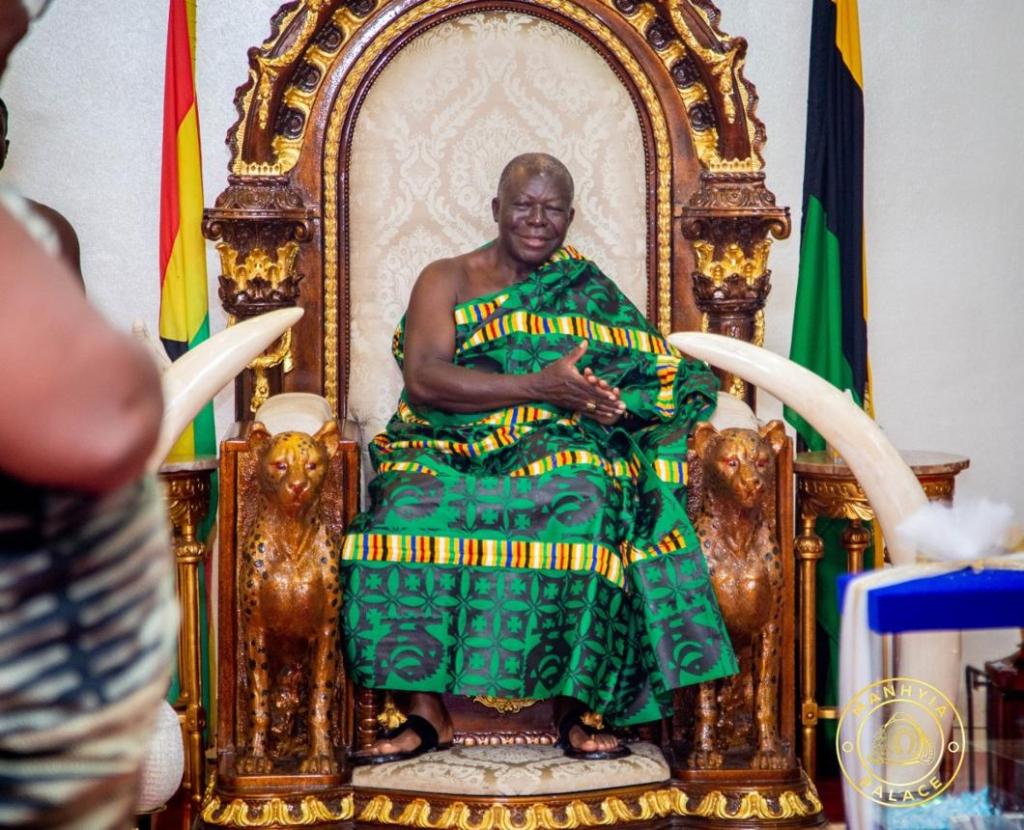
Unlike many precolonial African monarchies, the Asante royal institution remains exceptionally prominent.
The current Asantehene is Otumfuo Osei Tutu II, who has occupied the Golden Stool since 1999. The Manhyia Archives traces the succession of Asante rulers through the historic dynasty to Osei Tutu II.
The modern Asantehene obviously bears no personal responsibility for transactions conducted centuries before his birth. What survives is the royal institution and lineage, not individual culpability.
3. The Oyo Royal Institution
The Oyo Empire was one of the dominant Yoruba powers of West Africa.
Oyo developed a sophisticated imperial structure supported by cavalry, tribute, agriculture and extensive commercial networks. By the eighteenth century, however, slavery had become an important part of its economy.
The Smithsonian’s Slavery and Remembrance project states that Oyo became increasingly involved in slave trading during the eighteenth century. Enslaved labor worked royal farms, while surplus captives could be sold toward the Atlantic coast.
Academic research published by Oxford University Press describes Oyo as a major slave-trading state and supplier to the transatlantic trade. Its nineteenth-century collapse then produced another catastrophe: warfare and political fragmentation resulted in large numbers of Yoruba people themselves being enslaved. Researchers estimate that roughly 121,000 people were enslaved during conflicts associated with Oyo’s collapse between 1817 and 1836.
That second part is critical. Yoruba history cannot accurately be reduced to “Yoruba sold slaves.” Yoruba political elites participated in slave systems at particular times, while enormous numbers of Yoruba people were themselves victims of enslavement.
The Alaafin institution nevertheless survives.
In 2026, Oba Abimbola Akeem Owoade I serves as the 46th Alaafin of Oyo. His coronation represents the continuation of an institution whose history reaches back to the old Oyo political order.
Again, historical continuity should not be confused with inherited guilt.
4. The Efik Merchant and Royal Houses of Old Calabar
Old Calabar, in southeastern Nigeria, became one of the Atlantic world’s major slave-exporting regions.
Here the story is particularly useful because historians possess unusually detailed records of African merchants themselves.
Among the best known is Antera Duke, an eighteenth-century Efik merchant and chief. His surviving diary records his dealings with British merchants and provides historians with a rare African-written account of commerce during the slave-trading era. Research on Old Calabar describes Antera as a prominent merchant, head of an influential family and high-ranking member of the Ekpe institution.
Other famous families included the Robin Johns of Old Town. Little Ephraim Robin John and Ancona Robin John belonged to an Efik ruling family involved in slave trading. Their story contains one of the Atlantic world’s bitter historical reversals: the two traders were themselves captured and sold into slavery before eventually securing their freedom.
The Duke, Henshaw, Cobham, Archibong and related houses became prominent names within Calabar’s political history.
Traditional Efik institutions also survived colonialism. The modern Obong of Calabar remains a traditional ruler and cultural custodian of the Efik people.
Old Calabar therefore provides perhaps the clearest warning against treating entire ethnic groups as perpetrators or victims. Within the same society there were rulers, slave merchants, enslaved people, middlemen, captives and families whose fortunes could reverse violently.
5. The Pepple Dynasty and the Kingdom of Bonny
The Niger Delta Kingdom of Bonny developed into another major commercial gateway connecting African interior markets with Atlantic merchants.
Bonny became an important slave-trading center before transitioning heavily toward palm oil during the nineteenth century. Cambridge University Press’s history of southern Nigeria describes Bonny’s political system as being organized around a king and powerful trading Houses.
One of its most famous dynastic names became Pepple, derived from Perekule.
The kingdom’s royal and chieftaincy House system survived the slave-trading era, British colonial intervention and Nigerian independence. The modern Kingdom of Bonny remains a traditional state, with the monarchy now exercising cultural rather than sovereign national power.
The survival of these Houses demonstrates something important about the slave trade: commerce was frequently organized not simply around “tribes,” but around ports, monarchies, commercial Houses and elite trading networks.
6. Allada and the Aja-Fon Royal Tradition
Before Dahomey became dominant, Allada, historically known to Europeans as Ardra, was itself an important West African kingdom connected to Atlantic commerce.
Allada controlled access to coastal trading outlets and became deeply involved in the expanding slave trade. Historical estimates cited for the kingdom indicate extremely large numbers of captives passing through its commercial networks during the seventeenth century.
Allada is particularly important because of its dynastic relationship to Dahomey. Traditions connect the royal houses of Allada, Dahomey and Porto-Novo.
The monarchy also survives ceremonially. Benin today contains traditional kings in Allada, Abomey and Porto-Novo whose positions coexist with the authority of the modern republic.
7. The Aro Trading Network
The Aro Confederacy, centered on Arochukwu in what is now southeastern Nigeria, operated differently from centralized kingdoms such as Dahomey or Asante.
It developed an extensive commercial, religious and political network across southeastern Nigeria. During the era of Atlantic slavery, Aro commercial networks became important suppliers connecting the interior with coastal trading centers.
Historical accounts describe Aro merchants as important suppliers of enslaved people to riverine trading centers including Bonny and other Niger Delta markets.
But describing the Igbo as a whole as a slave-selling people would be particularly misleading. Huge numbers of enslaved people exported through the Bight of Biafra were themselves Igbo.
The Aro example again reveals the inadequacy of racial or tribal shorthand. Commercial and political networks could victimize neighboring communities, rivals and sometimes people belonging to broadly related linguistic and cultural populations.
African Participation Does Not Erase European Responsibility
Acknowledging these histories should not become an escape hatch for European or American responsibility.
African rulers did not create the plantation economies of Virginia, South Carolina, Jamaica, Barbados, Cuba or Brazil. They did not operate the massive European and American shipping fleets that crossed the Atlantic. They did not write the colonial slave codes that transformed African ancestry into hereditary racial status.
Likewise, Europeans did not personally capture every African who entered the Atlantic system.
The machinery worked because multiple parties profited at different stages.
African wars produced captives. African merchants moved captives through inland commercial networks. African rulers sometimes taxed, controlled or participated directly in those markets. European merchants purchased captives on the coast. European and American ships transported them across the Atlantic. Colonial governments protected the trade, while plantation owners converted captive human beings and their descendants into generations of coerced labor.
The historical record requires enough room to hold all of those facts simultaneously.
Descendants Are Not Their Ancestors
There is also an important distinction between identifying a surviving royal house and accusing living people.
A modern Asantehene, Alaafin, Efik chief, Dahomey descendant or Bonny royal cannot reasonably be held personally responsible for something an ancestor did two or three centuries ago.
What can legitimately be examined is institutional history.
Royal families preserve genealogies. Palaces preserve artifacts. Traditional institutions preserve titles. Communities preserve oral histories. Some institutions have survived precisely because they successfully navigated the transition from precolonial states to colonial governments and finally to modern African republics.
That survival makes them valuable witnesses to history.
The Larger Lesson
Perhaps the most uncomfortable truth about the Atlantic slave trade is that it refuses to fit neatly into a story containing one group of villains and another group of victims.
European empires created enormous overseas demand and built the transatlantic shipping and plantation systems. African rulers and merchants in several regions supplied captives into those systems. Other African kingdoms resisted slave raiders. Some rulers participated during one period and opposed the trade during another. Communities that profited from slavery could later become its victims.
The same African population could contain slaveholders, merchants, soldiers, abolitionists, captives and descendants of captives simultaneously.
That is why the historically defensible question is not, “Which African tribes sold us?”
It is:
Which states, rulers, commercial houses and merchants participated in the trafficking of human beings, how did their relationships with European buyers operate, who became their victims, and what institutions from that era survived into the present?
When the question is framed that way, the history becomes considerably more complicated, but also considerably more accurate.
—Matt Gwinta, B1Daily





Leave a Reply