—Barrington Williams, B1Daily
The word reparations is increasingly appearing in government hearings, task forces, housing initiatives, commissions and state legislation. But beneath the growing political acceptance of the word sits a much harder question: Are governments actually preparing to compensate Black Americans for documented harms, or are they redefining reparations until the term means almost anything except substantial direct compensation?
That distinction matters.
A housing program can be useful. A scholarship can change someone’s life. Business grants, community investment, genealogy programs and neighborhood development can all produce real benefits. But if programs that governments already have the power to create are simply relabeled “reparations,” Black Americans could end up receiving another package of public programs while the central question of compensation remains unresolved.
The danger is not necessarily that every noncash program is illegitimate. The danger is that supplemental remedies become substitutes for restitution.
California Shows the Tension Clearly
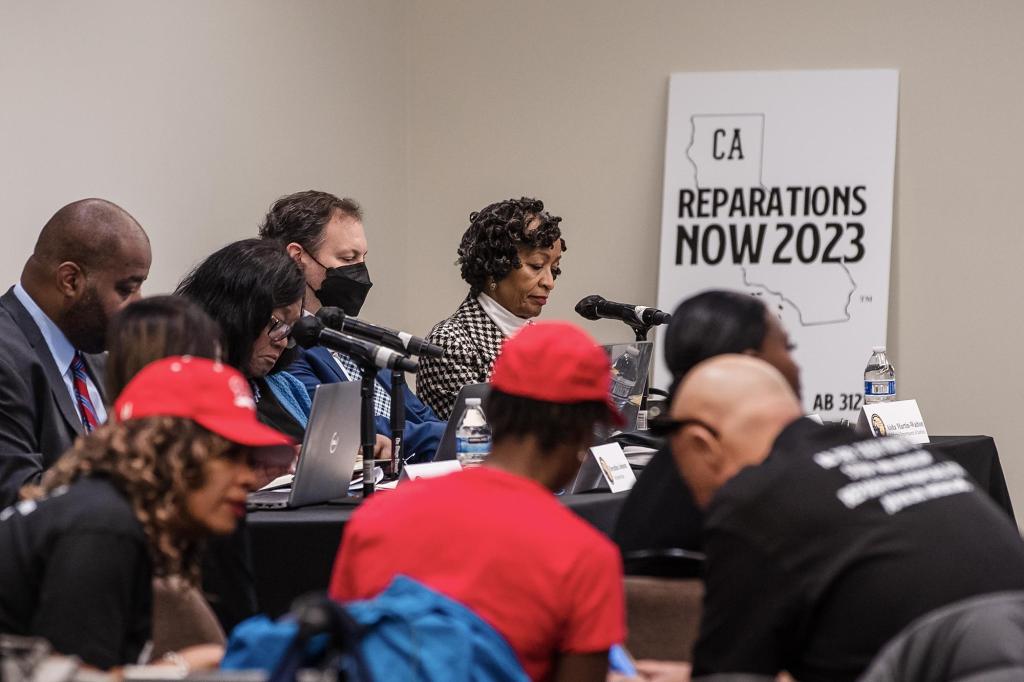
California became the center of the modern state-level reparations movement after creating its Task Force to Study and Develop Reparation Proposals for African Americans in 2020.
The task force did considerably more than recommend generic anti-poverty programs. Its final report documented slavery’s legacy alongside racial terror, political disenfranchisement, housing segregation, unequal education, environmental discrimination and other state-supported harms.
The task force also considered actual compensation.
A 2026 California Franchise Tax Board legislative analysis notes that the task force proposed several financial models, including payments for particular harms, cumulative compensation for eligible descendants who lived in California during defined periods and a possible initial “down-payment” approach. The task force recommended lineage-based eligibility tied to descendants of people enslaved in the United States or free Black Americans living here before the end of the nineteenth century.
That makes what happened afterward particularly important.
California has built portions of an administrative reparations structure without yet establishing a comprehensive system of direct monetary compensation. In 2025, the state created a Bureau for Descendants of American Slavery, which is tasked in part with developing a method for determining descendant eligibility and conducting education and outreach. The state also directed the California State University system to research methods for verifying descendant status.
Those steps may eventually make direct reparations easier to administer.
But they also illustrate the central dilemma: bureaucratic preparation is not payment.
A government can create an office. It can commission another report. It can establish a genealogy process. It can issue an apology. None of those acts, by themselves, transfer accumulated wealth back to the people whose families were prevented from accumulating it.
Reparations Cannot Become Another Name for Social Policy
This is where the debate becomes slippery.
Government officials frequently gravitate toward programs involving housing, education, health, business assistance or community redevelopment. Those policies can address racial inequality, but racial-equity policy and reparations are not automatically the same thing.
The distinction is relatively straightforward.
A social program generally asks: What does this population need now?
Reparations asks a different question: What harm did a government or institution cause, who suffered from it, and what is required to repair that specific injury?
Those questions can produce overlapping policies, but they are not interchangeable.
If a city historically seized Black property, compensation could include restoration of property or its equivalent value. If discriminatory lending policies prevented families from purchasing homes, housing assistance might be directly connected to the documented injury. If the government unlawfully deprived a group of wealth over generations, however, merely providing a job-training program would be a much weaker connection to the original loss.
Calling every program that disproportionately benefits Black residents “reparations” risks draining the term of meaning.
Evanston Demonstrates Both the Promise and the Problem
Evanston, Illinois, provides one of the most revealing experiments.
The city established what became the country’s most prominent municipal reparations program in response to documented housing discrimination. Its original model offered $25,000 benefits that could be used for home purchases, mortgage assistance or repairs.
That approach immediately generated criticism, including from some supporters of reparations, because the benefit was heavily restricted to housing. Renters could not necessarily use the assistance in ways that matched their own financial priorities.
The Urban Institute notes that roughly 65 percent of Black Evanston residents rented their homes, highlighting why a housing-restricted benefit could exclude or disadvantage many residents. Evanston subsequently expanded the program to permit direct cash payments.
That change is enormously important.
It demonstrates that the choice between programmatic reparations and direct compensation is not theoretical. Residents themselves may reasonably conclude that people receiving restitution should have considerable control over how that restitution is used.
By 2026, Evanston had distributed millions of dollars. A Justice Department court filing stated that more than $5 million had been distributed through unrestricted cash payments and housing-related financial assistance at the time described in the filing.
The Congressional Black Caucus has defended the program as a targeted response to Evanston’s documented history of housing discrimination between 1919 and 1969.
Yet Evanston is now also demonstrating another obstacle reparations programs face: litigation.
In June 2026, the Justice Department moved to intervene in a lawsuit challenging the city’s program, arguing that its race-conscious eligibility rules violate the Equal Protection Clause and the Fair Housing Act.
Whatever ultimately happens in court, Evanston exposes the difficult political environment surrounding direct reparative policies.
Cash Makes Politicians Confront the Actual Size of the Claim
There is another reason governments may prefer programs over direct payments: cash makes the financial question impossible to hide.
A $20 million neighborhood-development initiative can be presented as an investment.
A $20 million affordable-housing initiative can be incorporated into an existing agency.
A $20 million educational initiative can be dispersed through grants and institutions.
But write checks directly to eligible descendants and suddenly everyone begins calculating the total.
That is when the political temperature spikes.
Direct compensation forces lawmakers to answer questions they can postpone when discussing programs: Who qualifies? How much is owed? What historical period counts? Should the federal government bear the largest responsibility? Should states and municipalities compensate separately for their own documented actions?
Those are uncomfortable questions, but discomfort is not an argument against asking them.
The Wealth Gap Is Central to the Reparations Argument
Much of the case for monetary reparations concerns wealth precisely because many discriminatory policies were economic.
Enslavement extracted labor without corresponding wages.
After emancipation, Black Americans encountered land dispossession, racial terrorism, employment discrimination and exclusions from institutions capable of producing generational wealth.
During the twentieth century, federal, state and local policies helped shape segregated housing markets. Black families were frequently restricted from neighborhoods where property appreciated rapidly, while discriminatory lending practices limited access to conventional mortgages.
A government program offering financial counseling to descendants today might be beneficial.
But financial counseling is not equivalent to wealth that a family was legally or institutionally prevented from accumulating.
Teaching someone how to manage money does not replace money that was taken or opportunities deliberately denied.
Reparations Should Not Require Black Americans to Spend the Money the Way Government Prefers
There is also a philosophical issue hidden inside program-based reparations.
Restrictions imply that government should decide what recipients are permitted to do with compensation.
Imagine another type of successful claimant being told that a legal settlement could only be used for college tuition, mortgage payments or approved business expenses.
That would be unusual.
When courts award damages, plaintiffs generally receive money because the payment itself represents compensation for injury. The government does not usually insist that the recipient prove that every dollar will generate some socially preferred outcome.
Reparations advocates therefore have a reasonable argument that direct monetary compensation recognizes recipients as people capable of determining their own priorities.
One person may purchase a home.
Another may eliminate debt.
Another may invest.
Another may start a company.
Another may pay for education.
Another may build an emergency fund.
The same dollar could have radically different value depending on the household receiving it.
But Cash Alone Would Also Be Incomplete
There is an important counterargument.
If reparations consisted exclusively of checks while discriminatory structures remained untouched, the government could claim to have settled a historical debt without correcting policies that continue producing inequality.
That would also be inadequate.
The California task force’s enormous report illustrates why reparations proposals extend beyond slavery itself into housing, education, environmental policy, political rights and other fields.
A serious reparations framework could therefore include both individual compensation and institutional reform.
Direct payments could address identifiable economic injury and lost wealth.
Land restoration could address documented property seizure.
Housing remedies could address discriminatory government housing policies.
Educational initiatives could address specific state-supported exclusion.
Business and lending reforms could eliminate continuing barriers.
Historical preservation could acknowledge communities that were destroyed or displaced.
Those policies need not compete with cash payments.
The problem arises when governments say the programs themselves are the payment.
There Is a Difference Between Reparations and Helping Poor People
Another recurring political maneuver is to replace a lineage-based reparations discussion with broad economic assistance for disadvantaged populations.
Universal programs can be good public policy. They can also disproportionately help Black Americans because Black households are overrepresented among populations harmed by certain economic inequalities.
But universal poverty policy cannot logically settle a reparations claim.
A struggling white household receiving housing assistance may deserve that assistance.
A recent immigrant family may deserve educational assistance.
A low-income Black household may deserve both.
Yet reparations concerns a specific historical relationship between identified institutions and people harmed by those institutions.
Replacing reparations with a generic anti-poverty program changes the subject from liability to need.
Those are different concepts.
The Federal Government Remains the Elephant in the Room
Local reparations experiments receive considerable attention, but American slavery and subsequent racial discrimination were not merely municipal issues.
Federal law protected slavery for much of the country’s history. Federal institutions subsequently influenced housing, lending, infrastructure, veterans’ benefits and numerous other areas that helped determine which families accumulated assets.
That is why the federal reparations debate has historically centered on establishing a national process capable of examining the country’s obligations comprehensively.
Local programs can repair local harms.
States can repair state harms.
But neither can substitute completely for a federal accounting if the claim involves federal policy.
Without that distinction, America risks creating hundreds of disconnected local programs while avoiding the largest question sitting at the center of the debate.
A Reparations Program Should Have a Test
Before government officials label something reparations, Black Americans should be able to ask several basic questions.
What specific government action is being repaired?
Who was harmed by it?
How were eligible descendants identified?
What economic or social loss resulted?
How was the value of the remedy determined?
Is this program additional compensation, or is government claiming that it settles the debt?
Those questions would separate genuine reparative policy from ordinary programs wearing a new political label.
The Word Cannot Be Allowed to Become Meaningless
The greatest danger facing the reparations movement may not be an explicit declaration that Black Americans deserve nothing.
It may be a political compromise in which everyone agrees to use the word reparations while quietly abandoning the substance behind it.
A commission becomes reparations.
An apology becomes reparations.
A genealogy database becomes reparations.
A small-business program becomes reparations.
A home-repair grant becomes reparations.
A diversity initiative becomes reparations.
Eventually politicians can announce that reparations have been delivered while descendants look around and discover that almost no wealth has actually changed hands.
That would not resolve the argument.
It would merely rename it.
Government programs can absolutely form part of a comprehensive reparations package. Some may even constitute the most appropriate remedy for particular government abuses. But when measurable economic losses are involved, policymakers should be prepared to explain why direct compensation is absent.
The strongest reparations framework would not force Black Americans to choose between structural reform and economic restitution.
It would recognize that repair can require both.
—Barrington Williams, B1Daily






Leave a Reply