—Michael Lyles, B1Daily
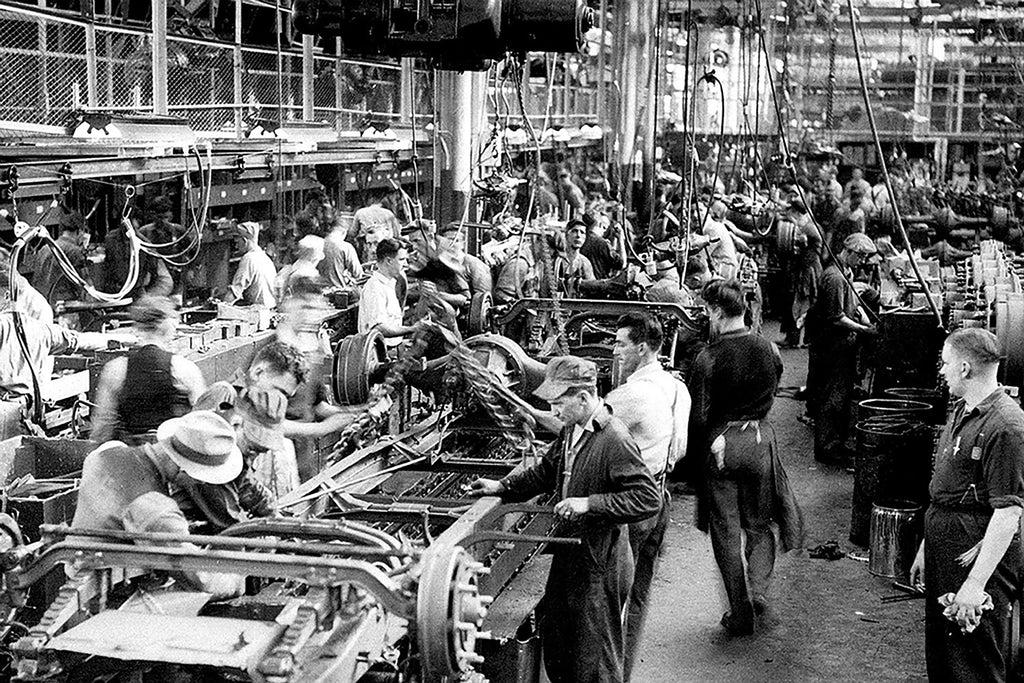
Before abandoned factories and population loss became shorthand for Detroit, the city was one of America’s great industrial powerhouses. Detroit’s population approached two million people by 1950, powered by automobile manufacturing, wartime production and generations of workers who came looking for something increasingly difficult to find today: a factory job capable of supporting a family.

The automobile industry was Detroit’s economic engine. Ford, General Motors, Chrysler and their enormous networks of suppliers created employment throughout the region. After World War II, Detroit’s industrial economy initially remained strong, and wages rose substantially during the following decade.
Black Americans were an important part of that workforce. The Great Migration brought thousands of Black Southerners to Detroit seeking automobile jobs and an escape from Jim Crow. But Detroit was no racial paradise. Black workers encountered employment discrimination, segregated housing and barriers to better factory positions. Ford was particularly important because it employed large numbers of Black workers when other manufacturers were less willing to do so.
Yet Black Detroit also constructed an economy of its own. Paradise Valley, beside the predominantly Black neighborhood of Black Bottom, contained more than 300 Black-owned businesses, including restaurants, drugstores, beauty salons, theaters and nightclubs.
Then the economic geography changed.
Factories increasingly decentralized after World War II, shifting production away from the city. The east side alone lost more than 70,000 jobs during the decade following the war, while suburbanization and population loss weakened Detroit’s tax base. Between 1950 and 1960, the city lost nearly 20 percent of its population.

Black workers were particularly vulnerable because many were arriving in search of industrial opportunities just as those opportunities were beginning to disappear. Highways, housing discrimination, suburbanization and the destruction of Black Bottom and Paradise Valley compounded the economic damage.
Detroit’s decline therefore cannot be reduced to a simplistic story about crime, bad government or the 1967 uprising. The economic foundations were already shifting years earlier.
Before deindustrialization, Detroit demonstrated what mass industrial employment could build: neighborhoods, union wages, businesses and pathways into the middle class. Its later collapse demonstrated the opposite.
When the factories leave, they do not simply take machines with them.
They take paychecks, customers, tax revenue and generations of economic stability.
—Michael Lyles, B1Daily






Leave a Reply