—Kerry Hill, B1Daily
A new battle over Black political representation is unfolding, and this time the fight is not simply about whether states are diluting Black voting power. Courts are increasingly confronting a more difficult question: when does creating a majority-Black congressional district to protect minority voting strength itself become unconstitutional racial gerrymandering?

That conflict exploded in Louisiana v. Callais. Louisiana’s 2022 congressional map contained only one majority-Black district among six seats. After a federal court found that the map likely violated Section 2 of the Voting Rights Act, lawmakers created a second majority-Black district. But opponents challenged the new district because race played a major role in drawing it.
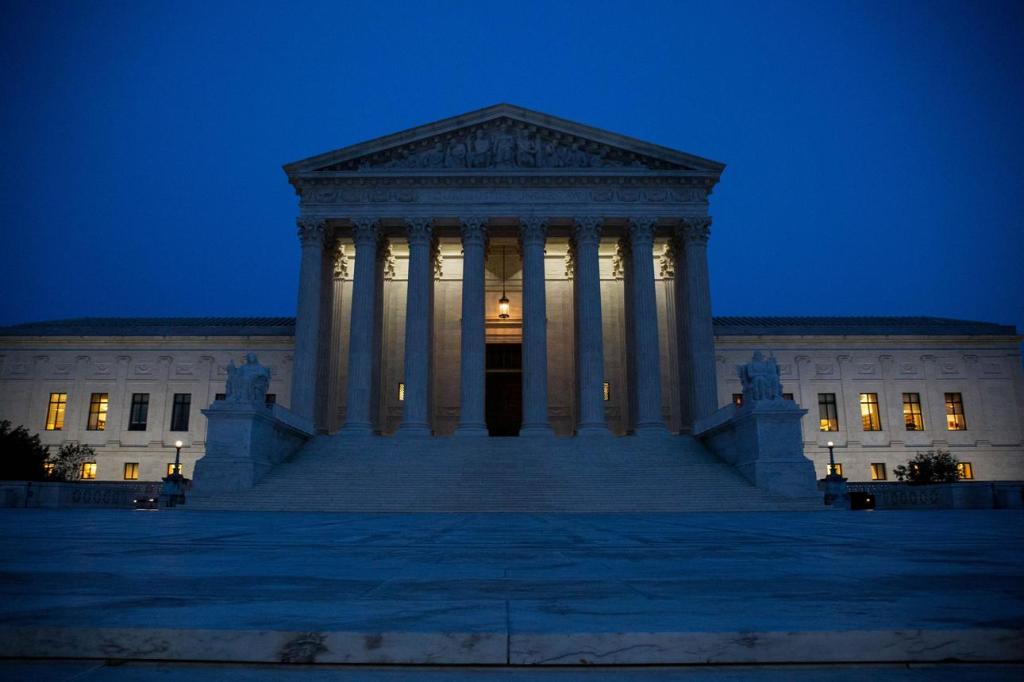
In April 2026, the Supreme Court sided with the challengers. The Court held that the Voting Rights Act did not require Louisiana to create the additional majority-minority district under the circumstances and therefore could not justify Louisiana’s race-conscious map.
The decision represents a major shift from the Court’s 2023 ruling in Allen v. Milligan, where the justices upheld a Voting Rights Act challenge to Alabama’s congressional map. That case centered on whether Black voters had less opportunity to elect representatives of their choice when Alabama maintained only one majority-Black district despite evidence that two reasonably configured districts could be drawn.

After Callais, however, plaintiffs face a tougher standard. In a June 2026 Alabama case, the Supreme Court emphasized that challengers must account for political affiliation and demonstrate racial bloc voting that cannot simply be explained by partisan preference.
That distinction could have enormous consequences because race and party are closely intertwined in many Southern states. Black voters overwhelmingly supporting Democratic candidates can make it harder to determine whether a map disadvantages them because they are Black, because they are Democrats, or some combination of the two.
Supporters of tighter restrictions on race-conscious redistricting argue that the Constitution should not permit governments to sort citizens into districts primarily according to race. Critics counter that ignoring race can make it easier to “crack” Black communities across several districts or “pack” them into a small number of seats, weakening their practical ability to elect preferred candidates. Louisiana’s original map was challenged on precisely those grounds.
That leaves majority-Black congressional districts caught between two constitutional pressures: consider race too aggressively and a district may be struck down as a racial gerrymander; consider it too little and a map may fail to protect minority voting power.
The stakes extend far beyond lines on a map. Congressional districts determine whether geographically concentrated Black communities can translate population into political representation.
The next phase of the voting-rights struggle may therefore revolve around a deceptively simple question:
How do you protect Black voting power when the law increasingly restricts the use of race in designing the districts meant to protect it?
—Kerry Hill, B1Daily






Leave a Reply