—Sylvester Loving, B1Daily
Franklin D. Roosevelt’s New Deal is remembered as the massive Democratic response to the Great Depression, creating jobs, financial protections and a stronger federal safety net. But for many Black Americans, that promise arrived with enormous holes.
Social Security Left Millions Outside
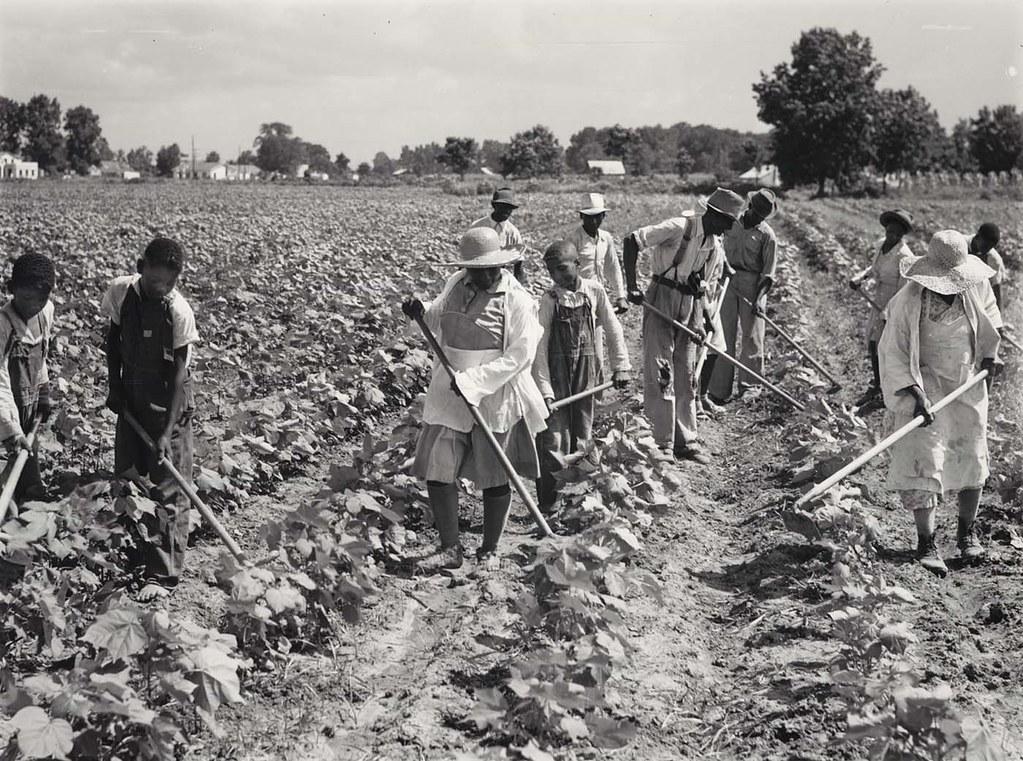
The original Social Security Act of 1935 excluded agricultural and domestic workers from old-age insurance coverage. Those exclusions had an enormous racial impact because roughly 65% of employed African Americans worked in agriculture or domestic service, according to 1930 Census figures examined by the Social Security Administration.
The motivation behind those exclusions remains debated. Some historians argue that Southern Democrats seeking to preserve the racial and economic order influenced New Deal policy. However, a detailed Social Security Administration historical review concluded that the specific agricultural and domestic-worker exclusions originated primarily from administrative and tax-collection concerns rather than a congressional effort deliberately designed to exclude Black workers.
Whatever the motivation, the effect was dramatically unequal: millions of workers, including a disproportionate share of Black workers, initially stood outside one of America’s most important wealth-protection programs.
Housing Created Another Divide
The New Deal’s housing revolution also produced deeply unequal results.
Federal intervention made long-term mortgages more accessible and helped transform homeownership into one of America’s primary mechanisms for building generational wealth. But discriminatory lending, segregation and federal housing policies helped determine which neighborhoods received access to favorable financing.
Black families were frequently prevented from purchasing homes in communities where property values would later soar. That meant many white households gained an appreciating asset that could eventually be transferred to their children while many Black households remained renters or were confined to segregated housing markets.
The consequences did not disappear when the New Deal ended.
Black Workers Faced a Different New Deal
New Deal employment programs provided desperately needed jobs, but they operated within a country where Jim Crow remained deeply entrenched.
Roosevelt faced a Democratic coalition containing powerful Southern segregationists in Congress. Aggressively confronting racial discrimination risked fracturing the coalition needed to pass other New Deal legislation.
That political calculation had consequences.
Roosevelt notably declined to strongly support federal anti-lynching legislation despite pressure from Black civil-rights organizations. His administration simultaneously included Black advisers and programs that materially helped Black families, producing a legacy filled with contradictions rather than a simple record of inclusion or exclusion.
The Wealth Consequences Lasted Generations
The New Deal helped redefine the relationship between Americans and their federal government. Social insurance, labor protections, housing programs and public employment created foundations upon which millions of families built greater economic security.
Black Americans benefited from portions of that transformation.
But they frequently did so later, less completely or under discriminatory conditions.
That distinction matters when discussing today’s racial wealth gap. When government helps one population obtain homes, employment protections and retirement security more effectively than another, the difference compounds across generations.
The New Deal did not create every economic inequality between Black and white America, nor did it exclude Black Americans from every program.
But its benefits were distributed through an America still governed by segregation.
The New Deal expanded America’s economic safety net, but Black Americans too often discovered that the net contained holes exactly where they were standing.
—Sylvester Loving, B1Daily






Leave a Reply