—Josh Allen, B1Daily
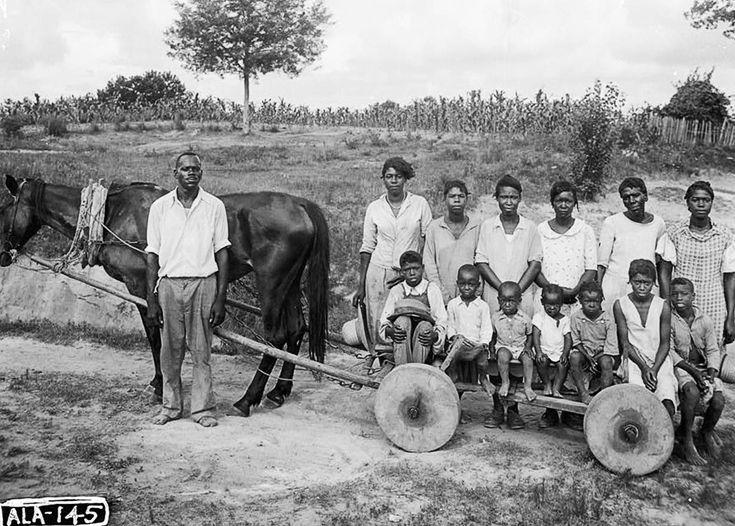
At the beginning of the twentieth century, Black Americans had accomplished something extraordinary despite emerging only decades earlier from slavery. Black farmers operated roughly 16 million acres of farmland by 1910, according to USDA historical data. Over the following century, much of that land disappeared from Black ownership and operation.

The collapse was not caused by a single policy. It came through a grinding combination of discrimination, violence, unequal access to federal prog
rams, heirs’ property problems, foreclosure and economic pressure.
The Peak of Black Landownership
After emancipation, acquiring land represented independence. Thousands of formerly enslaved people and their descendants purchased farms throughout the South. By 1920, there were approximately 925,000 Black-operated farms, according to USDA historical census data.
Land meant more than agricultural income. A farm could be passed to children, borrowed against, expanded or sold. It represented an asset capable of producing generational wealth.
But holding onto that land became increasingly difficult.
Discrimination Inside the Farm System
Black farmers repeatedly alleged discrimination by the USDA and local agricultural institutions responsible for distributing loans and assistance.
The federal government eventually acknowledged serious problems. The USDA’s own Civil Rights Action Team reported in 1997 that minority farmers had experienced discrimination in program delivery and participation on county committees.
The consequences could be devastating. A farmer who received a loan too late to plant could lose a crop. A farmer denied credit might be unable to purchase equipment or survive a bad season. Financial discrimination could therefore become land loss.
These complaints ultimately contributed to Pigford v. Glickman, the landmark class-action settlement involving Black farmers who alleged racial discrimination in USDA farm programs.
Heirs’ Property Became Another Trap
Another major vulnerability involved heirs’ property.
When landowners died without wills, property could pass jointly to numerous descendants. After several generations, dozens of relatives might possess fractional interests in a single farm.

Historically, partition laws sometimes allowed an outside investor to purchase one heir’s small interest and then seek a court-ordered sale of the entire property. The USDA identifies heirs’ property as an important issue affecting land retention and access to agricultural programs.
Land accumulated over generations could therefore disappear through a legal proceeding even when most family members wanted to keep it.
The Loss Was Also a Wealth Transfer
Black farmland loss cannot be measured only in acres.
Imagine agricultural property that remained within the same family from 1910 through today. That land could appreciate, generate crops, support businesses, provide collateral and eventually pass to grandchildren and great-grandchildren.
Losing the farm meant losing all those future possibilities.
Black farmers also faced the same enormous economic forces that pushed millions of small American farmers out of agriculture, including mechanization, consolidation and migration toward cities. But racial discrimination created additional obstacles for Black farmers attempting to survive those changes.
That distinction matters. Not every lost Black farm was stolen, and not every decline resulted from racism. But the documented history makes it equally inaccurate to describe the disappearance simply as ordinary market evolution.
What Disappeared With the Land
Today, Black farmers represent only a small fraction of America’s agricultural producers. The dramatic decline from the enormous Black agricultural presence of the early twentieth century represents one of the country’s most consequential and overlooked stories of lost wealth.
The families affected did not merely lose dirt.
They lost homes, businesses, collateral, inheritance and appreciating assets.
America frequently discusses the racial wealth gap in terms of income and financial literacy. The history of Black farmers points toward something deeper.
You cannot understand today’s wealth gap without examining what happened to the property previous generations managed to acquire.
—Josh Allen, B1Daily






Leave a Reply