—Barrington Williams, B1Daily
Joe Biden’s disastrous exit from the 2024 presidential race was supposed to settle one question inside the Democratic Party: America’s political gerontocracy had finally reached its limit.
Yet two years later, Democrats are still fighting over when experience becomes entrenchment.

That argument is playing out dramatically in Massachusetts, where Democratic Sen. Ed Markey, 80, is seeking another six-year term against 47-year-old Rep. Seth Moulton. Markey argues that ideas and effectiveness matter more than someone’s birth certificate. Moulton has made generational change central to his challenge, arguing that Democrats need “new ideas and a new playbook.”
The contest raises a much bigger question heading toward 2028: Did Democrats actually learn anything from Biden’s age crisis?
Biden Changed the Politics of Age
Biden was 81 when he abandoned his reelection campaign in 2024 after months of concerns about his age and fitness. Whatever Democrats think of his presidency, the political lesson was brutal.
Age stopped being an abstract concern and became an issue capable of consuming a presidential campaign.
The problem also extends beyond Biden. Democrats have faced years of criticism over aging leaders remaining in powerful positions, including the late Sen. Dianne Feinstein and longtime congressional leaders. Markey’s current campaign shows the tension remains unresolved.
That doesn’t mean an older politician is automatically incapable of governing. Age alone tells voters relatively little about an individual’s health, judgment or effectiveness.
But presidential campaigns are also about perception.
After Biden, Democrats would face an enormous political burden trying to convince voters to elect another candidate approaching 80.
The 2028 Bench Looks Very Different
There is another reason an octogenarian Democratic nominee appears less likely: Democrats don’t need one.
The emerging 2028 field contains politicians from several younger generations.

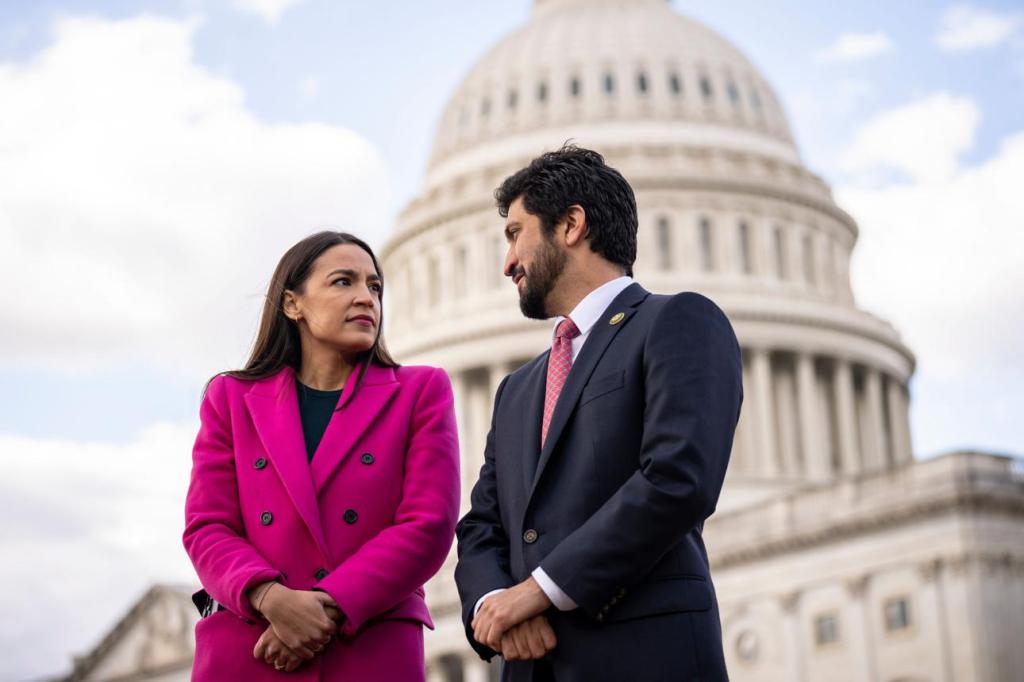
Georgia Sen. Jon Ossoff is 39. Rep. Alexandria Ocasio-Cortez is 36. Other frequently discussed possibilities include Pete Buttigieg, Wes Moore, Josh Shapiro, Andy Beshear, Gavin Newsom, Cory Booker and Chris Murphy. No major candidate has formally secured the field, and 2028 remains politically distant, but the potential bench is considerably younger than the leadership class that dominated Washington during the Biden era.
Even Rahm Emanuel, who would be considered an older candidate at 68 in 2028, has proposed a mandatory retirement age of 75 for federal officials.
The conversation has shifted so dramatically that some Democrats are now debating whether candidates such as Ocasio-Cortez and Ossoff might actually be too young for the presidency.
That is quite a reversal.
Younger Democratic Voters Are Sending a Message
The generational divide is visible in polling.
The Yale Youth Poll’s spring 2026 survey found Democrats under 35 strongly preferred Ocasio-Cortez, who received 32% among that group. Democrats 65 and older instead favored Newsom at 28%, followed by Buttigieg at 19%.
There are signs of a similar generational struggle among Black Democrats. Recent reporting has found younger Black voters increasingly willing to break from candidates backed by older Black political institutions, even though younger Black voters still lean Democratic overall.
That matters because the Democrats’ newly approved 2028 primary calendar puts South Carolina first, giving its heavily Black Democratic electorate enormous influence over the nomination. Nevada follows, with New Hampshire, New Mexico, Michigan and Virginia rounding out the early contests.
A candidate will therefore need to bridge several generations of Democratic voters rather than simply becoming the favorite of young progressives online.
Age Won’t Be the Only Question
Democrats could overlearn the Biden lesson.
Replacing an 80-year-old politician with a 40-year-old politician does not automatically produce better policies, stronger leadership or a winning presidential candidate.
The 2028 nominee will still have to demonstrate economic credibility, communicate with working-class voters, appeal to Black and Latino constituencies, survive ideological fights between progressives and moderates and convince voters that he or she can actually govern.
That is why the Markey-Moulton fight is instructive.
Markey’s supporters argue that his progressive record matters more than his age. Moulton argues that longevity itself can become an obstacle to political renewal. Both arguments represent genuine factions within the Democratic coalition.
But the presidency magnifies the issue enormously.
After watching age dominate Biden’s final presidential campaign, Democratic primary voters may be reluctant to voluntarily recreate the same vulnerability.
The party therefore seems more likely to enter 2028 asking a very different question.
Not “Who has been here the longest?”
But “Who is ready to lead the party after the Biden generation is gone?”
The answer could come from the progressive left, the moderate wing or somewhere between them. What appears increasingly difficult to imagine is Democrats enthusiastically returning to the same age problem that helped define their 2024 collapse.
—Barrington Williams, B1Daily




Leave a Reply