—Sylvester Loving, B1Daily
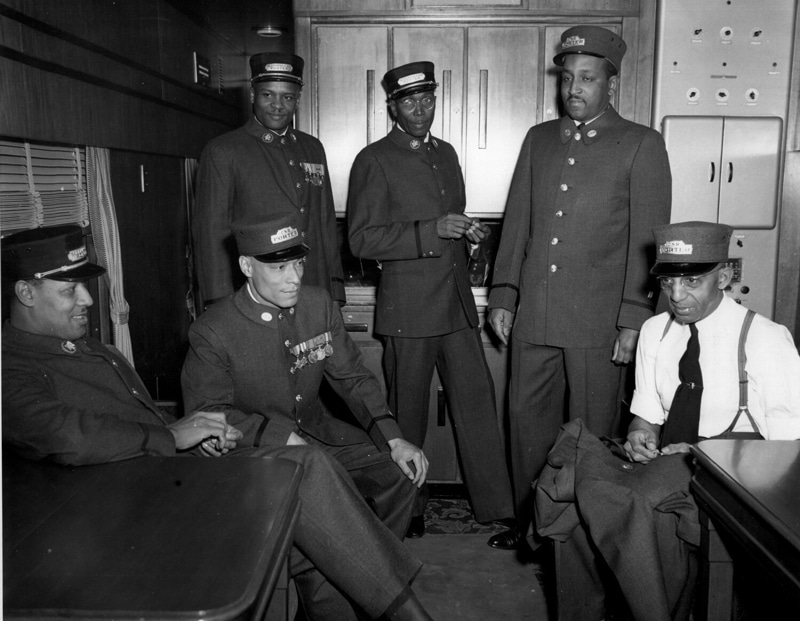
The trains rolled through the American night carrying businessmen, politicians, industrialists and wealthy travelers between the great cities of a growing nation.
Inside the sleeping cars, Black men worked.

They carried luggage. Shined shoes. Prepared berths. Answered bells. Served passengers. Smiled through insults. Worked exhausting schedules and depended heavily upon tips to supplement their wages.
Some passengers did not even bother learning their names.
They simply called them “George.”
The insult came from George Pullman, founder of the company whose sleeping cars had become synonymous with luxury rail travel. Calling a Black porter “George” reduced a man with a family, ambitions and a name of his own into an extension of the company he served. The Library of Congress notes that porters endured long hours, low wages and degrading treatment, while sometimes having to pay expenses associated with their work.
Yet beneath the polished shoes, crisp uniforms and practiced courtesy, something was stirring.
The porters were preparing for war.
Not with rifles.
With organization.
And they were about to find their general.
Enter A. Philip Randolph
A. Philip Randolph was not a Pullman porter.
That was precisely what made him dangerous.
Pullman could intimidate its employees. It could threaten their livelihoods. It could make an organizer wonder whether attending one union meeting might cost him the paycheck feeding his children.
Randolph stood outside that machinery.
A socialist, journalist, labor activist and formidable public speaker, Randolph had co-founded The Messenger, where he advocated Black political and economic power. In 1925, Pullman porter Ashley Totten approached him about the grievances of the men working aboard the sleeping cars.
On August 25, 1925, more than 500 porters gathered in New York and launched the Brotherhood of Sleeping Car Porters, electing Randolph as their leader.
Their demand was revolutionary in its simplicity:
Recognize us as workers with the right to bargain collectively.
Pullman refused.
And so began a struggle that would last twelve years.
The Empire Strikes Back
The Brotherhood wasn’t confronting some insignificant employer.
Pullman was the nation’s largest employer of African Americans, and porters represented about 44 percent of its rail-car operating workforce. Pullman employment also carried considerable prestige within Black communities despite the discrimination workers endured.
That gave the corporation enormous leverage.
The company resisted independent unionization, and workers supporting the Brotherhood risked retaliation. Pullman’s influence also extended into Black civic institutions and newspapers through advertising and financial relationships. Some Black community leaders opposed the union because they feared antagonizing a company that provided thousands of Black men with employment.
Randolph therefore faced enemies outside the union and fear within it.
And then came catastrophe.
The Great Depression devastated the country.
BSCP membership, which had reached approximately 7,300 in 1927, collapsed to roughly 2,000 by 1930 as workers became terrified of doing anything that might jeopardize increasingly precious jobs. Some observers effectively declared Randolph’s organizing campaign dead.
Pullman had money.
Pullman had jobs.
Pullman had influence.
Randolph had a shrinking union.
But Randolph possessed something corporations sometimes underestimate because it doesn’t appear neatly on a balance sheet.
He could wait.
The Brotherhood Refused to Die
The organization survived because the struggle extended far beyond Randolph himself.
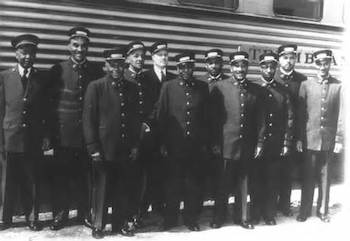
Porters organized across railroad hubs. Figures including Milton P. Webster, C. L. Dellums, Ashley Totten and others helped build the movement nationally. Women also became indispensable to the campaign.
Rosina Corrothers Tucker and other women organized families, distributed union literature and visited homes, sometimes operating where male Pullman employees faced greater company scrutiny. The women’s auxiliaries became part of the infrastructure keeping the Brotherhood alive.
This was becoming more than a union.
It was becoming a network.
Porters traveled across America every day. They carried newspapers, information and political ideas between Black communities separated by hundreds of miles.
And Randolph kept pushing.
Year after year.
No contract.
Keep organizing.
Membership falls.
Keep organizing.
Company refuses recognition.
Keep organizing.
Depression.
Keep organizing.
That persistence eventually collided with something Pullman could not control.
The law began changing.
Washington Changes the Battlefield
Franklin Roosevelt’s New Deal dramatically strengthened organized labor.
Federal legislation expanded protections for workers seeking collective bargaining, while a 1934 amendment to the Railway Labor Act weakened the kind of company-controlled representation that had frustrated independent organizing.
Suddenly Pullman’s fortress had cracks.
Then came the vote.
In 1935, Pullman employees voted 5,931 to 1,422 to recognize the Brotherhood as their legal bargaining representative.
Imagine that moment.
Men who had spent years fearing that union membership could cost them their livelihoods had spoken.
Not hundreds.
Thousands.
Pullman could no longer pretend Randolph represented an insignificant band of agitators.
The porters had chosen their Brotherhood.
Now the Brotherhood wanted its contract.
August 25, 1937
Twelve years to the day after the Brotherhood was organized, the impossible finally happened.
On August 25, 1937, the Pullman Company signed a collective bargaining agreement with the Brotherhood of Sleeping Car Porters.
The Library of Congress identifies it as the first collective bargaining agreement between a Black union and a major American corporation.
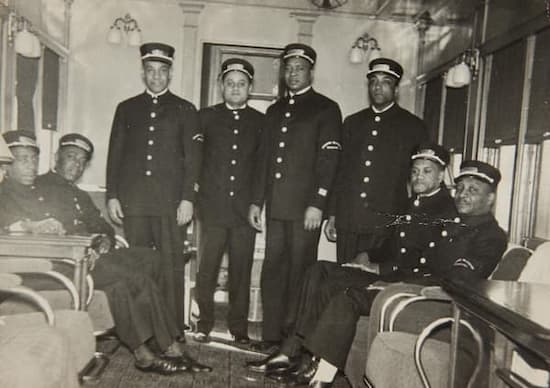
The contract brought higher wages, reduced hours, improved job security and a formal grievance procedure protecting workers’ rights. National Park Service materials describe the union victory as establishing a 240-hour work month and greater protections for rest and compensation.
The men Pullman once expected to survive on obedience and tips now possessed something vastly more powerful.
A contract.
A piece of paper backed by collective power.
The company could negotiate with them.
It could disagree with them.
It could fight them across the bargaining table.
But it could no longer pretend they weren’t there.
The Victory Was Bigger Than Pullman
The Brotherhood’s victory echoed far beyond the railroad tracks.
At a time when many white unions excluded Black workers, Black railroad employees had built an organization capable of confronting one of America’s most powerful corporations and winning.
The BSCP demonstrated that civil rights and economic rights were not separate wars.
A man could possess the theoretical right to vote and still be economically powerless at work.
Randolph understood that freedom required leverage.
And organized workers had leverage.
The Brotherhood subsequently became an important institution in the broader civil-rights movement. Randolph would take the lessons learned fighting Pullman into national politics. In 1941, his threat to organize a massive March on Washington helped pressure President Franklin Roosevelt into issuing an executive order prohibiting discrimination in defense-industry and federal-government employment. Years later, Randolph’s pressure also contributed to President Harry Truman’s desegregation of the armed forces.
The battlefield had expanded.
Pullman had taught Randolph something valuable.
Power rarely surrenders because someone politely explains that the system is unfair. Power moves when refusing to move becomes more expensive.
They Had Names
Perhaps that is the most fitting way to remember the Pullman porters.
Passengers called them “George.”
History remembers something else.
Ashley Totten.
Milton P. Webster.
C. L. Dellums.
Rosina Corrothers Tucker.
A. Philip Randolph.
And thousands of porters whose individual names may never appear in textbooks but whose dues, meetings, organizing, courage and stubborn refusal to surrender carried the Brotherhood through twelve brutal years.
They worked aboard trains they didn’t own for a corporation they didn’t control in an America that frequently denied Black workers membership in the very labor organizations supposedly created to protect working people.
So they built their own.
Pullman had the railroad cars.
Pullman had the money.
Pullman had the corporate machinery.
But the porters had one another.
And on August 25, 1937, after twelve years of struggle, that was finally enough.
—Sylvester Loving, B1Daily



Leave a Reply