—Barrington Williams, B1Daily
Washington gets the cameras. Governors get the national profiles. Presidential elections consume billions of dollars and years of political oxygen.
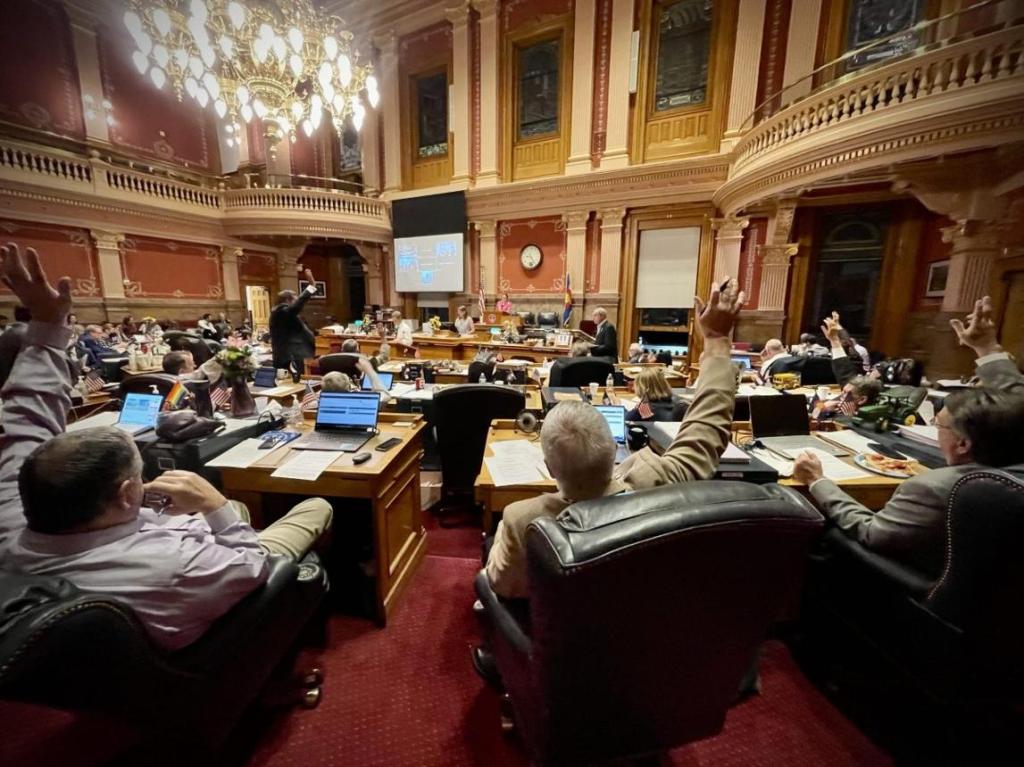
But some of the most consequential political battles in America are moving somewhere considerably less glamorous: state capitols.

In November 2026, voters will choose 6,139 state legislators across 46 states, representing more than 83% of all state legislative seats nationwide. Those elections will determine who writes state laws, controls legislative chambers and, in many states, holds enormous influence over the rules governing future elections.
The political future of the United States may therefore be decided long before Americans cast their next presidential ballots.
State Legislatures Are Becoming America’s Policy Laboratories
The decline of congressional productivity has made state governments increasingly important.
When Washington cannot agree on abortion, voting rules, housing, education, labor policy, firearms, healthcare or environmental regulation, state lawmakers frequently act instead.
The result is an America in which crossing a state line can increasingly mean entering a substantially different legal system.
Abortion provides perhaps the clearest example. Following the Supreme Court’s Dobbs decision, state legislatures and state constitutions became central battlegrounds over reproductive policy. In 2026 alone, lawmakers in numerous states have introduced additional abortion-related restrictions, while other states have pursued constitutional protections.
Elections themselves are following the same pattern. According to the National Conference of State Legislatures, state lawmakers introduced more than 1,800 election-administration bills in 2026, with hundreds enacted or adopted.

That is not political background noise.
Those laws determine how Americans participate in democracy.
The Real Prize Is the Map
Then there is redistricting.
State legislatures frequently have enormous influence over the congressional boundaries determining who gets elected to Washington.
The traditional arrangement was relatively predictable: conduct the census every ten years, redraw districts and fight over the maps.
That system is breaking down.
President Donald Trump’s push for Republican-controlled states to redraw congressional districts before the 2026 midterms triggered a nationwide redistricting arms race. Democratic-controlled states responded with efforts of their own. Roughly one-third of states considered revisiting congressional maps during the current cycle.
The Supreme Court’s April 2026 decision weakening an important Voting Rights Act protection raised the stakes further, potentially giving state lawmakers greater latitude to dismantle or restructure districts containing large Black and Latino populations.
Suddenly, winning a state legislative chamber isn’t merely about passing state laws.
It can help determine who controls Congress.
Black Political Power Is Particularly Vulnerable
For Black voters, this shift deserves special attention.
Majority-Black congressional and legislative districts have historically provided Black communities with opportunities to elect candidates of their choice.
But those districts depend heavily upon how political boundaries are constructed.
Move several predominantly Black neighborhoods from one district into another and the political consequences can be enormous.
The Supreme Court’s recent Voting Rights Act decision has already affected litigation involving Black voters in Mississippi and Native American voters in North Dakota, while Georgia lawmakers have considered new state legislative districts following the ruling.
That means arguments over Black political representation increasingly lead directly back to state capitols.
A presidential candidate can win millions of Black votes.
A governor can make national headlines.
But a state legislature can help determine which congressional districts Black voters live in, which election rules they operate under and how much political influence their communities possess.
Democrats Learned This Lesson the Hard Way
For years, national Democrats concentrated enormous attention and money on presidential and congressional races while Republicans built formidable state-level organizations.
Now Democrats increasingly recognize the strategic cost.
The current redistricting fight has made statehouse control a national priority. Democrats are targeting legislative chambers partly because controlling state governments could give them additional power over maps ahead of the 2028 presidential election and eventually the post-2030 census redistricting cycle.
The irony is difficult to miss.
Political activists routinely spend two years obsessing over who will occupy the White House while paying little attention to candidates running for state senate a few miles away.
Yet that obscure state senator may eventually cast a vote determining the boundaries of several congressional districts.
2030 Is Already Coming
This is where the battle becomes even bigger.
The 2030 Census will trigger another nationwide redistricting cycle.
The politicians elected during the next several election cycles could therefore help determine who controls the machinery when those maps are drawn.
NCSL is already tracking the election years of legislators and governors who could be in office during the 2030 redistricting process.
Smart political organizations are thinking several elections ahead.
Winning the presidency gives a party the White House for four years.
Winning enough state governments before redistricting can help shape political representation for an entire decade.
The Most Important Race You Ignore
None of this means presidential elections have become irrelevant. Presidents appoint judges, direct federal agencies, conduct foreign policy and wield enormous executive authority.
Congress remains enormously powerful as well.
But America’s political system was deliberately divided between federal and state governments. That division is becoming increasingly visible as states challenge federal authority and pursue dramatically different political agendas.
The next era of American politics may therefore be fought simultaneously on two levels.
One battle will happen on television between presidential candidates.
The other will happen quietly in hundreds of state legislative districts most Americans cannot name.
And the second battle may determine the rules governing the first.
—Barrington Williams, B1Daily





Leave a Reply