—Barrington Williams, B1Daily
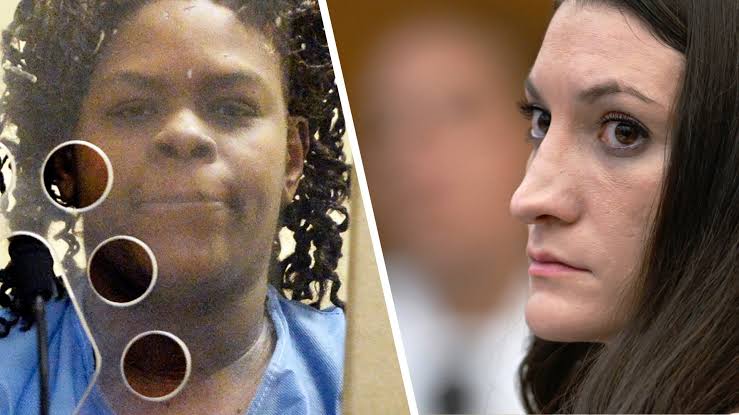
The Lindsay Clancy trial has become a national conversation about motherhood, mental illness, postpartum psychosis and criminal responsibility. But there is another conversation Massachusetts should be having, one made considerably harder to ignore by the record of the very judge presiding over Clancy’s case.
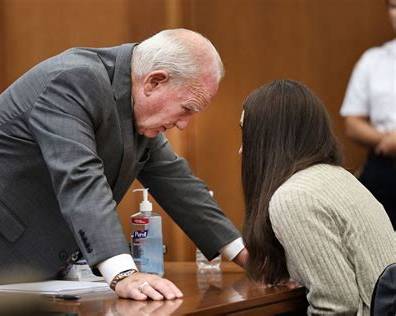
His name is Judge William F. Sullivan.
And only four years ago, Sullivan presided over the remarkably similar prosecution of Latarsha Sanders, a Black mother accused of killing her two young sons while suffering from severe psychosis.
The comparison is uncomfortable.
It should be.
Because Sanders was convicted and sentenced to two concurrent terms of life without parole after a trial in which Sullivan prevented jurors from seeing crucial psychiatric evidence supporting her insanity defense. Massachusetts’ highest court has now unanimously ruled that Sullivan’s decision was a prejudicial error serious enough to deprive Sanders of a fair trial and require a new one.
Meanwhile, in Sullivan’s courtroom today, Lindsay Clancy’s mental illness has occupied center stage in an extraordinarily lengthy trial, followed by a jury deliberation stretching into a seventh day before the case ended in a mistrial.
Black Americans have every reason to look at those two cases and ask:
Where was all this patience when the mother was Black?
Her Name Is Latarsha Sanders
Sanders’ case should be receiving far more attention.
In February 2018, Sanders killed her sons, 8-year-old Edson “Marlon” Brito and 5-year-old La’Son Brito. She did not dispute committing the killings.
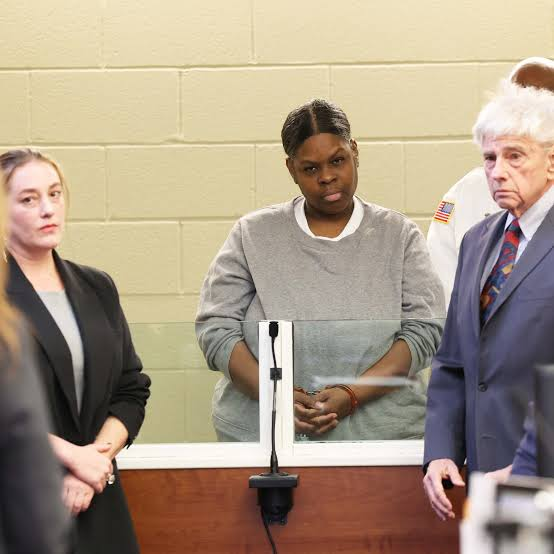
Neither does Clancy.
Sanders’ defense instead argued that she was suffering from severe mental illness and therefore lacked criminal responsibility.
So does Clancy’s.
Sanders’ expert concluded that she had been “grossly psychotic” when she killed her children and diagnosed her with schizophrenia-spectrum and other psychotic disorders. A psychologist retained by the Commonwealth itself concluded that Sanders had a severe mental illness and was likely experiencing symptoms around the time of the killings.
Those are not trivial similarities.
Yet during Sanders’ 2022 trial, Sullivan excluded psychiatric treatment records that her defense wanted admitted as evidence. Those records documented her mental-health treatment and diagnoses after her arrest and formed part of the medical foundation underlying her defense.
The jury convicted Sanders after approximately four hours of deliberation. Sullivan then imposed the mandatory sentence: life without parole on each murder count, running concurrently.
Case closed.
Except it wasn’t.
Massachusetts’ Highest Court Says Sanders Didn’t Get a Fair Trial
On August 6, 2026, the Massachusetts Supreme Judicial Court unanimously vacated Sanders’ murder convictions.
Why?
Because Judge Sullivan got a critical evidentiary ruling wrong.
The SJC concluded that excluding Sanders’ relevant psychiatric records was prejudicial error and that the exclusion improperly stripped her only defense of its medical foundation. The court ordered a new trial.
Read that again.
A Black woman facing life imprisonment argued that severe psychosis left her not criminally responsible for killing her children.
Evidence supporting that defense existed.
The trial judge kept crucial portions of that evidence away from the jury.
She was convicted.
She received life without parole.
And Massachusetts’ highest court eventually had to throw the convictions out because the error undermined the fairness of her trial.
That isn’t internet speculation.
That’s the appellate record.
Now Look at Lindsay Clancy
Then comes Lindsay Clancy.
Clancy does not deny strangling her three children, Cora, Dawson and Callan, in January 2023. Her lawyers argue that she was suffering from postpartum psychosis and therefore lacked criminal responsibility. Prosecutors contend that she understood what she was doing and deliberately carried out the killings.
Her trial became a sprawling examination of psychiatric medicine.
Jurors heard from doctors, psychologists, relatives and other witnesses. More than 80 witnesses and 300 exhibits were involved. The defense attacked the quality of Clancy’s psychiatric treatment and presented testimony supporting its contention that psychosis rendered her not criminally responsible. Prosecutors countered with experts who said she retained the ability to understand right from wrong.
The jury then spent roughly a week wrestling with the question.
On September 4, the proceedings ultimately ended in a mistrial after jurors could not reach unanimity.
There is an important correction to make here: Sullivan himself was not deliberating for a week. The jury was. A judge cannot control how quickly jurors reach a verdict.
But that doesn’t make the comparison with Sanders disappear.
Far from it.
The far more consequential comparison concerns what evidence those juries were permitted to consider.
Mental Illness for Her, Prison for Her?
This is where the racial disparity becomes impossible to wave away with sentimental speeches about equal justice.
Sanders was a Black mother.
Clancy is a white mother.
Both admitted killing their children.
Both cases revolved around whether severe mental illness eliminated criminal responsibility.
Both cases were prosecuted by the office of Plymouth County District Attorney Timothy Cruz.
And both trials were presided over by Judge William Sullivan.
Yet Sanders’ jury was deprived of psychiatric evidence so important that Massachusetts’ highest court later concluded its exclusion warranted throwing out her convictions.
That fact should detonate like a flare over the Clancy proceedings.
It does not prove that Sullivan consciously decided, “Black defendant gets one standard, white defendant gets another.” There is no public evidence establishing such a motive.
But judicial bias doesn’t become unworthy of scrutiny merely because nobody leaves a signed confession explaining it.
Outcomes matter. Patterns matter. Discretion matters.
And when dramatically different treatment appears across racial lines in closely comparable cases, the public has every right to demand an explanation.
Sanders Had a Mental-Health Story Too
There is something particularly disturbing about how easily America extends psychological complexity to certain defendants while transforming others into monsters.
Clancy’s deteriorating mental condition has been examined in microscopic detail.
Her medications.
Her depression.
Her alleged hallucinations.
Her psychiatric treatment.
Her family observations.
Her attempts to obtain help.
Her defense’s contention that the medical system failed her.
Those are legitimate issues for a jury deciding criminal responsibility.
But Sanders deserved the same opportunity.
Her defense expert conducted extensive interviews and neuropsychological testing and reviewed thousands of pages of treatment records. He concluded Sanders was grossly psychotic when she killed her sons. Another psychologist diagnosed her with paranoid schizophrenia and concluded she was likely symptomatic around the time of the killings.
Yet Sanders’ jury didn’t get the full picture.
The SJC said the exclusion of her records “impermissibly stripped” her sole defense of the medical foundation supporting it.
That phrase should haunt this comparison.
Because suddenly the question isn’t whether Sanders had evidence of serious mental illness.
She did.
The question is why her jury wasn’t allowed to fully consider it.
Four Hours Versus Seven Days
The contrast becomes even more striking when looking at what happened once each case reached a jury.
Sanders’ jury reportedly convicted her after roughly four hours.
Clancy’s jury deliberated for seven days and repeatedly reported being deadlocked. Sullivan gave them additional instructions and repeatedly sent them back to continue working toward unanimity before a mistrial was eventually declared.
Again, the jury’s deliberation time itself cannot fairly be blamed on Sullivan.
But it illustrates something larger.
Clancy received a trial in which the central psychiatric question generated weeks of testimony, dueling experts and days upon days of jury consideration.
Sanders received a trial that the state’s highest court has now determined was fundamentally compromised because evidence supporting the same fundamental type of defense was wrongly excluded.
One woman’s mental state became an enormous national discussion.
The other woman’s mental-health evidence was partially locked outside the jury room.
If you cannot understand why Black Americans might see a racial double standard there, you’re working extraordinarily hard not to see the problem.
This Is What Judicial Bias Scrutiny Is Supposed to Look Like
The point isn’t that Clancy should have been denied psychiatric evidence because Sanders was.
That would be barbaric.
Sanders should have received the same careful consideration.
Mental illness does not become less real because the patient is Black.
Psychosis doesn’t acquire legitimacy when attached to a white suburban mother.
The insanity defense cannot become an instrument of compassion for defendants society instinctively identifies with while becoming an obstacle course for defendants it doesn’t.
And when the same judge presides over two strikingly comparable cases, makes a prejudicial evidentiary error against the Black defendant, and then oversees a far more expansive examination of mental illness in the white defendant’s case, scrutiny isn’t inflammatory.
Scrutiny is mandatory.
The Sanders Reversal Changes Everything
Without the Supreme Judicial Court’s ruling, defenders of the system could dismiss this entire comparison as Monday-morning quarterbacking.
They can’t anymore.
Massachusetts’ highest court has already examined Sullivan’s handling of Sanders’ mental-health evidence.
He got it wrong.
Not according to activists.
Not according to Twitter.
Not according to this opinion page.
According to the unanimous Massachusetts Supreme Judicial Court.
That transforms Sanders from a rhetorical comparison into an institutional warning.
Her conviction wasn’t merely controversial.
It was vacated.
Her trial wasn’t merely criticized.
She was granted another one.
And the error occurred precisely where the Sanders and Clancy cases most closely intersect: evidence concerning mental illness and criminal responsibility.
Black Defendants Deserve Complexity Too
America has repeatedly demonstrated an extraordinary capacity for finding humanity in defendants who resemble the people society already considers sympathetic.
Their childhoods matter.
Their diagnoses matter.
Their medications matter.
Their trauma matters.
Their doctors matter.
Their psychological deterioration matters.
Black defendants deserve that same complexity.
Latarsha Sanders deserved it.
Whether Sanders ultimately satisfies Massachusetts’ demanding legal standard for lack of criminal responsibility should be determined through a fair trial where jurors hear admissible evidence supporting both sides.
That’s what due process means.
The justice system doesn’t owe Sanders an acquittal.
It owes her the same fair shot at proving her defense that it owes Lindsay Clancy.
And according to Massachusetts’ highest court, the first time Sanders stood before Judge William Sullivan, she didn’t get it.
That fact should follow every discussion of the Clancy trial.
Because when one mother receives exhaustive consideration of her psychiatric condition while another mother’s conviction has to be erased because the same judge wrongly prevented jurors from considering crucial psychiatric evidence, Massachusetts doesn’t merely have a courtroom curiosity on its hands.
It has a racial disparity demanding an explanation.
And until that explanation arrives, Black Americans have every reason to ask whether compassion inside America’s courtrooms still comes with a color chart.
—Barrington Williams, B1Daily




Leave a Reply