—Sylvester Loving, B1Daily
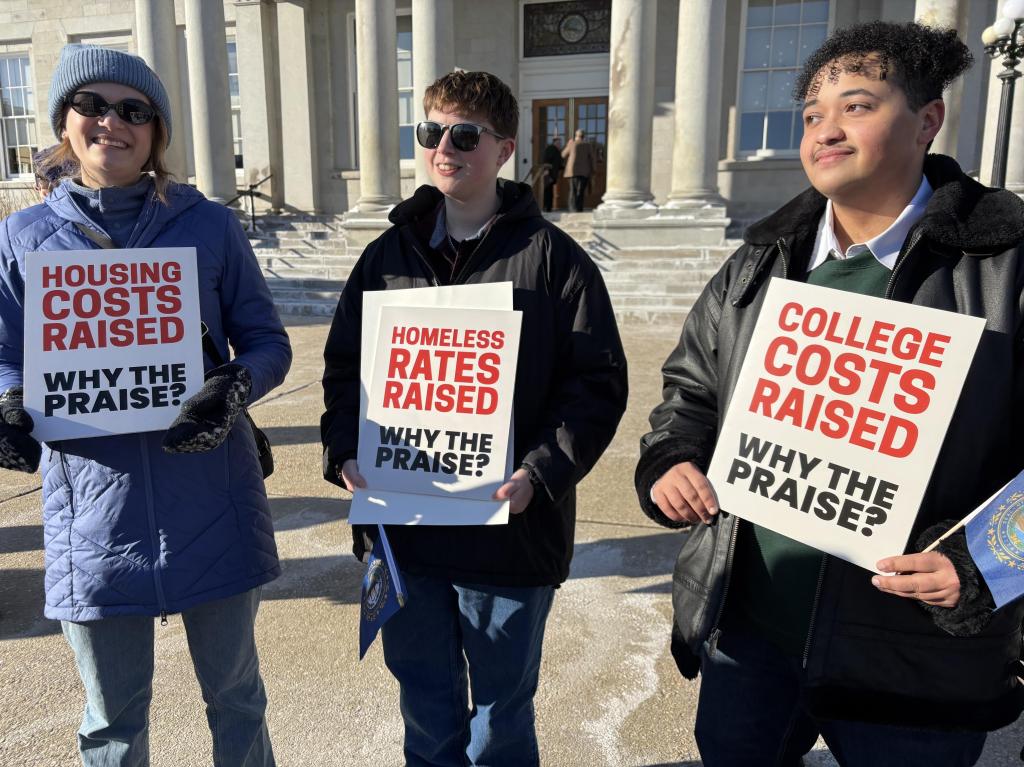
America is sitting on a generational economic powder keg. Housing prices have climbed beyond the reach of millions of young workers, rent consumes an enormous share of household income, and the traditional promise that hard work leads to financial independence is becoming increasingly difficult to fulfill.
For Generation Z, roughly those born between 1997 and 2012, the frustration is about more than expensive apartments or stagnant entry-level salaries. It is about entering adulthood in an economy where assets increasingly determine opportunity, while the cost of acquiring those assets continues to rise.
The question is no longer simply whether young Americans are dissatisfied. It is whether their growing economic frustration will eventually translate into a sustained national protest movement.
A Housing Market That Feels Like a Locked Door
Homeownership was once considered a central milestone of American adulthood. Today, high home prices, mortgage rates, property taxes, and insurance costs have pushed that milestone further away for many young adults.
Renting offers little relief. In expensive metropolitan areas, young workers can spend substantial portions of their income simply maintaining a roof over their heads. Saving for a down payment becomes extraordinarily difficult when rent, groceries, transportation, and healthcare consume nearly every paycheck.
The result is a generation increasingly forced to delay moving out, starting families, purchasing homes, or building meaningful savings.
And while housing costs burden Americans across age groups, younger households face a particular disadvantage: They have had less time to accumulate assets and are often trying to enter markets already dominated by established property owners.
Wealth Inequality Is Becoming a Generational Divide
The American economy continues to generate enormous wealth, but that wealth is distributed unevenly. Homeowners benefit when property values appreciate, shareholders benefit from rising financial markets, and families with inherited assets can transfer advantages to the next generation.
Young adults without family wealth frequently begin several steps behind.
This is particularly consequential for young Black American Freedmen, whose families have historically faced discriminatory barriers to property ownership, mortgage lending, and intergenerational wealth accumulation.
The economic divide is not simply between young and old. It is also between young people with access to family assets and those expected to finance adulthood entirely through wages and debt.
That distinction matters because an economic system can appear prosperous on paper while remaining deeply inaccessible to people trying to establish financial independence.
The Job Market Is Adding Fuel to the Fire
A college degree no longer guarantees a smooth transition into professional employment. Young graduates increasingly face intense competition for entry-level positions, while artificial intelligence threatens to automate portions of the work traditionally assigned to junior employees.
Recent reporting has documented young Americans struggling to secure internships, find stable employment, and imagine purchasing homes even after completing their education.
Meanwhile, the Federal Reserve’s latest household finance research shows that although overall household wealth has increased, much of the growth has flowed toward already wealthy Americans. The result is an economy that can post respectable aggregate numbers while leaving many younger households feeling financially insecure.
Why a Gen Z Protest Movement Is Plausible
History demonstrates that economic frustration can become a powerful source of political mobilization. The Occupy Wall Street movement in 2011 focused national attention on wealth inequality, corporate influence, and the concentration of economic power.
Generation Z has already demonstrated an ability to organize demonstrations around climate change, racial justice, and international conflicts. Economic affordability could become another unifying issue, especially because housing costs and employment insecurity affect young Americans across political and geographic boundaries.
However, a nationwide economic uprising is not guaranteed. Political differences, competing priorities, and the absence of unified leadership could prevent scattered frustrations from developing into a sustained movement.
What makes the possibility significant is the growing distance between economic expectations and economic reality.
Washington Should Pay Attention to the Numbers
Recent research underscores the depth of the affordability problem. Pew Research Center found that 89% of adults under 40 believe purchasing a home is harder for today’s young adults than it was for their parents’ generation.
Between 2019 and 2024, inflation-adjusted median home values increased approximately 30%, while median household income among households headed by adults under 40 rose just 9%.
And in an October 2026 Pew survey, 66% of American adults expressed serious concern about housing costs, while 73% were very concerned about food and consumer prices.
These figures do not establish that protests are imminent. They do, however, demonstrate that economic dissatisfaction is widespread and rooted in measurable affordability problems.
The American Dream Is Becoming a Political Flashpoint
The potential for a Gen Z protest movement ultimately rests on a simple contradiction: America remains one of the wealthiest countries in the world, yet many young adults struggle to afford the basic foundations of independent life.
Some economists emphasize increasing housing construction, reducing regulatory barriers, and strengthening productivity as solutions. Others argue for stronger labor protections, expanded affordable housing programs, and policies addressing wealth concentration.
Those disagreements will shape the national debate, but they do not erase the underlying frustration.
If the cost of participating in the American economy continues to rise faster than young workers’ ability to build financial security, the possibility of a major generational protest movement will remain an important political question.
Whether that frustration produces nationwide demonstrations, organized labor campaigns, electoral change, or entirely new political movements remains uncertain.
What is increasingly clear is that young Americans are asking whether the economy they inherited can still deliver the opportunities they were promised.
—Sylvester Loving, B1Daily




Leave a Reply