—Terrence Dorner, B1Daily
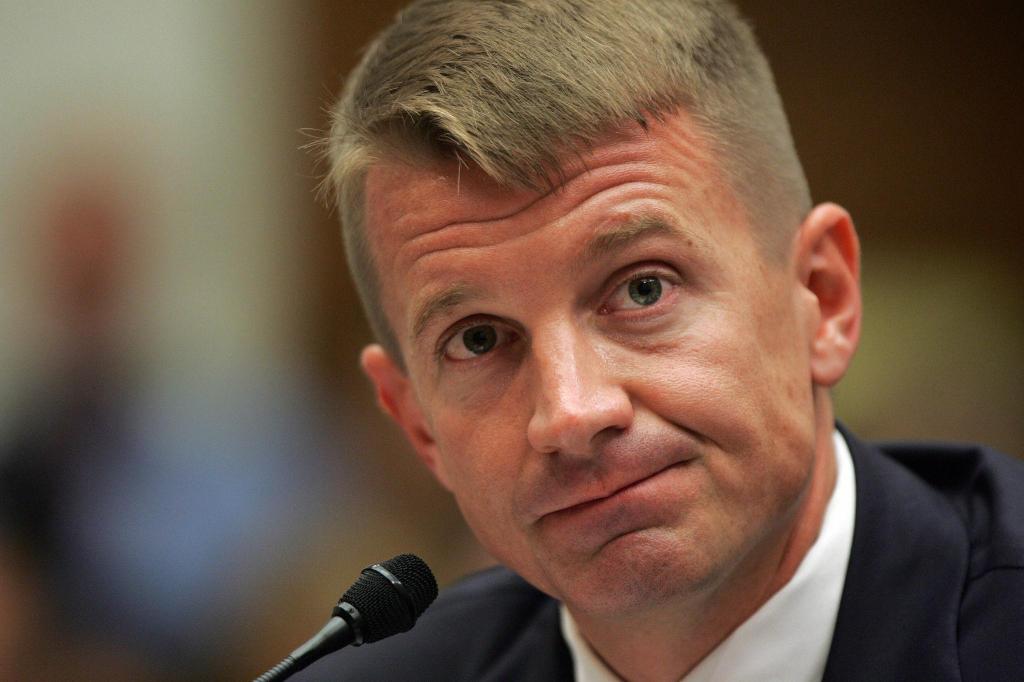
The Iraq War produced one of the most controversial experiments in modern American military history: outsourcing armed security operations to private corporations operating alongside the world’s most powerful military. Few companies became more notorious than Blackwater, the security empire founded by Erik Prince.
Blackwater contractors were entrusted with protecting American diplomats, operating heavily armed convoys, and navigating some of Iraq’s most dangerous streets. But the company’s history became inseparable from civilian deaths, allegations of excessive force, and a massacre that would ultimately produce federal murder and manslaughter convictions.
The corporate lineage eventually led to Academi and the modern Constellis organization, although Constellis did not exist during the Iraq War atrocities and Prince no longer owns or controls it. That distinction matters when examining responsibility for Blackwater’s actions.
Nisour Square: When a Security Convoy Opened Fire on Civilians
On September 16, 2007, Blackwater’s Raven 23 tactical security team entered Nisour Square, a busy Baghdad traffic circle. After a nearby bombing, the heavily armed contractors moved into the intersection and opened fire.
American prosecutors later established that the shooting killed 14 unarmed Iraqi civilians, including two children, and wounded numerous others. Iraqi investigations reported a higher death toll of 17.
Among the victims were 21-year-old aspiring doctor Ahmed Haithem Ahmed Al Rubia’y and his mother, Dr. Mahassin Mohssen Kadhum Al-Khazali. They were traveling to an appointment when the shooting began. A nine-year-old boy and an eleven-year-old boy were also among those killed.
The prosecution’s evidence showed that Blackwater personnel fired rifles, machine guns, and grenade launchers at civilians who posed no demonstrated threat. The contractors had claimed they were responding to hostile fire, but the federal case established criminal responsibility for several members of the team.
Four contractors, Nicholas Slatten, Paul Slough, Evan Liberty, and Dustin Heard, were convicted of murder or manslaughter-related offenses. Another contractor, Jeremy Ridgeway, pleaded guilty and cooperated with prosecutors.
These were not merely allegations of battlefield misconduct. They resulted in criminal convictions in American federal courts.
Erik Prince and the Question of Command Responsibility
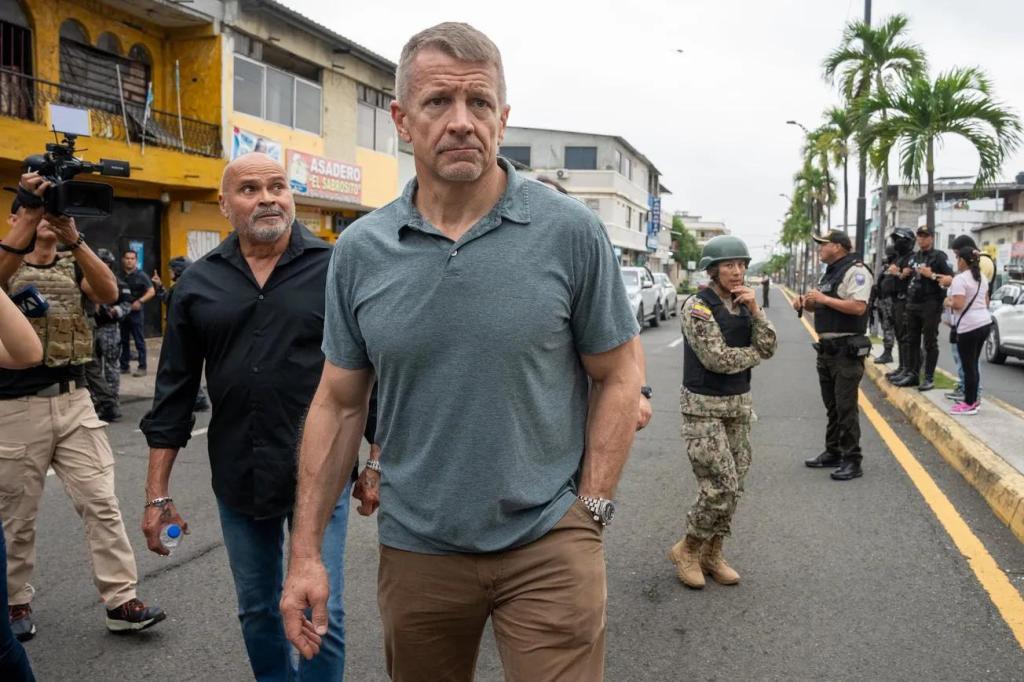
Erik Prince founded Blackwater in 1997 and oversaw its expansion into a major government security contractor during the wars in Afghanistan and Iraq. Under his leadership, the company received substantial federal contracts and became a significant participant in American overseas security operations.
The Nisour Square massacre occurred while Prince headed the company. That made his leadership and Blackwater’s internal oversight central subjects of public scrutiny.
However, an essential legal distinction remains: Prince was not personally convicted of committing war crimes or directing the Nisour Square killings. The criminal convictions concerned the contractors who participated in the shooting.
Nevertheless, the scandal raised broader questions about executive responsibility, operational discipline, rules of engagement, and whether private security companies could be held accountable for the conduct of armed employees in war zones.
The question extended beyond the individual shooters. How could a privately employed security team possess such extensive firepower, operate on foreign streets under American government contracts, and become involved in a deadly incident of this magnitude?
A Pattern of Violence and Allegations of Impunity
Nisour Square was not Blackwater’s first encounter with controversy. Congressional investigations examined numerous shooting incidents involving the company’s contractors in Iraq, including allegations that personnel used excessive force and fired on civilians without adequate justification.
Blackwater operated in an extraordinarily dangerous environment where insurgent attacks, roadside bombs, and ambushes were genuine threats. Yet those dangers did not eliminate the legal obligation to distinguish civilians from combatants or justify indiscriminate force.
The company’s reliance on aggressive convoy-protection tactics created a persistent tension between protecting American personnel and safeguarding Iraqi civilians. Investigations also questioned whether the State Department exercised sufficient oversight of contractors performing security functions traditionally associated with military or government personnel.
The resulting controversy became a case study in the dangers of allowing private companies to conduct heavily armed operations without clearly defined accountability.
Nearly 200 Shooting Incidents: The Congressional Investigation
In October 2007, congressional investigators revealed that Blackwater personnel had been involved in 195 shooting incidents between January 2005 and September 2007. According to the company’s own incident reports, Blackwater employees fired first in 163 of those encounters, approximately 84 percent.
Firing first does not automatically constitute a war crime, particularly when an imminent threat exists. However, the frequency of those incidents raised serious concerns about the company’s interpretation of defensive force and the effectiveness of government oversight.
Congressional investigators also examined the December 2006 killing of an Iraqi vice president’s security guard, Raheem Khalif Hulaichi. Blackwater contractor Andrew Moonen was implicated in the shooting after reportedly consuming alcohol. He was dismissed and returned to the United States, while the handling of the incident raised questions about accountability for American contractors overseas.
These incidents demonstrated why the Blackwater controversy extended beyond a single massacre. Congressional scrutiny focused on repeated shootings, civilian casualties, contractor discipline, and whether the State Department had adequately supervised the company’s operations.
Donald Trump’s Pardons Reopened the Wounds
In December 2020, President Donald Trump granted full pardons to the four Blackwater contractors convicted in connection with Nisour Square.
The decision provoked condemnation from Iraqi victims’ families and United Nations human rights experts, who argued that the pardons undermined accountability for serious violations of international humanitarian law.
The Trump White House defended the clemency decisions, citing concerns about the prosecutions and the contractors’ service. Critics argued that the pardons reversed years of investigative and judicial work on behalf of Iraqi victims.
For families who had waited years for convictions, the pardons reopened questions about whether American citizens and contractors could ultimately escape punishment for killing civilians overseas.
From Blackwater to Constellis: The Corporate Afterlife
Blackwater’s name became so controversial that the company rebranded as Xe Services in 2009. After Prince sold his ownership interest, portions of the former business were acquired by new investors and reorganized under the Academi name.
In 2014, Academi joined other security companies, including Triple Canopy, within the newly formed Constellis structure.
Constellis emphasizes that it is a separate corporate organization, does not operate under the Blackwater brand, and has no ownership connection to Erik Prince. The company’s modern operations should therefore not be confused with Prince’s leadership of Blackwater during the Iraq War.
Nevertheless, the evolution of the private security industry raises an important policy question: When companies implicated in serious misconduct reorganize, merge, or change names, how should governments evaluate their institutional histories when awarding future contracts?
The Military Consequences of Privatizing War
The Blackwater controversy exposed a fundamental challenge of modern warfare. Private security contractors can provide essential protection, logistics, and specialized expertise, but their operations can also blur lines of command responsibility and legal accountability.
Traditional military forces operate under established chains of command, military discipline, and rules governing armed conflict. Contractors may be subject to criminal and civil law, contractual oversight, and international humanitarian obligations, but enforcing those rules across borders has historically proven difficult.
Blackwater’s conduct also carried strategic consequences. Civilian casualties and allegations of contractor impunity damaged American credibility among Iraqis at a time when the United States was attempting to stabilize the country and gain public cooperation.
In counterinsurgency warfare, civilian protection is not simply a humanitarian obligation. It is essential to maintaining legitimacy and preventing armed groups from exploiting public resentment.
The Legacy of Erik Prince’s Private Security Empire
The record of Blackwater in Iraq includes criminal convictions for killing civilians, documented patterns of frequent armed confrontations, and congressional findings that exposed weaknesses in government supervision.
Prince’s role as founder and former chief executive makes his leadership part of that history, although he was not personally convicted of the Nisour Square killings or other war crimes in Iraq.
The enduring lesson is larger than one executive or corporation. Governments that outsource armed operations cannot outsource their responsibility to protect civilians, investigate unlawful killings, and ensure accountability.
The weapons may belong to private contractors, but the consequences of their actions can become the responsibility of an entire nation.
—Terrence Dorner, B1Daily



Leave a Reply