—Pratima Gadal, B1Daily
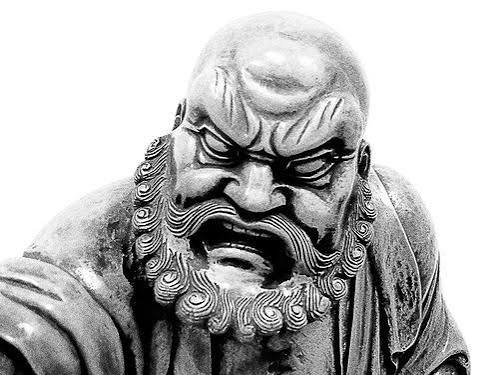
Few figures loom larger over the mythology of martial arts than Bodhidharma, known in China as Damo or Da Mo. Traditionally described as a Buddhist monk who traveled from India to China around the fifth or sixth century, Bodhidharma became revered as a foundational figure in Chan Buddhism, the tradition that later developed into Zen Buddhism in Japan.
But another tradition gives Damo an even more explosive legacy: the birth of Shaolin martial arts.
According to the famous Shaolin story, Bodhidharma encountered monks whose bodies had become weak from prolonged meditation. He introduced a series of physical exercises traditionally called the 18 Hands of Luohan, or 18 Hands of Lohan. The Smithsonian’s history of martial arts along the Silk Road recounts this tradition, describing 18 exercises said to have been taught by Bodhidharma and subsequently expanded into Shaolin boxing.
That story helped transform Damo into one of martial arts’ most recognizable patriarchs. In the traditional telling, physical conditioning and Buddhist discipline became intertwined at Shaolin, eventually blossoming into the enormous family of fighting systems associated with Shaolin kung fu.
There is, however, an important line between tradition and documented history. It would be inaccurate to state as established fact that Bodhidharma invented Chinese martial arts or introduced martial arts to China. China had fighting traditions before Bodhidharma, and historians have found no early evidence connecting him to Shaolin combat training. The surviving historical record of Shaolin martial practice emerges separately, while the explicit Bodhidharma origin story appears centuries later.
There is also no solid historical basis for confidently calling Bodhidharma a Black monk in the modern racial sense. Sources disagree even about his precise origins, although traditions commonly place him in India or somewhere farther west. Artistic depictions showing him with very dark skin cannot by themselves establish his ancestry.
That distinction doesn’t make the legend meaningless. Bodhidharma’s martial mythology became enormously influential in its own right. His image represents an ancient cultural crossroads where India, Buddhism, China and eventually Shaolin martial culture became woven together.
Damo therefore occupies two histories at once: the historical Buddhist monk who helped transmit Chan teachings into China, and the legendary martial patriarch credited by later Shaolin tradition with planting the seeds of the 18 Hands of Luohan.
Sometimes a legend becomes almost as culturally powerful as the history underneath it.
—Pratima Gadal, B1Daily


Leave a comment