—Barrington Williams, B1Daily
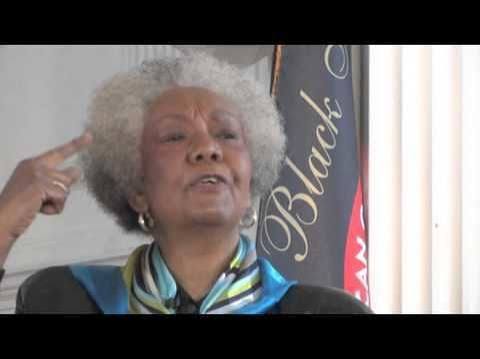
Dr. Frances Cress Welsing did not enter America’s intellectual conversation quietly. She walked directly into some of its most radioactive questions: What does racism do to the Black mind? How does white supremacy reproduce itself? And what happens psychologically when Black people spend their lives navigating a society in which racial hierarchy has shaped institutions, culture and power?
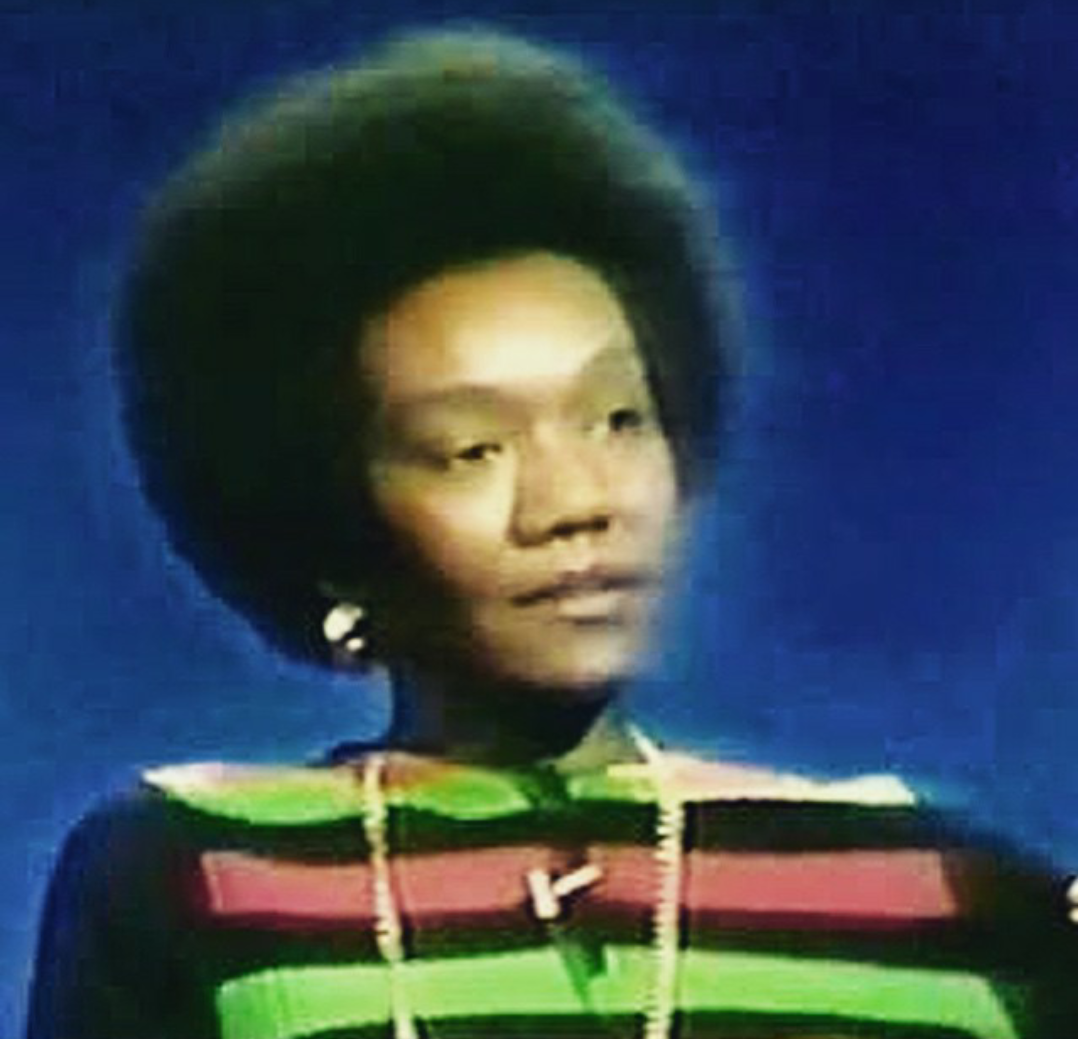
For generations of readers influenced by Afrocentric psychology and independent Black scholarship, Welsing became a towering figure. Calling her “the mother of Black thought and psychology” is best understood as an honorific reflecting that influence rather than a formal historical title. Black psychology has a much broader lineage, including figures such as Francis Cecil Sumner, Kenneth and Mamie Clark, Joseph White and Na’im Akbar.
But few Black intellectuals developed a theory of racism as provocative, sweeping or fiercely debated as Welsing’s.
From Medicine to the Psychology of Racism
Born Frances Luella Cress in Chicago in 1935, Welsing grew up in an accomplished Black family. Her father was a physician and her mother a teacher. She graduated from Antioch College in 1957 and earned her medical degree from Howard University College of Medicine in 1962 before training in psychiatry. She later taught at Howard and spent decades providing psychiatric services in Washington, D.C.
Her career wasn’t confined to the lecture hall. Howard University’s own retrospective credits Welsing with pioneering work in child psychiatry and mental health and developing approaches for emotionally disturbed children. She also maintained a private psychiatric practice for decades.
Yet Welsing increasingly became preoccupied with a larger patient:
Black America itself.
She believed psychology could not adequately understand Black people’s experiences without confronting racism as an environment affecting their behavior, relationships and mental health.
The Cress Theory
Her intellectual explosion came with “The Cress Theory of Color-Confrontation and Racism (White Supremacy),” developed around 1969-70 and subsequently published in The Black Scholar in 1974.
Welsing proposed that white supremacy should be understood not simply as individual hatred but as a global system of power. Her most controversial proposition went considerably further: she theorized that white racism ultimately grew from psychological anxiety surrounding white genetic survival in a predominantly nonwhite world.
That biological-psychological explanation has not been established by mainstream genetics or psychology and has been widely criticized as scientifically unsupported. But historically, focusing only on whether every component of Welsing’s theory survived scientific scrutiny misses why her work became influential.
She was attempting to reverse the psychological microscope.
At a time when racist theories had repeatedly portrayed Black people themselves as psychologically or biologically deficient, Welsing asked what would happen if racism itself became the phenomenon requiring psychological examination.
That reversal was intellectual dynamite.
Neely Fuller and a System Called White Supremacy
Welsing’s thinking also intersected with the work of Neely Fuller Jr., whose ideas about racism as an interconnected system influenced her development. Fuller conceptualized white supremacy as operating across major areas of human activity, including economics, education, entertainment, labor, law, politics, religion, sex and war.
Welsing took that systemic framework and pushed deeply into psychology.
Instead of treating racial incidents as disconnected explosions, she encouraged followers to search for recurring patterns involving power, imagery, sexuality, family relationships, education and social conditioning.
That approach would become central to her intellectual legacy.
The Isis Papers
Then came the book that cemented her reputation.
Published in 1991, The Isis Papers: The Keys to the Colors collected essays Welsing had developed over roughly two decades.
The book examined racism, symbolism, sexuality, Black family relationships, education, violence and psychological conditioning through Welsing’s theoretical framework.
It became enormously influential in certain Black intellectual, Afrocentric and nationalist circles even while remaining controversial outside them.
Welsing wanted Black readers to scrutinize seemingly ordinary things: language, symbols, cultural imagery and social expectations. Her argument was that domination didn’t survive solely through explicit laws or physical force. Power could reproduce itself psychologically, teaching both dominant and subordinated populations assumptions about beauty, intelligence, authority and human worth.
That broader proposition remains recognizable in contemporary discussions about representation, implicit bias and internalized racism, even though Welsing’s particular biological explanations remain heavily disputed.
When Welsing Took On William Shockley
One episode perfectly captures her combative intellectual personality.
In 1974, Welsing publicly debated Stanford physicist and Nobel laureate William Shockley, who promoted claims concerning Black genetic intellectual inferiority.
Welsing confronted him on Tony Brown’s Journal.
The symbolism was enormous.
Here was a Black woman psychiatrist confronting one of America’s most prominent proponents of hereditarian racial theories and refusing to accept the premise that Black people should perpetually occupy the defendant’s chair in debates about race and intelligence.
Whether audiences accepted Welsing’s alternative theory or not, she was insisting that the intellectual interrogation run in both directions.
Black Mental Health as a Political Question
Welsing’s most durable contribution may ultimately be less about melanin than about context.
She argued relentlessly that Black mental health couldn’t be separated from the racial environment surrounding Black people.
Kevin Washington, then president of the Association of Black Psychologists, said after her death that Welsing’s major contribution to Black mental health was her willingness to challenge dominant thinking and conceptualize what she called “global white supremacy.”
That perspective pushed psychological discussion beyond asking:
“What is wrong with this Black individual?”
and toward another question:
“What has happened to this individual, and what social environment are they attempting to survive?”
That shift is larger than any single Welsing theory.
Brilliant, Controversial and Impossible to Ignore
A serious historical treatment of Welsing shouldn’t turn her into either a prophet beyond criticism or a curiosity easily dismissed.
Some of her biological and genetic explanations for racism are unsupported by mainstream science. Other claims associated with her writings, including explanations involving disease and deliberate racial warfare, have likewise attracted substantial criticism. Her work therefore sits at an unusual intersection of psychiatry, racial theory, political analysis and speculative interpretation.
But controversy was practically Welsing’s natural habitat.
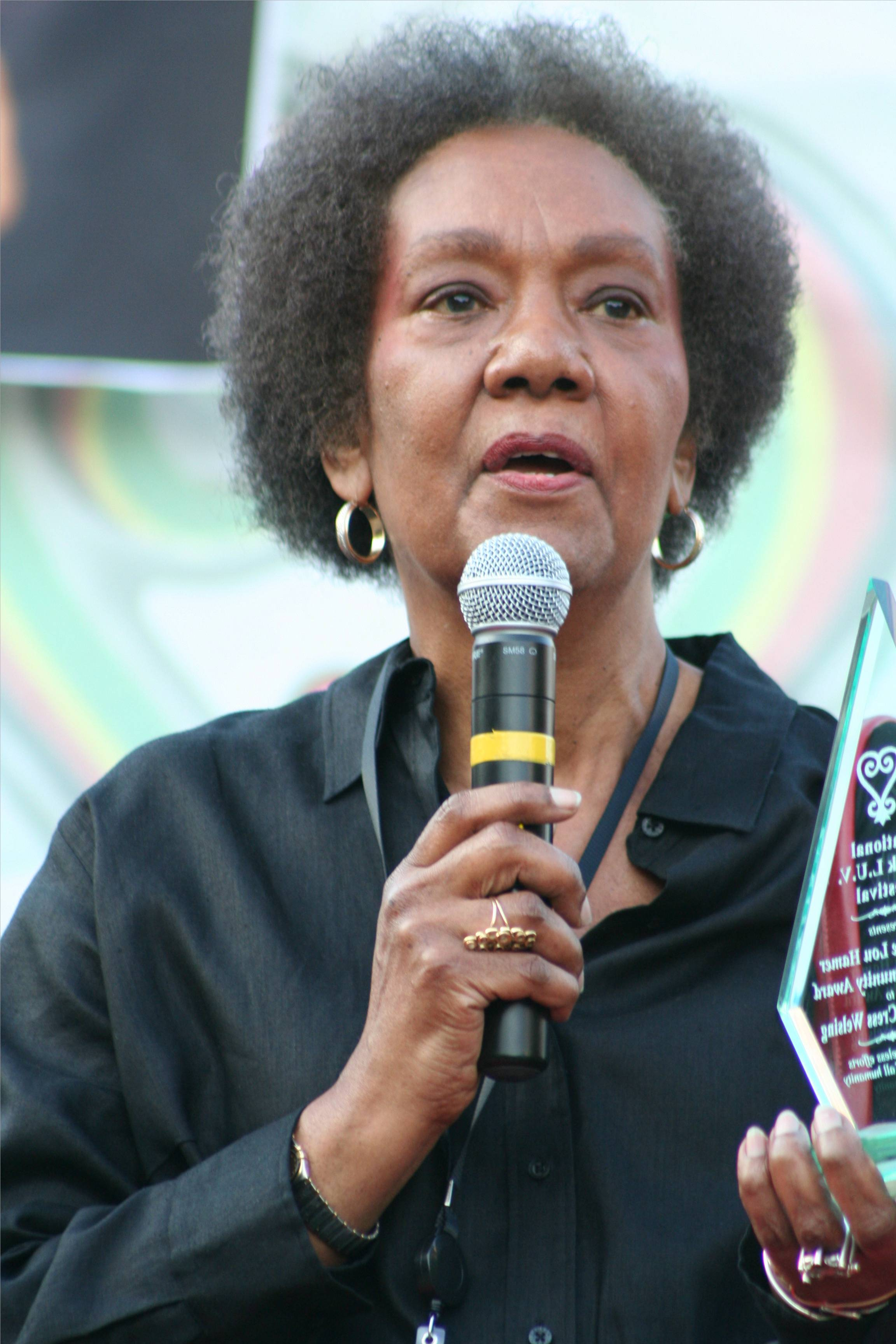
She wasn’t attempting to make her ideas comfortable enough for institutional approval. She was trying to construct an explanatory framework for Black people confronting a society whose racial inequalities were historically undeniable.
Even contemporary reporting recognized the extraordinary divide surrounding her. A 1980 Washington Post feature literally presented competing reactions to one of her lectures, with one writer describing her work sympathetically while another sharply rejected her genetic theory.
That split followed Welsing throughout her career.
The Doctor Who Refused to Stop Asking Why
Welsing died in Washington, D.C., on January 2, 2016, after suffering a stroke. She was 80. She had continued counseling patients until shortly before her death.
Her books, lectures and recorded appearances continued circulating afterward, particularly among Black readers interested in psychology, racism and independent Black political thought.
That may ultimately explain her longevity better than any title.
Welsing gave her audience permission to interrogate the psychological dimensions of power. She demanded that racism itself become an object of analysis rather than simply accepting endless examinations of supposedly defective Black behavior.
Some of her answers remain deeply contested.
But the questions she insisted Black America had every right to ask were explosive:
Who defines normality? Who defines intelligence? Who establishes beauty? Who controls institutions? How does living under racial hierarchy affect the psyche? And what happens when the people traditionally being studied decide to become the researchers themselves?
Dr. Frances Cress Welsing spent her career turning the examination table around.
And that is why, decades after The Isis Papers, Black intellectual circles are still arguing with her, arguing about her, and most importantly, still reading her.
—Barrington Williams, B1Daily




Leave a comment