—Barrington Williams, B1Daily
When a criminal defendant claims mental illness, America’s justice system is supposed to examine the medical evidence rather than rely on stereotypes about race, violence, or criminality. But research suggests that Black defendants can face additional obstacles when asking jurors to recognize psychiatric impairment.

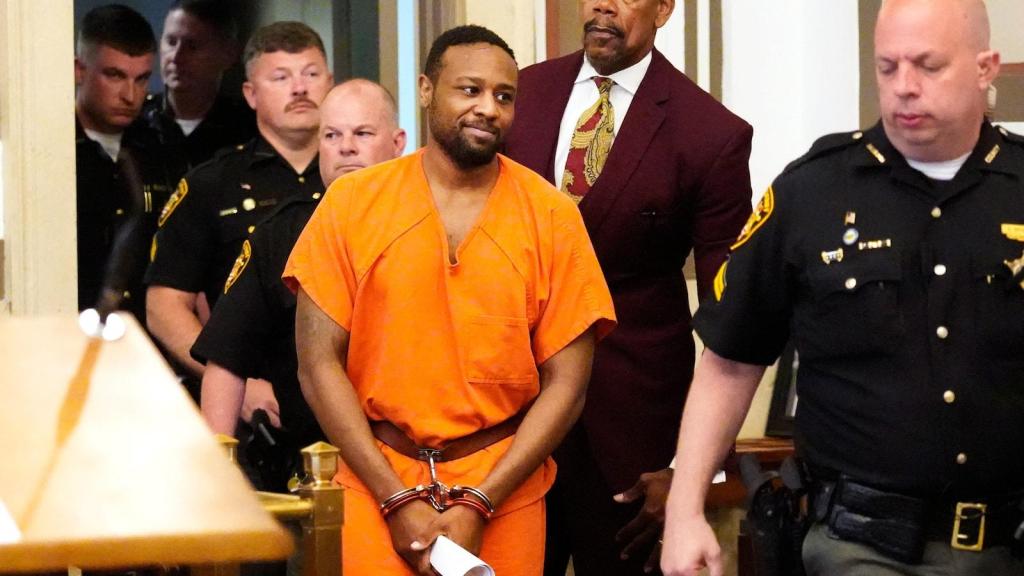
The case of Rodney Hinton Jr., a Black Cincinnati father accused of killing Hamilton County Sheriff’s Deputy Larry Henderson, has brought that uncomfortable issue into focus.
Hinton’s attorneys argue that he was experiencing a severe psychiatric episode when he allegedly drove into Henderson on May 2, 2025, shortly after viewing police body-camera footage of his 18-year-old son, Ryan Hinton, being fatally shot by Cincinnati police.
Three mental health experts subsequently agreed that Hinton had a qualifying serious mental illness at the time of the incident. Prosecutors withdrew their pursuit of the death penalty, and Hinton’s defense is now seeking a verdict of not guilty by reason of insanity.
The case raises a significant question: When Black defendants present evidence of serious psychiatric illness, are American courts and juries willing to give that evidence the same consideration afforded to white defendants?
Mental Illness Is Not the Same as Criminal Insanity
Hinton’s case illustrates an important legal distinction. A diagnosis of serious mental illness does not automatically establish that a defendant was legally insane when an offense occurred.
Ohio law allows qualifying psychiatric conditions to make certain defendants ineligible for execution. An insanity defense requires a separate determination about whether a severe mental disease or defect prevented the defendant from understanding the wrongfulness of their actions.
Hinton’s attorneys argue that his documented psychiatric history, combined with the trauma of watching his son’s death, severely affected his mental state. Prosecutors have continued pursuing murder charges, and the insanity claim remains contested.
His trial began in October 2026, with the defense emphasizing his history of psychiatric treatment and episodes involving a loss of contact with reality.
Research Reveals a Troubling Racial Disparity
The broader concern about racial bias is supported by research, although the evidence is not uniform.
A 2020 study involving 216 participants found that mock jurors were significantly more likely to convict a Black defendant described as having schizophrenia than a Black defendant described as having depression. The same difference was not statistically significant for white defendants.
The findings suggest that stereotypes connecting Black men with dangerousness may influence how some jurors interpret psychiatric evidence.
A separate 2025 study found that one forensic evaluator identified Black defendants as exaggerating psychiatric symptoms substantially more often than white defendants. However, the overall sample did not show the same racial disparity after accounting for that evaluator, illustrating why individual bias and institutional patterns require careful examination.
These findings do not establish that every Black defendant receives unequal treatment. They do demonstrate why racial fairness in psychiatric evaluations and insanity proceedings deserves scrutiny.
A Black Defendant Shouldn’t Have to Fight Two Trials
A criminal defendant facing an insanity proceeding must overcome substantial legal obstacles. The defense must establish the relevant psychiatric condition and satisfy the jurisdiction’s demanding legal standard.
But racial stereotypes can create another challenge: persuading decision-makers to see a Black defendant as someone experiencing a genuine psychiatric crisis rather than simply someone who is inherently violent.
That distinction matters enormously.
A white defendant’s psychiatric history should not automatically become an excuse for criminal conduct, and a Black defendant’s diagnosis should not automatically be dismissed as manipulation.
Both deserve individualized evaluations grounded in medical evidence and the law.
Rodney Hinton Jr. Is Testing That Principle
Hinton’s case is particularly revealing because his psychiatric condition has already received significant legal recognition. The prosecution accepted expert findings sufficient to withdraw the death penalty, even while maintaining that he should face severe punishment if convicted.

That development complicates any suggestion that Hinton has been categorically denied consideration because he is Black.
Nevertheless, his trial raises broader questions about how mental illness, grief, race, and criminal responsibility intersect in American courtrooms.
Deputy Larry Henderson’s death remains a tragedy for his family and community. Recognizing the seriousness of that loss does not require abandoning the principle that defendants must be evaluated fairly.
The central issue is not whether Rodney Hinton Jr. deserves automatic acquittal because of mental illness. It is whether the legal system can evaluate his psychiatric evidence without racial assumptions influencing the outcome.
A justice system committed to equal protection must apply the same standards of criminal responsibility to everyone, regardless of race, wealth, or public outrage.
Until those standards are consistently demonstrated, questions about racial bias in America’s treatment of mentally ill defendants will remain legitimate and necessary.
—Barrington Williams, B1Daily



Leave a Reply