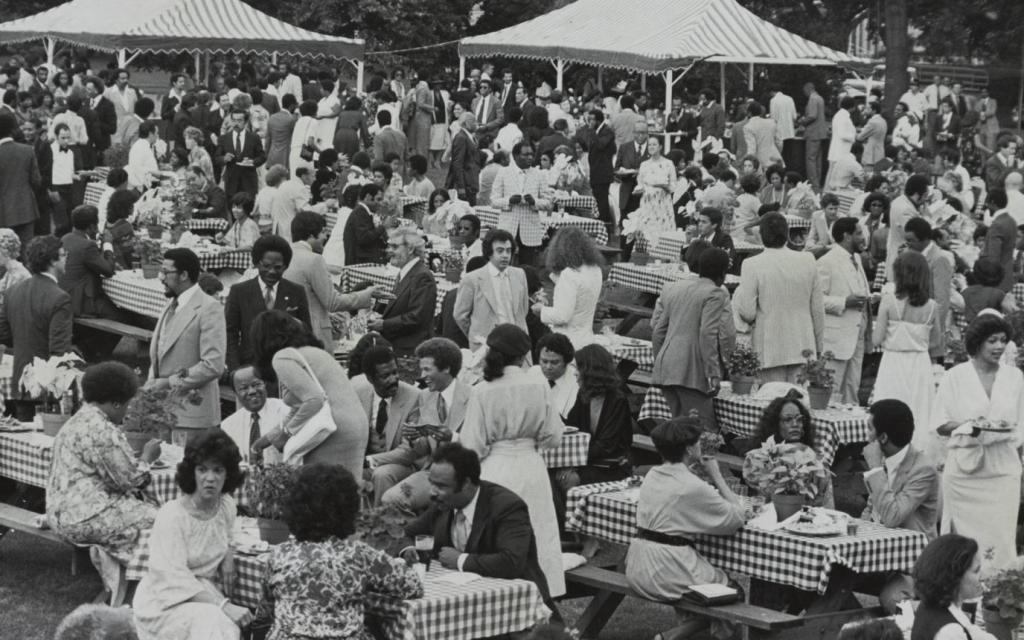
—Kerry Hill, B1Daily
America loves celebrating ethnicity. Irish Americans proudly commemorate their heritage on St. Patrick’s Day. Italian Americans organize cultural festivals, preserve their traditions, and celebrate their ancestral contributions. Jewish Americans maintain institutions dedicated to protecting their cultural and historical identity.
Yet when descendants of American slavery emphasize their own distinct ethnic identity as Black American Freedmen, the conversation can suddenly become contentious.
Why?
Why should a population whose ancestors endured centuries of slavery, segregation, racial terrorism, and systematic exclusion face criticism for wanting to define itself according to its own historical experiences?
Black Americans Are More Than a Racial Classification
One of the most persistent problems surrounding Black American identity is the tendency to treat race and ethnicity as interchangeable.
They aren’t.
Race broadly categorizes populations according to socially constructed physical characteristics. Ethnicity encompasses shared ancestry, history, traditions, and cultural experiences.
Black American Freedmen represent a historically distinct population whose ancestors were enslaved in the United States and whose descendants developed a recognizable culture over generations.
From the blues and jazz to gospel music, soul food, historically Black institutions, and African American Vernacular English, this population has produced cultural traditions that have profoundly influenced American society.
These achievements did not emerge from a generic racial identity. They developed through particular historical circumstances involving particular communities.
Recognizing that distinction should not be controversial. It should be basic historical literacy.
The Strange Politics of Cultural Ownership
American society generally accepts that ethnic communities have legitimate interests in preserving their histories and cultural traditions.
However, discussions about Black American cultural ownership frequently become entangled in accusations of division, exclusion, or hostility toward other populations.
The distinction matters.
Acknowledging that Black American Freedmen developed particular musical traditions, linguistic expressions, and cultural institutions does not mean other communities cannot appreciate or participate in them.
It means their historical origins deserve recognition.
Hip-hop, for example, emerged from a complex cultural environment in the Bronx involving Black American, Caribbean, and Latino influences. Recognizing those contributions accurately strengthens historical understanding rather than diminishing anyone else’s participation.
Likewise, the blues, jazz, and numerous other traditions have identifiable histories rooted deeply in Black American communities.
Cultural exchange is inevitable. Historical erasure is not.
Why Does Freedmen Identity Make Some People Uncomfortable?
Part of the controversy surrounding Freedmen identity stems from its political implications.
A distinct ethnic identity challenges the assumption that every person classified as Black in America necessarily shares the same historical experiences or policy interests.
A recent Nigerian immigrant, a Jamaican American, and a descendant of American slavery may encounter similar racial discrimination, but their ancestral histories are not identical.
That distinction becomes particularly important when discussing reparations.
Reparations specifically intended to address American slavery and subsequent government-sanctioned discrimination require a clear understanding of the population harmed and the institutions responsible.
A lineage-based eligibility standard is therefore a legitimate subject for public policy debate, although any actual program would need to address constitutional requirements and practical questions of documentation.
Recognizing different historical claims is not the same as declaring one population superior to another.
Unfortunately, discussions surrounding ethnic recognition can become unnecessarily hostile when people interpret distinctions in ancestry as judgments about human worth.
They are not.
Black American Culture Belongs in the Historical Record
Perhaps the greatest contradiction is that America celebrates Black American cultural contributions while frequently failing to acknowledge the specific communities responsible for creating them.
Corporations profit from Black American musical innovations. Advertisers incorporate Black American slang into marketing campaigns. Entertainment industries commercialize cultural expressions that originated in historically marginalized neighborhoods.
Yet recognition of cultural origins does not always translate into economic opportunity, historical preservation, or meaningful investment in the communities that produced those traditions.
That is a legitimate grievance worth examining.
Black American Freedmen should not have to watch their cultural contributions become universally celebrated while their distinct historical identity remains poorly understood.
Nor should cultural preservation require hostility toward African immigrants, Caribbean Americans, or anyone else who participates in American society.
There is enough historical evidence to recognize multiple communities without erasing the distinctions between them.
Ethnic Recognition Is Not Ethnic Supremacy
The demand for a distinct Black American Freedmen identity is fundamentally a demand for historical recognition and self-definition.
It does not require racial separatism, hostility toward immigrants, or rejection of international solidarity.
It requires acknowledging that descendants of American slavery possess a shared historical experience that cannot simply be reduced to skin color.
America routinely recognizes ethnic distinctions within broader racial populations. There is no compelling reason that descendants of American slavery should be excluded from that conversation.
The real challenge is ensuring that recognition promotes historical accuracy, cultural preservation, and political accountability rather than unnecessary antagonism.
Black American Freedmen do not need permission to celebrate their ancestry, preserve their culture, or advocate for policies addressing their historical experiences.
Their ancestors helped build the United States. Their communities transformed American culture. Their political struggles expanded the meaning of American citizenship.
That history deserves recognition on its own terms.
And if America genuinely believes in celebrating cultural diversity, it should have no difficulty acknowledging the distinct identity of a people whose contributions helped define the nation itself.
—Kerry Hill, B1Daily


Leave a Reply