—Sylvester Loving, B1Daily
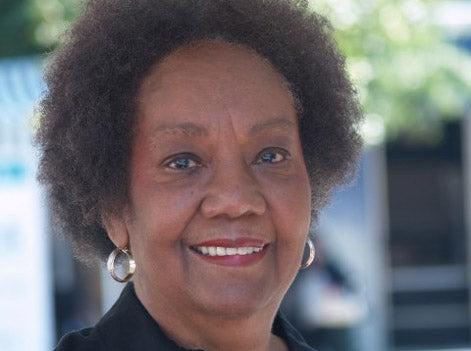
Dr. Frances Cress Welsing was one of the most provocative Black intellectuals of the twentieth century. A psychiatrist, author, and theorist, she devoted much of her career to examining racism as a global system of power. Her ideas inspired generations of Black readers, even as they generated intense disagreement within academic circles.
But one of the most troubling chapters of Welsing’s legacy concerns not her confrontations with white institutions, but her relationship with historically Black academia, particularly Howard University.
In her scholarly essay Dr. Frances Cress Welsing: A Genius Shunned by Black Academicians, Regina Jennings examined what she considered the academic establishment’s failure to recognize and support Welsing. Jennings argued that Black universities had opportunities to provide Welsing with institutional resources, intellectual legitimacy, and an endowed academic chair, yet failed to do so.
The criticism raises a difficult question: How could an institution dedicated to advancing Black intellectual achievement overlook a thinker whose work had become so influential within Black political and cultural discourse?
Howard University and the Politics of Intellectual Acceptance
Welsing served as an assistant professor of pediatrics at Howard University College of Medicine from 1968 until 1975. During that period, she developed the ideas that would become central to her influential 1991 book, The Isis Papers: The Keys to the Colors.
Her theories challenged conventional explanations of racism, presenting white supremacy as an organized global system rather than merely a collection of individual prejudices.
Welsing attributed her failure to obtain promotion and tenure at Howard to institutional objections to those theories. Her academic appointment ended in 1975, and she continued her professional career outside the university.
The rejection became an important part of how her supporters understood her relationship with Black academia. To them, Howard represented an institution that should have encouraged independent Black scholarship, even when that scholarship challenged established intellectual traditions.
Yet the university’s precise internal reasoning cannot be fully reconstructed from Welsing’s account alone, and some of her biological and psychological explanations of racism have been disputed on scientific grounds.
The larger question, however, extends beyond whether every element of her theory was correct. It concerns whether controversial Black scholars can receive serious intellectual engagement without being excluded from the institutions that helped educate them.
The Academic Chair That Never Came
One of Regina Jennings’s most pointed criticisms concerned Howard University’s failure to provide Welsing with the kind of institutional recognition often reserved for influential scholars.
Jennings argued that Howard could have established an academic chair honoring Welsing’s work, providing financial support and a formal institutional platform for continued scholarship.
Such recognition would have carried considerable symbolic significance. It would have demonstrated that a historically Black university could acknowledge the intellectual influence of a controversial Black thinker without necessarily endorsing every conclusion she reached.
Instead, Welsing continued much of her work independently, building an audience through public lectures, interviews, community discussions, and her writing.
Her supporters viewed this independence as evidence of intellectual courage. Jennings interpreted the lack of institutional support as evidence of a deeper problem within Black academia: the reluctance to embrace scholars whose theories challenged prevailing academic assumptions.
There is an important distinction between Jennings’s criticism and a documented institutional decision. The available account does not establish that Howard formally considered and rejected an endowed chair for Welsing. Rather, Jennings criticized the university for failing to create such an opportunity.
When Black Intellectuals Become Outsiders in Black Institutions
Welsing’s experience raises questions about the relationship between academic institutions and independent Black intellectual traditions.
Historically Black colleges and universities have produced some of America’s most consequential scholars, scientists, physicians, and political thinkers. They have also operated within academic systems that emphasize peer review, disciplinary standards, research funding, and institutional reputation.
Those responsibilities can create tension when scholars advance unconventional theories.
Welsing’s work occupied precisely that contested territory.
Her central argument treated racism and white supremacy as interconnected systems shaping economics, education, religion, sexuality, politics, and cultural life. That framework appealed to readers seeking explanations for the persistence of racial inequality beyond individual acts of discrimination.
However, her theories also included sweeping claims about racial psychology and biological motivations that have not been established by mainstream scientific research.
Recognizing those limitations does not erase her historical influence. Nor does acknowledging her influence require accepting every element of her work.
A serious academic institution should be capable of making both distinctions.
Jennings’s broader criticism was that Black academicians had failed to sufficiently examine Welsing’s ideas, preserve her intellectual contributions, and recognize the significance of her relationship with Black communities.
The Public Became Her University
Although Welsing never achieved the institutional recognition her supporters believed she deserved, her influence extended well beyond the boundaries of Howard University.
Her 1991 book, The Isis Papers, became a widely discussed text in Black intellectual and political circles. Through lectures and interviews, she developed a following among readers interested in racial identity, Black psychology, and the structure of white supremacy.
Her influence was not limited to universities or professional psychiatric organizations. It reached community organizations, independent study groups, activists, and ordinary readers.
That distinction matters because intellectual influence is not always reflected in academic appointments, honorary degrees, or university-sponsored research.
Welsing demonstrated that a scholar could remain culturally influential while operating outside the institutions traditionally responsible for validating scholarship.
But independence came with limitations. Without sustained university support, opportunities for collaborative research, academic debate, archival preservation, and institutional mentorship were more difficult to establish.
Jennings believed Black academia had failed to appreciate the importance of those opportunities.
Recognition After Death Is Not the Same as Support During Life
Welsing died on January 2, 2016, at the age of 80.
Howard University subsequently acknowledged her legacy in its alumni publication, recognizing her work as a psychiatrist and public intellectual.
Yet posthumous recognition raises its own uncomfortable questions.
Why do institutions sometimes find it easier to celebrate controversial thinkers after their deaths than to engage with them while they are alive?
Could Welsing’s intellectual contributions have received more rigorous examination if universities had created opportunities for sustained scholarly debate?
And what responsibility do historically Black universities have to preserve the work of influential Black thinkers whose ideas fall outside academic consensus?
These questions extend beyond Welsing herself.
They concern how Black institutions document intellectual history, respond to dissent, and determine which scholars receive institutional recognition.
The Legacy Black Academia Must Confront
Dr. Frances Cress Welsing’s career cannot be reduced to a simple story of academic persecution. Her work attracted genuine criticism, and academic institutions have legitimate reasons to evaluate scholarship according to evidence and professional standards.
Nevertheless, Regina Jennings’s essay presents a challenge that deserves consideration.
A scholar can be controversial and historically important. An institution can reject a theory while still preserving its author’s work, facilitating scholarly examination, and acknowledging the author’s cultural influence.
Welsing’s ideas influenced generations of readers who believed that conventional discussions of racism failed to explain the full scope of white supremacy.
Whether one agrees with her theories or disputes them, that influence is part of Black American intellectual history.
The enduring question is not whether Howard University should have accepted every argument Welsing made. It is whether Black academic institutions did enough to engage, examine, and preserve the work of a scholar who profoundly influenced Black political thought.
Regina Jennings believed they did not.
And nearly eleven years after Welsing’s death, that criticism remains worthy of serious discussion.
—Sylvester Loving, B1Daily





Leave a Reply