—Barrington Williams, B1Daily
The Republican Party has a problem, and it goes considerably deeper than losing an election.
After suffering sweeping defeats in the 2026 midterms, Republicans are scrambling to explain how a party that returned Donald Trump to the White House just two years ago managed to lose control of both the House and Senate.
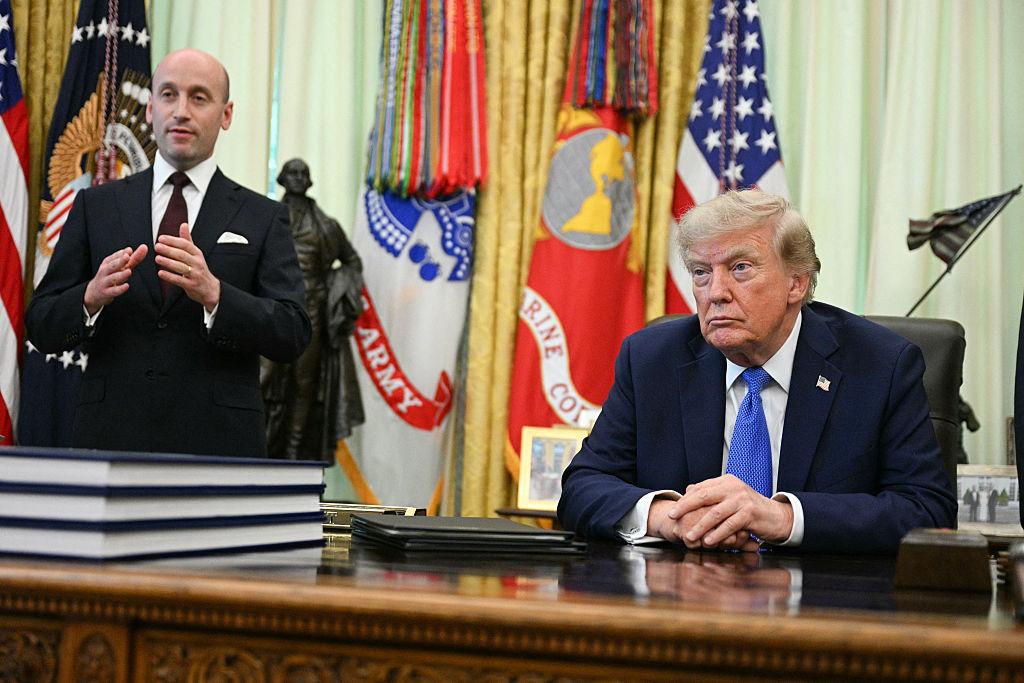
Voters delivered a particularly harsh verdict on the economy, the administration’s war with Iran, and its increasingly aggressive immigration policies. Yet instead of signaling a significant policy change, Trump appointed Stephen Miller, one of the administration’s most influential hardliners, as White House chief of staff.
For Black Americans, the appointment deserves attention. Miller has been a central architect of the administration’s immigration enforcement strategy, its challenges to diversity initiatives, and its expansive approach to executive authority.
The question now is whether the Republican Party intends to reconsider the policies that contributed to its electoral defeat or continue pursuing them under new management.
Black Voters Helped Deliver the Republican Defeat
The midterms revealed a significant shift among Black voters, particularly Black men.
According to the Associated Press Voter Poll, approximately nine in ten Black voters supported Democratic House candidates. Among Black men, Republican support fell to roughly one in ten, compared with approximately one-quarter who supported Trump in the 2024 presidential election.
Those figures represent different elections and electorates, but they illustrate the Republican Party’s difficulty maintaining the gains it made among Black male voters two years earlier.
Economic frustration played an important role. Voters who expected lower living costs instead confronted persistent affordability problems, while the administration devoted substantial attention to immigration enforcement, tariffs, and foreign policy.
For Black working-class households already facing disparities in wealth, homeownership, and financial security, those economic concerns carry particular significance.
Republicans had an opportunity to demonstrate how their policies would improve economic conditions for these communities. The midterm results suggest that many voters remained unconvinced.
Stephen Miller’s Promotion Sends a Message
Miller’s appointment is especially consequential because his influence extends well beyond immigration.
He has helped shape the administration’s opposition to DEI programs, supported restrictions on birthright citizenship, and promoted an aggressive interpretation of presidential authority.
His elevation follows the departure of Susie Wiles, who had served as Trump’s chief of staff.
Supporters view Miller as a disciplined advocate capable of advancing the president’s priorities despite congressional opposition. Critics see his promotion as evidence that the administration intends to intensify policies that have already generated substantial public resistance.
For Black Americans, the consequences could extend to federal civil rights enforcement, employment opportunities, university diversity programs, and government contracting.
The administration argues that its opposition to certain DEI policies protects equal treatment under the law. Civil rights advocates counter that dismantling lawful initiatives can weaken efforts to address documented discrimination and unequal access to opportunity.
Those competing arguments will become increasingly important as a Democratic-controlled Congress prepares to scrutinize the administration’s actions.
Republicans Are Fighting Over Who Deserves the Blame
The internal Republican debate has already begun.
Vice President JD Vance attributed the party’s losses primarily to the war in Iran. Senator John Cornyn criticized the administration’s tariffs, aggressive immigration enforcement, and failure to concentrate on the economic concerns that helped Republicans win in 2024.
Other Republicans have questioned whether the party devoted too much attention to cultural controversies while voters remained concerned about groceries, housing, healthcare, and employment.
These disagreements reveal competing interpretations of the election.
Some Republicans believe the party needs to reconsider its policy priorities. Others maintain that the administration should continue pursuing its central objectives while improving implementation and communication.
The distinction matters because the Republican Party’s response will help determine the direction of national politics heading into 2028.
Black America Needs More Than a Republican Reckoning
The Republican defeat also presents an important challenge for Democrats.
Black voters helped deliver the party’s congressional victories, but electoral success does not automatically produce meaningful economic improvements.
Democratic leaders must still articulate how they intend to address the racial wealth gap, expand Black homeownership, strengthen civil rights enforcement, support Black-owned businesses, and confront persistent employment disparities.
For advocates of reparations for American Freedmen, the election also raises questions about whether congressional leaders will advance legislation addressing the historical and continuing consequences of slavery and government-sanctioned discrimination.
These issues cannot be resolved simply by opposing Stephen Miller or criticizing Trump’s administration.
Black voters deserve specific legislative commitments, measurable goals, and accountability from whichever party seeks their support.
The GOP’s Crisis Is Bigger Than Trump
Republicans now face a difficult political question: What does their party stand for beyond loyalty to Donald Trump?
Trump remains influential within Republican politics, but the midterms demonstrated the limits of relying on his political identity to deliver victories in congressional and statewide elections.
The party must determine how to reconcile its immigration, trade, economic, and cultural priorities with the concerns voters expressed at the ballot box.
Meanwhile, Miller’s promotion suggests that the White House is not preparing an immediate retreat from its most controversial policies.
For Black Americans, the coming congressional session will provide an opportunity to evaluate both parties through their actions rather than their campaign messaging.
The Republican Party lost political power in November. What remains to be seen is whether either party will translate the election results into policies that materially improve the lives of Black Americans.
That is the standard by which the next two years should be judged.
—Barrington Williams, B1Daily



Leave a Reply