—Matt Gwinta, B1Daily
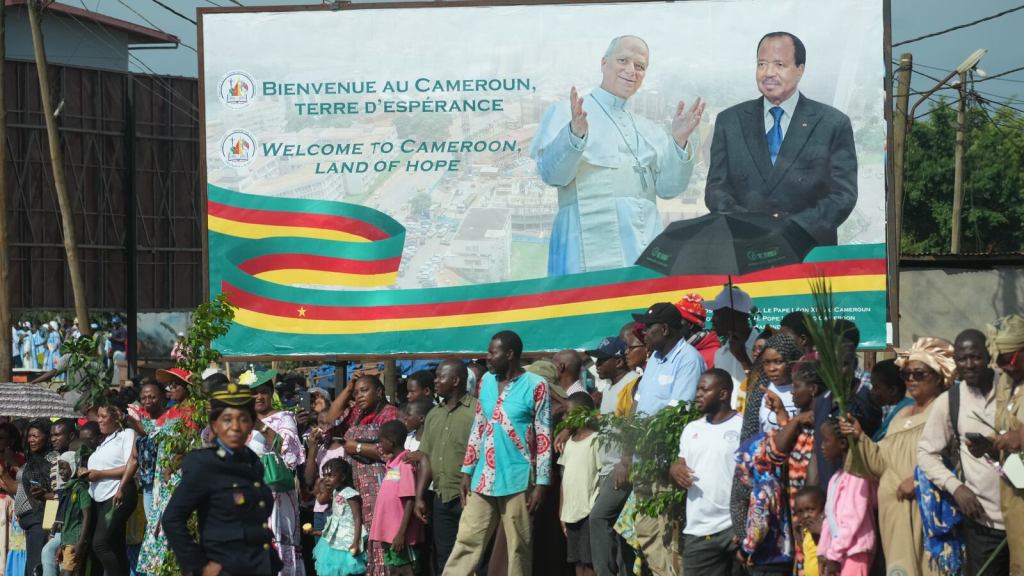
When separatist fighters in Cameroon declared a temporary ceasefire simply because Pope Leo XIV was arriving, it wasn’t just a symbolic gesture. It was a revealing moment, almost cinematic in its clarity. Guns went quiet not because of a negotiated settlement, not because of structural reform, but because a religious figure stepped onto the stage.
The conflict itself is no small matter. Since 2017, Cameroon’s Anglophone crisis has killed thousands and displaced hundreds of thousands, rooted in deep colonial fractures and political grievances that have festered for decades. Yet in the middle of this long-burning war, a pause emerges not from diplomacy or statecraft, but from reverence.
That should raise eyebrows.
Because what unfolded wasn’t just a ceasefire. It was a demonstration of priorities. Armed groups that have resisted political compromise for years suddenly found unity in religious observance, framing the pause as a gesture of “spiritual importance” and respect for the pope’s presence. The battlefield didn’t respond to policy, pressure, or negotiation. It responded to faith.
And that’s where the discomfort begins.
On the global stage, power is measured in leverage, institutions, and the ability to enforce lasting agreements. Temporary halts tied to religious visits may look peaceful in headlines, but they also signal fragility. If conflict can pause for ceremony but not for governance, it suggests that the underlying systems of political resolution remain weak or secondary.
Even the pope himself seemed to recognize the tension, criticizing the manipulation of religion for political and military purposes while calling for deeper structural change. That contradiction sits at the heart of the moment: religion as both a tool for peace and a substitute for it.
The reality is harsher than the symbolism.
A three-day ceasefire is not peace. It’s a timeout. And when that timeout is triggered by religious reverence rather than institutional authority, it raises difficult questions about how seriously external powers, investors, and global policymakers can take such conflict zones. Stability built on personalities and spiritual events is unpredictable. Stability built on enforceable systems is something else entirely.
This isn’t about dismissing religion outright. Faith has historically played a role in mediation, community cohesion, and moral guidance across the world. But when it becomes the primary switch that turns violence on and off, it risks overshadowing the hard, unglamorous work of governance, law, and accountability.
Cameroon’s moment under the global spotlight reveals something deeper than a temporary peace. It exposes a tension between belief and statecraft, between symbolism and structure. And until that balance shifts, moments like this will continue to look less like breakthroughs and more like pauses in a cycle that hasn’t been broken.
Because in the end, the world doesn’t measure seriousness by who can stop fighting for a visitor. It measures it by who can stop fighting for good.
—Matt Gwinta, B1Daily



Leave a comment