—Kel McKnight, B1Daily
There was a time when social media felt like a crowded block party, messy but alive, where creativity had room to breathe and people showed up to build something. Now it feels like a demolition derby with Wi-Fi, and a big chunk of that chaos can be traced back to the rise of streamer culture gone feral.
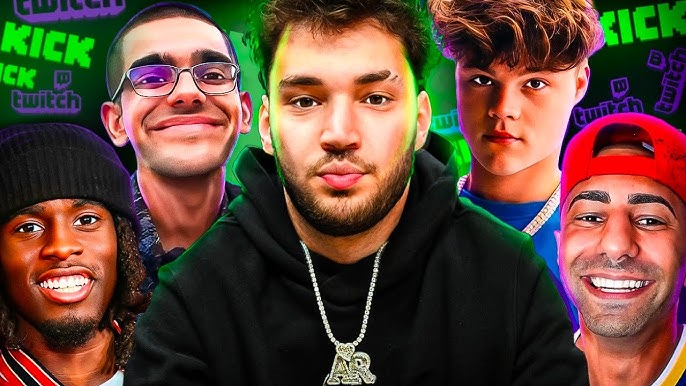
Let’s be blunt. A growing class of streamers didn’t just chase attention, they industrialized it. Platforms like Twitch, Kick, and YouTube became laboratories for a new kind of content: louder, riskier, and increasingly reckless. The algorithm rewarded spectacle, and streamers responded like gamblers on a hot streak, doubling down on whatever got the biggest reaction, no matter how toxic.
Public harassment became “content.” Harassing strangers in public spaces, provoking fights, crossing boundaries that used to be common sense, all packaged as entertainment. The line between prank and abuse didn’t just blur, it got bulldozed. What used to get someone thrown out of a venue now gets clipped, shared, and monetized.
And the audience? Conditioned. Viewers learned to expect escalation. If yesterday’s stunt got 50,000 views, today’s had to be more extreme. The result is a feedback loop where bad behavior isn’t an outlier, it’s the business model. Shock value became currency, and decency got treated like dead weight.
It doesn’t stop at the stream. That same energy bleeds across platforms like TikTok and Instagram, where clips of chaos spread faster than anything thoughtful ever could. Suddenly, everyone’s chasing virality with the same playbook: be louder, be wilder, be more disrespectful. Subtlety doesn’t trend. Restraint doesn’t go viral.
The collateral damage is everywhere. Regular users can’t exist online without dodging waves of copycat behavior. Businesses have to deal with disruptive “content creators” turning real spaces into unpaid film sets. Communities that once thrived on shared interests now get drowned out by whoever can generate the most outrage in the shortest amount of time.
And let’s talk about accountability, or the lack of it. Platforms issue statements, roll out half-measures, ban a few high-profile offenders, then quietly reopen the gates because controversy drives engagement. It’s a revolving door where the worst actors know the system better than the people trying to clean it up.
The truth is uncomfortable. Social media didn’t just get worse on its own. It was pushed there, one viral meltdown at a time, by people who realized that being the problem is more profitable than solving it.
Not every streamer is guilty. There are creators out there building communities, producing thoughtful content, and respecting their audience. But they’re fighting uphill against a culture that keeps rewarding the exact opposite.
Right now, the internet feels like it’s stuck in a loop of its own worst impulses. And until platforms stop treating chaos as a growth strategy and audiences stop feeding the machine, the circus isn’t packing up anytime soon.
The lights are still on. The crowd is still watching. But the show? It’s getting uglier by the minute.
—Kel McKnight, B1Daily



Leave a comment