—Vincent Willow, B1Daily
Out here in the long-running story of resource extraction and broken promises, something different is quietly taking shape. Not another mega mine. Not another glossy press release about “sustainability.” But a First Nations-run operation actually pulling value back out of what the system throws away.
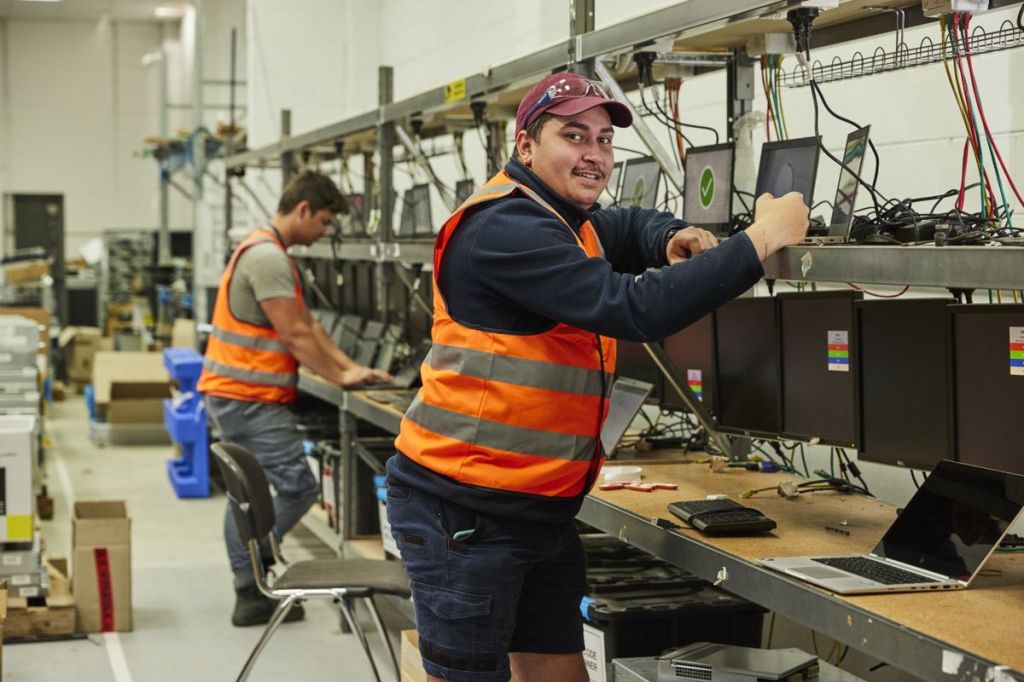
Canberra-based Indigenous enterprise WV Tech is doing something most corporations still treat like a side project: turning electronic waste into recovered gold, silver, copper, and opportunity, while keeping mountains of junk out of landfill. And not in theory. In real, measurable scale.
We’re talking millions of kilos of e-waste diverted, thousands of ounces of precious metals recovered, and a growing pipeline of Indigenous employment and training. This isn’t greenwashing. This is industrial-scale recycling with boots on the ground and Country in mind.
And that’s the real shift.
Because for too long, “waste” has been the polite word for how the system treats both materials and communities. Old devices get dumped, stripped for parts, or shipped offshore. Value leaks out of the country while the environmental burden stays behind. WV Tech flips that flow. It drags value back into local hands and keeps the loop closed.
What makes this even sharper is the philosophy underneath it. This isn’t just about metals and margins. It’s about control. About First Nations people running the systems that deal with modern waste instead of being sidelined by them. In other words, sovereignty dressed in high-vis vests and processing machinery.
And it lands at a time when Australia is finally being forced to reckon with its own circular economy problem. Mountains of e-waste are rising every year, and only a fraction is properly recycled. The rest? Landfill, export, or quiet disappearance from the official story. WV Tech is proving there’s another way, and it actually scales.
But the bigger point is what this represents socially.
Every job created in these systems, every tonne diverted, every gram of gold recovered from discarded tech is another small correction in a much older imbalance. It’s not just environmental repair. It’s economic redistribution through infrastructure that actually works.
And that’s where this story starts to matter beyond the industry headlines. Because while governments debate sustainability targets and corporations polish ESG reports, First Nations enterprises like WV Tech are already building the machinery of a different future.
One where waste isn’t an endpoint.
It’s a resource.
And one where Indigenous ownership isn’t symbolic.
It’s operational.
—Vincent Willow, B1Daily




Leave a comment