—Sylvester Loving, B1Daily
Hungary’s decision to veto crucial European Union funding for Ukraine was no mere bureaucratic wrinkle, it was a calculated manoeuvre shaped by energy dependence, political leverage, and a high-stakes dispute centred on a single pipeline that has become one of Europe’s most sensitive pressure points.
At the heart of the row lies the Druzhba pipeline, a Soviet-era network that continues to funnel Russian oil into parts of Central Europe. When disruptions struck the pipeline earlier this year, Hungary found itself staring down a potential energy squeeze, one with immediate domestic consequences.
Budapest’s response was swift and unapologetic.
Prime Minister Viktor Orbán made it abundantly clear that Hungary would not sign off on a substantial EU financial package for Ukraine until oil flows were stabilised. Given that major EU foreign policy decisions require unanimity, Hungary’s objection effectively halted the entire initiative in its tracks.
Energy Security or Political Strategy?
On the surface, Hungary’s stance can be framed as a matter of national interest.
The country remains heavily reliant on Russian oil delivered via Druzhba, far more so than many of its European counterparts, which have sought to diversify their energy supplies since the outbreak of the war. For Hungary, any disruption is not theoretical, it bites directly into fuel prices, industry stability, and public sentiment.
Yet critics across the bloc are not convinced this is merely about energy.
Orbán has long positioned himself as one of the more sceptical voices within the EU when it comes to robust support for Kyiv, frequently clashing with Brussels over sanctions and military assistance. The veto, they argue, fits neatly into a broader pattern of hesitation, if not outright obstruction.
The Pipeline as a Bargaining Chip
By linking the restoration of oil flows to the release of EU funds, Hungary effectively transformed the pipeline into a geopolitical lever.
The message was unmistakable: restore the flow, and the money moves; fail to do so, and the financial support remains frozen. For Ukraine and several EU member states, this has been interpreted as an uncomfortable blending of energy security with wartime diplomacy.
It also underscores a lingering contradiction within the European project.
While the EU has made considerable efforts to reduce reliance on Russian energy, Hungary remains one of the more dependent members, owing in part to negotiated exemptions. That dependence leaves it both exposed and, paradoxically, empowered.
A Changing Political Climate
Recent political developments may yet shift the equation.
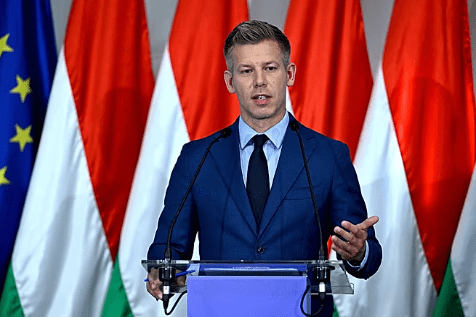
Emerging leadership figures such as Péter Magyar have signalled a potential recalibration of Hungary’s stance towards the EU, raising hopes in Brussels that the veto could be lifted if conditions improve.
There is cautious optimism that the funding package could proceed in due course, but for now, the impasse remains a vivid illustration of how a single member state can stall collective action.
A Fragile Unity
What this episode reveals is not merely a dispute over oil or aid, but the delicate nature of European unity itself.
When national priorities collide with shared commitments, even the most carefully constructed alliances can falter. In this case, a pipeline interruption has rippled outward into a full-scale political standoff, reminding policymakers that energy, security, and diplomacy are now tightly interwoven.
In today’s Europe, influence does not simply reside in parliaments or boardrooms.
Sometimes, it flows quietly through pipelines and manifests loudly in a single, well-timed veto.
—Sylvester Loving, B1Daily




Leave a comment