—Sylvester Loving, B1Daily
Donald Trump has spent years insisting that American foreign policy should produce tangible returns for the United States.
Venezuela may be where that philosophy reaches its most audacious conclusion.
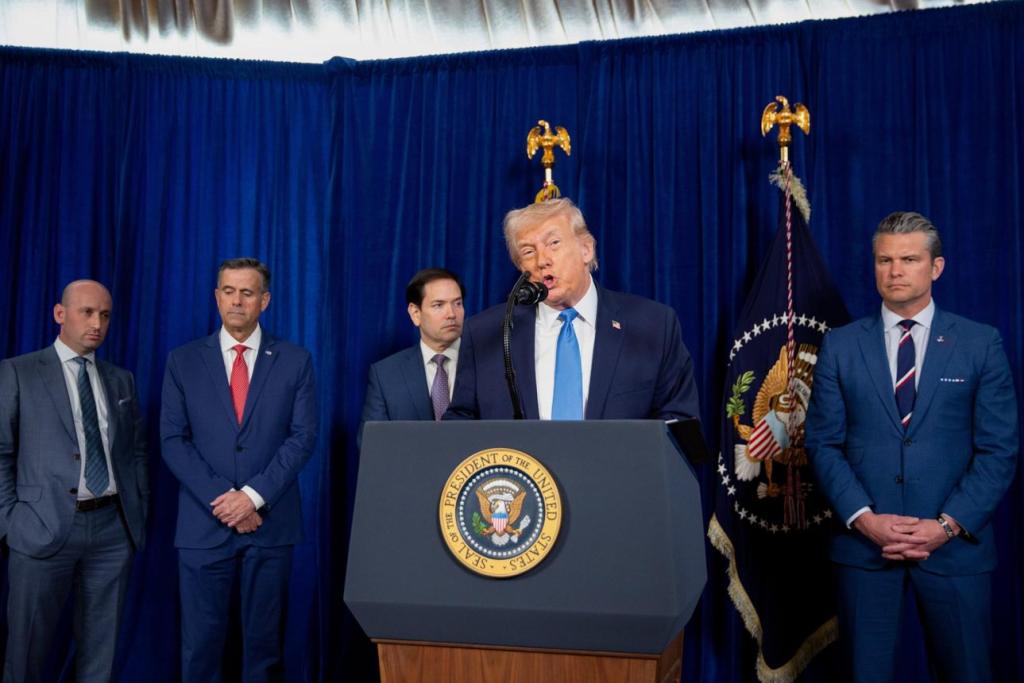
President Trump announced Friday that the United States has entered an extraordinary agreement with Venezuela that would give America majority control over the development of oil fields containing more than 65 billion barrels of proven reserves.

Trump immediately branded it the biggest oil deal in history.
Hyperbole is part of the Trump political vocabulary. But even after stripping away the salesmanship, the numbers involved here are staggering.
The proposed arrangement would potentially give the United States access to an amount of petroleum larger than America’s existing proven crude reserves, while placing Washington directly inside the development of the country possessing the world’s largest overall oil reserves.
This isn’t simply another energy agreement.
It looks increasingly like an attempt to redraw the petroleum map of the Western Hemisphere.
What Exactly Did Trump Get?
According to details emerging from the agreement, Venezuela would grant a newly created private company long-term rights to develop 17 oil fields containing approximately 65 billion barrels of proven reserves.
The arrangement reportedly gives the United States an effective 55 percent share of output through a combination of ownership and the right to purchase petroleum at cost.
The development rights could extend for 100 years.
Venezuela’s government says the arrangement could eventually attract roughly $100 billion in investment while generating more than $200 billion in tax revenue for Caracas.
Trump says the arrangement will cost American taxpayers nothing.
If those terms survive implementation, the geopolitical implications are enormous.
The United States wouldn’t technically be annexing Venezuelan petroleum.

But Washington would have something potentially more useful:
guaranteed long-term access to it.
Venezuela Is Sitting on an Ocean of Oil
Understanding the significance requires understanding Venezuela itself.
The country possesses roughly 303 billion barrels of proven petroleum reserves, generally considered the largest national reserve base on Earth.
More than Saudi Arabia.
More than Iran.
More than Canada.
Yet Venezuela currently produces only around 1.25 million barrels per day, a fraction of what its geological wealth theoretically makes possible.
Years of corruption, mismanagement, sanctions, political instability and inadequate investment devastated an oil industry that once made Venezuela one of the wealthiest countries in Latin America.
That disconnect has always made Venezuela irresistible to energy strategists.
The petroleum is there.
The infrastructure and political stability needed to extract enormous quantities of it are not.
Trump appears to believe American capital can change that equation.
There’s One Giant Problem: Getting the Oil Out
Sixty-five billion barrels sounds impressive.
But oil underground isn’t gasoline at the pump.
Some Venezuelan fields under consideration have badly deteriorated infrastructure. Others have little infrastructure at all.
Pipelines must be repaired.
Machinery must be installed.
Roads and transportation systems must function.
Workers and facilities need security.
And much of Venezuela’s enormous reserve consists of heavy crude that requires specialized processing.
American oil companies also remember what happened the last time Venezuela welcomed foreign investment.
Under Hugo Chávez, Venezuela nationalized major oil projects and seized foreign assets. ExxonMobil and ConocoPhillips were among the companies caught in bitter disputes over nationalization.
Executives therefore aren’t going to deploy tens of billions of dollars simply because Washington tells them Venezuela is open for business again.
They will want guarantees.
Contracts.
Political stability.
Legal protection.
And probably some assurance that the Venezuelan government of 2040 won’t tear up agreements signed by the Venezuelan government of 2026.
That makes Trump’s announcement the beginning of the story rather than the end.
Trump Has Another Problem: Gas Prices
There is also an obvious domestic political calculation.
Trump enters the 2026 midterm season under pressure over energy prices while the continuing war involving Iran has strained global petroleum markets.
America’s Strategic Petroleum Reserve has also been drawn down substantially.
Trump says Venezuelan petroleum will eventually help lower American gasoline prices.
Eventually is the important word.
Opening neglected Venezuelan fields isn’t something that happens between Labor Day and Election Day.
Large-scale petroleum projects can require years and billions of dollars before significant additional production reaches international markets.
The political announcement arrives immediately.
The barrels won’t.
The Bigger Prize Is Energy Security
The long-term argument for the agreement is much stronger.
Imagine the Western Hemisphere’s energy map if Venezuelan production eventually returned to several million barrels per day while American companies possessed privileged access to enormous fields.
The United States already produces more petroleum than any other country.
Canada is one of America’s largest suppliers.
Guyana has emerged as a rapidly expanding petroleum producer.
Brazil is another major producer.
Now add a rehabilitated Venezuelan industry increasingly connected to American capital.
Suddenly Washington possesses extraordinary influence over an enormous share of petroleum production across the Americas.
And that matters because energy remains geopolitical power.
Russia knows it.
Saudi Arabia knows it.
Iran knows it.
China knows it.
Trump certainly knows it.
And Then There Is China
The Venezuela deal should also be viewed through America’s larger competition with Beijing.
China spent years building economic relationships throughout Latin America while Washington’s attention drifted elsewhere.
Venezuela became particularly important.
Chinese lenders poured enormous sums into the country, frequently using petroleum shipments as part of repayment arrangements.
A Venezuela economically reconstructed around American energy companies would therefore represent more than an oil victory.
It would represent a geopolitical reversal.
Washington would be pulling one of the world’s most resource-rich countries back toward the American economic orbit.
The Monroe Doctrine once warned European powers against expanding their influence in the Western Hemisphere.
Trump’s version increasingly appears economic:
China doesn’t get to dominate strategic resources in America’s neighborhood.
But Is This a Deal or a Resource Grab?
That question will define the controversy.
Venezuelan critics are already furious.
Some opposition figures argue that an interim government lacks the legitimacy to surrender control over enormous portions of the country’s petroleum resources for generations.
Venezuelan law creates additional complications. The country’s constitution reserves core petroleum activities to the state, although recent reforms have expanded opportunities for private investment.
The optics are combustible.
The United States removed Nicolás Maduro earlier this year.
A U.S.-backed political order emerged.
Months later, Washington announces a century-long arrangement involving tens of billions of barrels of Venezuelan petroleum.
Critics will inevitably describe that sequence as resource imperialism.
Trump’s defenders will describe it differently.
Venezuela’s socialist experiment destroyed one of the world’s richest petroleum industries. American investment, they will argue, can rebuild it while giving Venezuelans jobs, government revenue and economic growth.
Both arguments will now collide.
The Ultimate Test Is Venezuela
There is one group whose interests shouldn’t disappear beneath America’s geopolitical celebration:
Venezuelans.
Venezuela possesses more oil than almost any population on Earth could reasonably know what to do with.
Yet millions of Venezuelans experienced poverty, shortages and economic collapse while sitting above that extraordinary wealth.
That is the tragedy of the Venezuelan petroleum story.
If this agreement rebuilds production, creates jobs, stabilizes government finances, attracts investment and allows Venezuelans themselves to benefit from their natural resources, it could become one of the most consequential economic transformations in modern Latin American history.
If it instead produces another arrangement where political elites and foreign corporations divide enormous resource wealth while ordinary Venezuelans remain poor, history will judge it much differently.
Trump Is Making an Enormous Bet
Strip away Trump’s declaration about the “biggest oil deal” and something genuinely historic may still be happening.
America is attempting to secure privileged access to 65 billion barrels of petroleum inside the country possessing the world’s largest proven reserves.
The strategic logic isn’t difficult to understand.
More secure petroleum supplies.
More leverage over global energy markets.
Less dependence on unstable producers outside the Western Hemisphere.
More opportunities for American energy companies.
Less Chinese influence in Venezuela.
Potentially cheaper petroleum over the long run.
But there are equally enormous risks.
Political instability.
Legal challenges.
Infrastructure costs.
Reluctant oil companies.
Venezuelan nationalism.
And the uncomfortable question of whether Washington should have this degree of influence over another country’s natural resources in the first place.
Trump has spent his political career arguing that America was terrible at making deals.
Now he says he’s made one involving enough petroleum to help power the United States for decades.
If the agreement survives the lawyers, politicians, oil executives and Venezuelan public, Trump’s claim may prove less exaggerated than it initially sounds.
Because Washington isn’t merely negotiating for oil.
It is making a bid for control over one of the largest pools of energy wealth on the planet.
—Sylvester Loving, B1Daily



Leave a Reply