—Kerry Hill, B1Daily
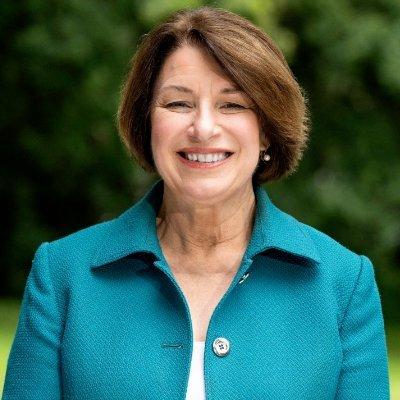
MINNEAPOLIS, MINNESOTA | Senator Amy Klobuchar built much of her political reputation as a tough-on-crime prosecutor. But her record as Hennepin County attorney from 1999 through 2006 raises an uncomfortable question: Why was her office so aggressive toward ordinary criminal defendants while no officers faced criminal charges in dozens of fatal encounters with police?
Before becoming a prominent Democratic senator and presidential candidate, Klobuchar oversaw prosecutions in Minnesota’s most populous county. Her approach emphasized tougher sentences, repeat offenders, and aggressive law enforcement. Yet when police officers were accused of excessive force, particularly in incidents involving Black residents, her office developed a record that civil rights advocates would later condemn.
Thirty Deaths, Zero Officers Charged
A 2020 investigation by the Star Tribune identified 30 people who died following physical confrontations with law enforcement during Klobuchar’s tenure. Not a single officer involved in those deaths faced criminal charges.
That figure does not establish that all 30 deaths were unlawful. But it illustrates the accountability concerns that followed Klobuchar from the prosecutor’s office into national politics.
Rather than making charging decisions directly in controversial police shooting cases, Klobuchar relied on grand juries, a practice common among prosecutors at the time. Critics argued that the secrecy surrounding those proceedings allowed prosecutors to avoid publicly explaining why officers were not charged.
The contrast was difficult to ignore: An office willing to pursue harsh criminal penalties against defendants appeared considerably more cautious when the accused carried badges.
The Death of Christopher Burns
One of the most troubling cases involved Christopher Burns, a 44-year-old Black Minneapolis resident who died in 2002 after police restrained him during a domestic disturbance call.
Burns was unarmed when officers placed him in a chokehold. His death sparked protests and demands that the officers involved face criminal charges.
Klobuchar did not bring charges against the officers. A grand jury also declined to indict them.
For Black community activists, the Burns case became a defining example of what they considered a double standard in Minneapolis law enforcement. The question was not whether every officer involved in a fatal encounter should automatically be prosecuted. It was whether the justice system subjected officers to the same rigorous scrutiny as civilians.
The Derek Chauvin Connection and an Important Distinction
Klobuchar’s prosecutorial record resurfaced nationally following the 2020 murder of George Floyd by Minneapolis police officer Derek Chauvin.
Chauvin had been among the officers involved in the fatal 2006 police shooting of Wayne Reyes, a case that occurred while Klobuchar was still county attorney.
However, claims that Klobuchar personally declined to prosecute Chauvin in that case are inaccurate. The grand jury decision occurred in 2007, after she had left office, and Hennepin County officials stated that she was not involved in that charging decision.
The larger criticism of her office’s reliance on grand juries nevertheless remained. Klobuchar subsequently acknowledged that prosecutors should take responsibility for deciding whether to charge officers rather than routinely leaving those decisions to grand juries.
What About Justice for Black Minnesotans?
During Klobuchar’s tenure, Minneapolis paid millions of dollars to settle police misconduct claims. An American Public Media investigation documented approximately $4.8 million in settlements associated with 122 police misconduct incidents over an eight-year period beginning in 1999.
At the same time, Klobuchar supported aggressive enforcement strategies associated with broken-windows policing, an approach criticized for disproportionately affecting Black communities.
Klobuchar has defended parts of her record, pointing to public safety initiatives and a decline in Black incarceration rates during her tenure. Her critics counter that these statistics do not resolve the concerns surrounding police accountability or the broader racial disparities in Minnesota’s criminal justice system.
The fundamental issue is not whether Klobuchar personally approved of police misconduct. There is no basis to conclude that she did. The issue is whether the prosecutorial policies she maintained provided sufficient accountability when officers were implicated in fatal encounters.
Political Success Doesn’t Erase a Prosecutorial Record
Klobuchar’s rise from county prosecutor to the United States Senate demonstrates how a tough-on-crime reputation can become a powerful political credential. But the families of people who died during encounters with police have a different set of questions about that era.
Why were police prosecutions so rare? Did the grand jury process provide meaningful independent scrutiny? And were Black residents given the same confidence in equal justice that prosecutors promised the broader public?
Those questions deserve more than campaign talking points.
Amy Klobuchar’s record is a reminder that being tough on crime and being tough on police misconduct are not necessarily the same thing. A justice system committed to equal protection must be willing to investigate both with the same seriousness.
—Kerry Hill, B1Daily



Leave a Reply