—Terrence Dorner, B1Daily
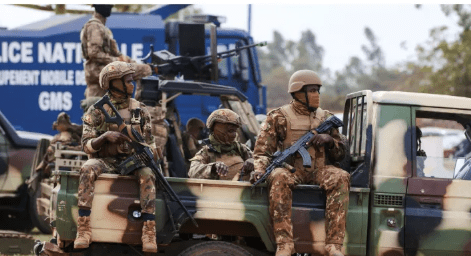
A surge of synchronized attacks across Mali has exposed a hard truth about the country’s security landscape: armed groups are no longer operating as scattered insurgents but as coordinated, adaptive forces capable of striking multiple targets with precision timing.
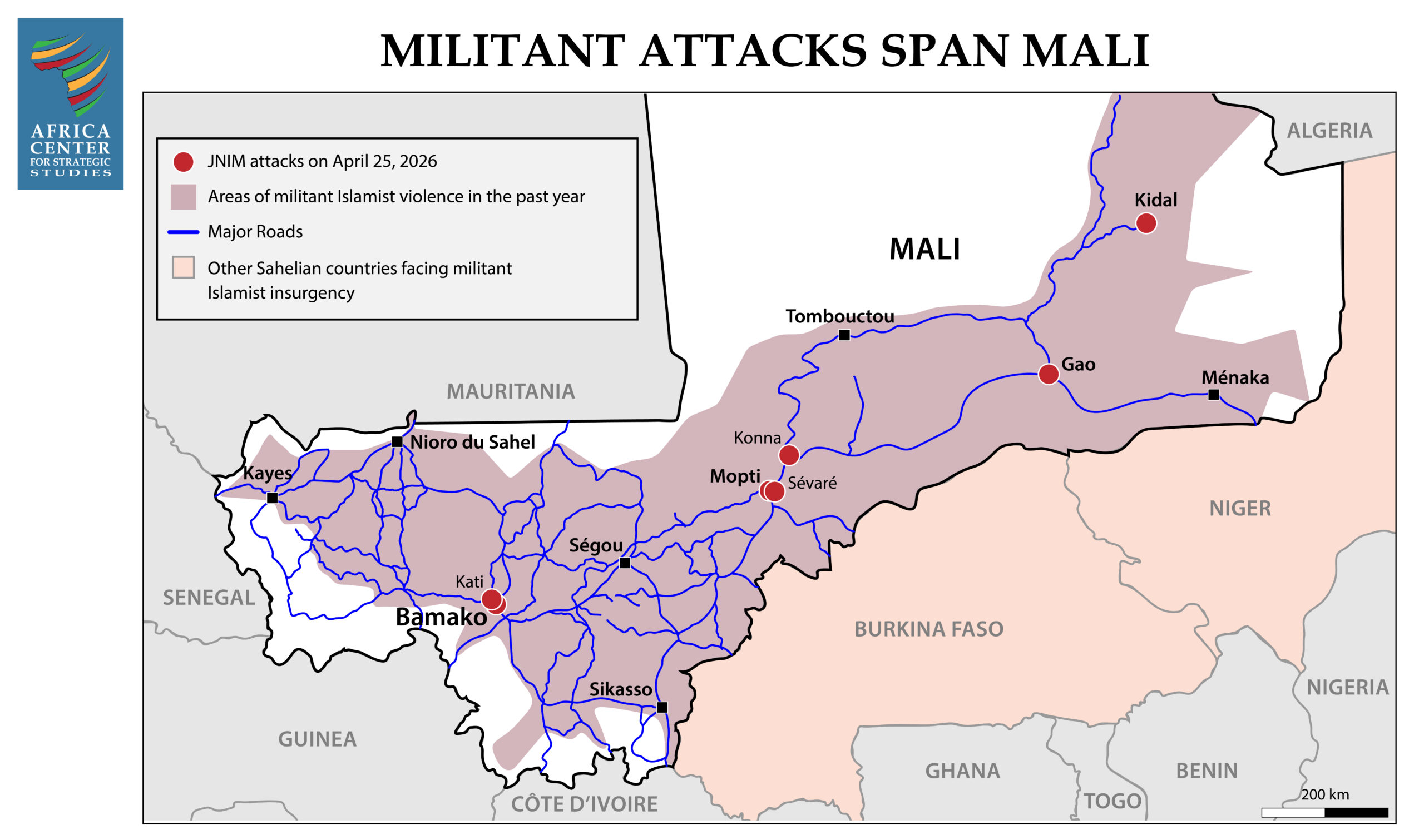
According to reporting, the wave of violence involved simultaneous assaults on military positions, infrastructure, and key transit corridors, stretching Malian defense resources thin and forcing rapid redeployments. The pattern points less to opportunistic raids and more to deliberate operational planning.
The Actors Behind the Offensive
Two major jihadist coalitions are widely assessed to be at the center of these operations:
Jama’at Nusrat al-Islam wal-Muslimin (JNIM), an al-Qaeda-linked umbrella group, has long embedded itself in rural communities while maintaining the capability to launch complex attacks on military installations.
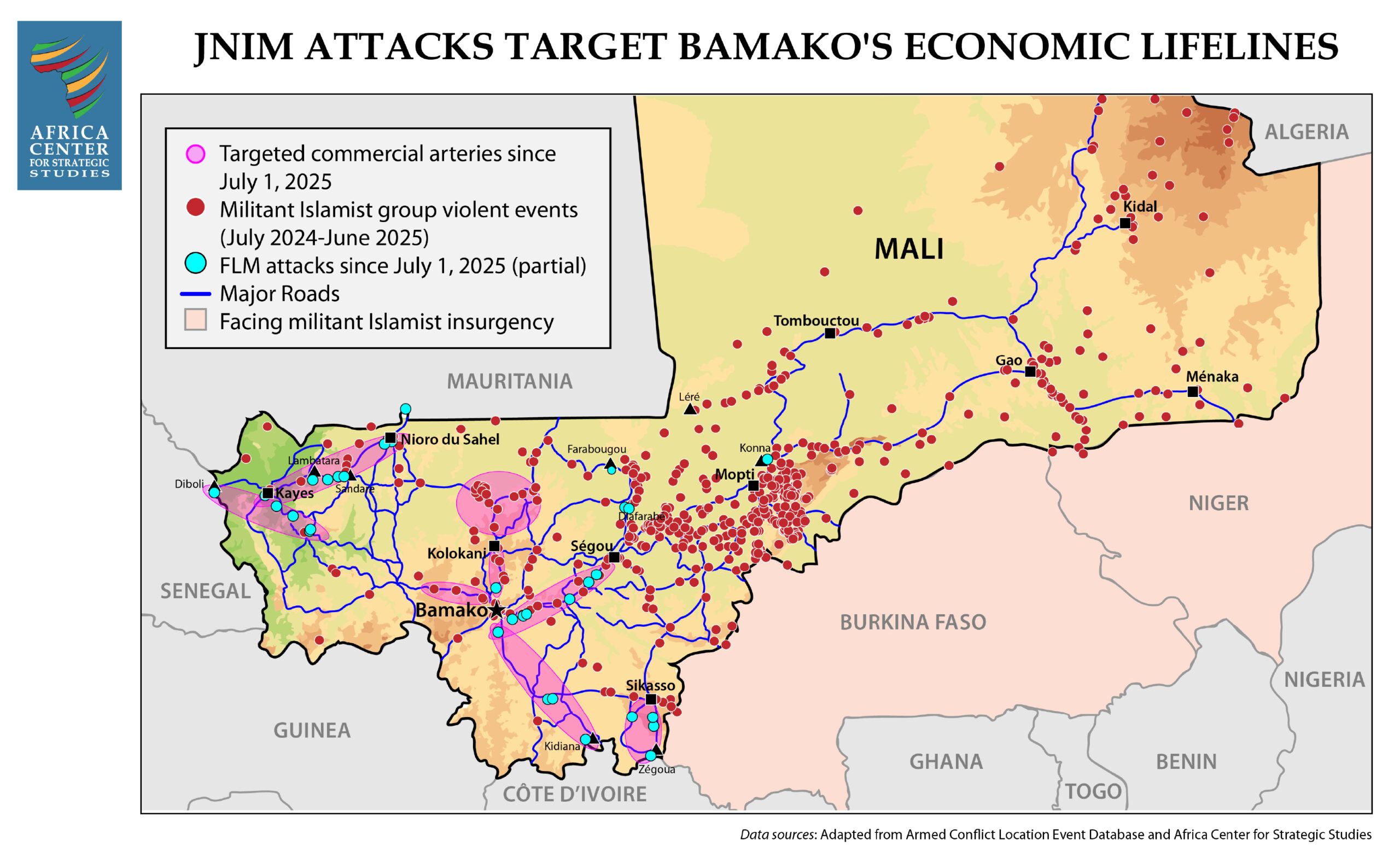
JNIM specializes in coordinated ambushes, IED deployment, and leveraging local intelligence networks.
Alongside them operates Islamic State in the Greater Sahara (ISGS), an ISIS-aligned faction known for more aggressive territorial ambitions and high-casualty assaults.
While JNIM and ISGS have clashed in the past, their parallel offensives create compounded pressure on state forces, even without direct coordination between them.
Both groups exploit porous borders across the Sahel, using mobility as a weapon. Fighters, weapons, and intelligence flow across neighboring states, allowing them to regroup quickly after strikes.
Tactics and Execution
The recent attacks reflect a shift toward multi-axis operations:
- Simultaneous strikes on dispersed military outposts to overwhelm response capacity
- Use of improvised explosive devices to disrupt reinforcements
- Targeting of supply routes and logistical hubs to isolate units
- Hit-and-run assaults designed to inflict damage without prolonged engagement
This approach mirrors insurgent playbooks seen across the broader Sahel, where speed and coordination compensate for limited heavy weaponry.
Strain on Malian Forces
The Malian Armed Forces (FAMa) have faced mounting pressure in recent years, particularly following the withdrawal of international forces that previously supported counterterrorism operations.
The reduced foreign presence has shifted the burden of security almost entirely onto national forces.
In response, Malian authorities have increasingly leaned on partnerships, including reported cooperation with Wagner Group personnel. While these forces have bolstered certain operations, critics argue that reliance on external actors has not fundamentally altered the insurgents’ ability to regroup and strike.
Strategic Implications
The coordinated nature of the attacks signals a maturing insurgency. These groups are not simply surviving; they are adapting, refining tactics, and demonstrating operational reach.
For Mali, the implications are severe:
- Defense forces must stretch across vast territory with limited resources
- Civilian confidence erodes as attacks appear increasingly organized
- Regional instability deepens as militant networks expand influence
The Sahel has become one of the world’s most volatile security zones, and Mali sits at its center.
A War Without Clear Lines
What makes this conflict particularly difficult is its fluidity. There are no fixed frontlines, no decisive battles that end the threat. Instead, it is a war of movement, intelligence, and endurance.
Each coordinated attack is both a tactical strike and a strategic message: the insurgents retain initiative.
Until Mali can disrupt the networks enabling these operations, through intelligence, regional cooperation, and sustained pressure, the cycle is likely to continue.
—Terrence Dorner, B1Daily






Leave a comment