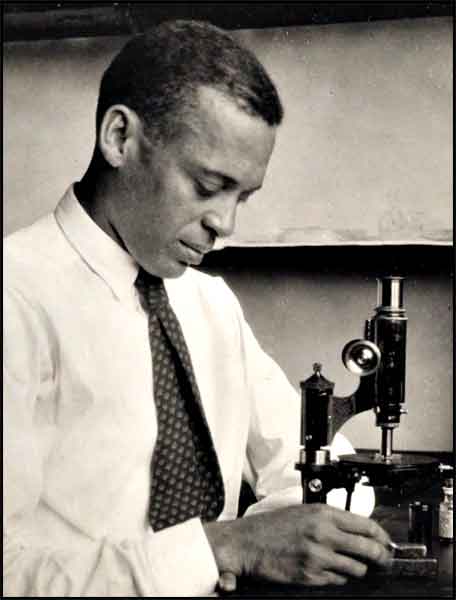
—Kerry Hill, B1Daily
Before biology learned to listen to the whole cell, it was obsessed with its center. The nucleus was king, crowned as the sole keeper of life’s secrets, while everything else was treated like background noise. Then came Dr. Ernest Everett Just, a thinker sharp enough to notice what everyone else ignored and stubborn enough to prove it mattered.
Often called a “scientist’s scientist,” Just didn’t chase trends. He dismantled them.
A Radical Idea Wrapped in Saltwater
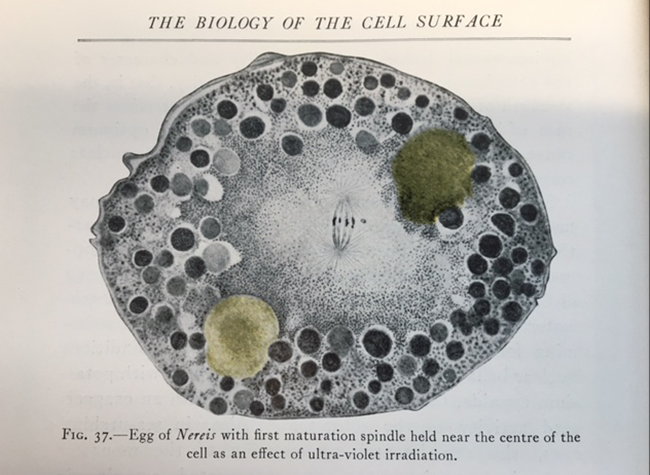
Working primarily with marine organisms, Just observed something that contradicted the scientific dogma of his time. The cell’s outer layer wasn’t just a passive boundary. It was alive with activity, responsive, selective, and essential.
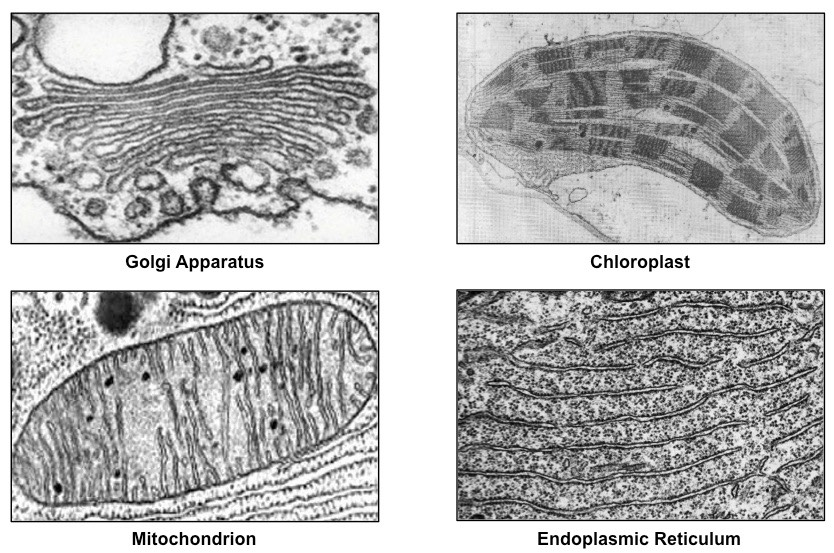
He demonstrated that the cell surface regulates how a cell interacts with its environment, influencing development from the very first moments of life. That idea may sound obvious now, but at the time, it was borderline heresy in a field fixated on nuclear control.
What Just uncovered was a biological plot twist: life isn’t dictated from a single throne at the center. It’s negotiated at the edges.
His work helped lay conceptual groundwork for what we now recognize as epigenetics, the understanding that gene expression is shaped by environmental signals, not just genetic code alone. Long before the term gained popularity, Just was already mapping its logic in real time.
The Principle of Normality
But Just didn’t stop at what cells do. He challenged how scientists study them.
He introduced what became known as the principle of “normality,” a deceptively simple idea with massive implications: if you want to understand life, you have to study it under conditions that resemble how it actually exists.
At the time, many experiments relied on harsh manipulations that stripped cells from their natural context. Just argued that this distorted results, like trying to understand a symphony by smashing the instruments.
He insisted on preserving the natural environment of cells, allowing them to behave as they would in living systems. This approach didn’t just improve accuracy, it reshaped experimental design across biology and embryology.
Today, that philosophy is baked into everything from tissue culture techniques to developmental biology. What was once dismissed as idealistic is now standard practice.
A Mind Ahead of Its Time
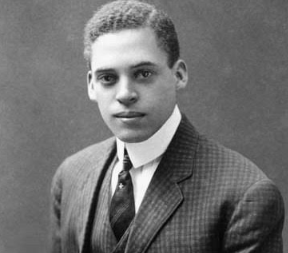
Like many groundbreaking figures, Just worked in a world that didn’t fully recognize him. As a Black American scientist in the early 20th century, he faced systemic barriers that limited funding, institutional support, and visibility.
Yet his ideas endured.
They moved quietly at first, like a tide building strength beneath the surface, until the broader scientific community caught up. And when it did, it found that Just had already been there, charting the territory.
Legacy Written on the Cell Itself
Dr. Ernest Everett Just didn’t just add to biology. He recalibrated it.
He shifted attention from the center to the surface, from isolated parts to integrated systems, from artificial setups to living reality. In doing so, he helped transform how scientists understand development, environment, and the delicate choreography of life.
The cell, once imagined as a simple container with a commanding nucleus, became something richer, a responsive, dynamic entity negotiating constantly with the world around it.
And that shift, that quiet revolution, still echoes in every lab where life is studied not as a machine, but as a conversation.
—Kerry Hill, B1Daily





Leave a comment