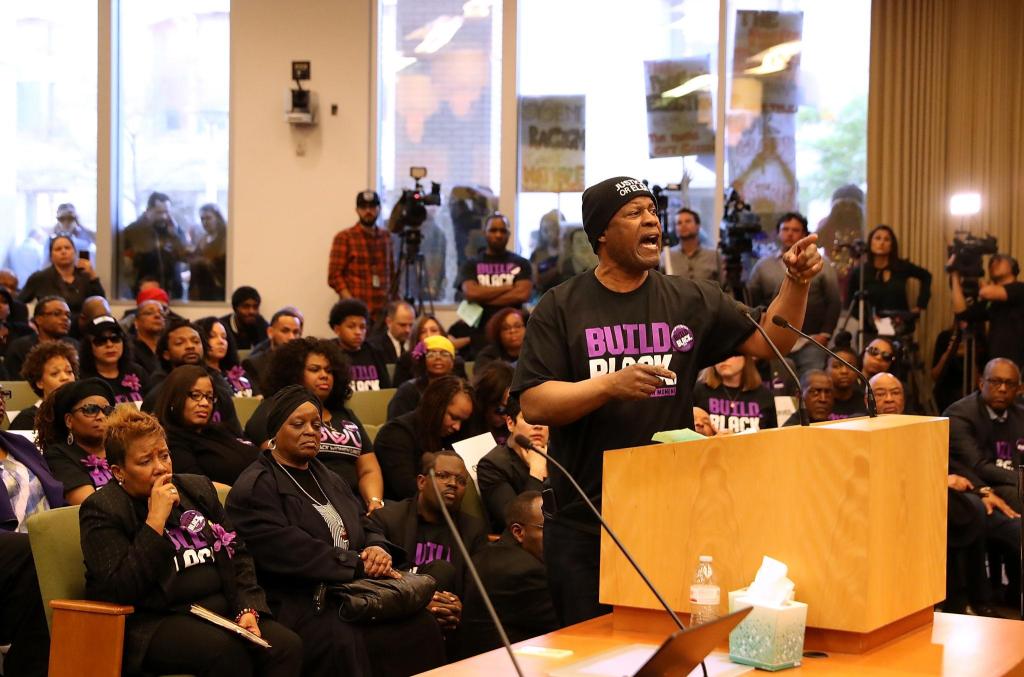
—Sylvester Loving, B1Daily
Presidential elections consume nearly all the oxygen in American politics. Candidates dominate television, social media becomes a battlefield, billions of dollars pour into campaigning, and every election is advertised as the most consequential of our lifetime.
But for many Black Americans, some of the government decisions that most directly affect everyday life aren’t being made in the White House.
They’re being made at city hall, the county courthouse, the prosecutor’s office, the school board and the state legislature.
The president matters enormously. Presidents appoint federal judges, enforce federal civil-rights laws, influence the economy, direct federal agencies and can sign or veto legislation affecting millions of Americans. But Washington is only one layer of government. Local and state officials often exercise much more immediate control over the institutions people encounter every day.
Your Prosecutor Isn’t Elected in Washington
Criminal justice provides perhaps the clearest example.
District attorneys and other local prosecutors make enormously consequential decisions about which cases are prosecuted, what charges defendants face, whether plea agreements are offered and what sentences prosecutors request.
Sheriffs can influence jail operations, policing practices and cooperation with other law-enforcement agencies. Mayors and city councils can influence police budgets and local public-safety policies. Judges, depending on the state and jurisdiction, may also face voters.
For Black communities concerned about unequal treatment within the criminal-justice system, these offices aren’t obscure positions at the bottom of the ballot.
They are centers of political power.
A voter can obsess over presidential criminal-justice rhetoric while paying almost no attention to the prosecutor exercising enormous discretion several miles from their home.
City Hall Controls the Neighborhood
Local governments make decisions that can determine what a neighborhood looks like ten or twenty years from now.
City councils and planning authorities influence zoning and development. Local governments decide where infrastructure investments are made, how neighborhoods are redeveloped and how public resources are distributed.
Those decisions can directly affect historically Black neighborhoods.
A major development project might create jobs and investment. It might also increase property values and rents enough to displace longtime residents. A zoning decision that sounds painfully boring at a council meeting can eventually determine whether affordable apartments, luxury developments, businesses or industrial facilities appear in a neighborhood.
Presidential politics gets the fireworks.
Local government often controls the bulldozers.
School Boards Hold Real Power
Education provides another example.
Presidents can influence federal education policy, but America’s public-school system remains heavily shaped by state and local government.
School boards and local administrators can influence curriculum, disciplinary policies, school boundaries, budgets and administrative priorities. State governments wield even greater authority over education funding and standards.
That makes school-board elections especially important for Black parents concerned about educational quality, disciplinary disparities and whether schools accurately teach Black history.
Yet these elections can attract dramatically less attention than presidential contests.
That imbalance creates an opportunity for highly organized groups. When turnout is low, relatively small groups of committed voters can potentially exert considerable influence over who controls local institutions.
Housing Politics Starts Closer to Home
Housing affordability has become one of the defining economic problems facing American families.
Again, Washington matters. Federal housing programs, interest-rate conditions, tax policy and civil-rights enforcement can have enormous consequences.
But whether apartments can actually be constructed in a particular neighborhood often depends upon local zoning and land-use decisions.
City councils, county governments, planning commissions and other local authorities can influence development, property regulations, transportation investments and affordable-housing initiatives.
For Black Americans trying to build wealth through homeownership or remain in rapidly changing neighborhoods, those decisions can become intensely personal.
A presidential candidate can promise economic opportunity.
A city council can approve the redevelopment project happening three blocks away.
The Statehouse May Matter Even More
The argument shouldn’t stop at municipal elections.
State legislatures and governors wield tremendous authority over voting rules, Medicaid, education, criminal law, taxation, unemployment systems, transportation and numerous other policies.
They also participate in drawing congressional and state legislative districts through processes that vary by state.
That means Black political power isn’t determined solely by how many people vote. It can also be influenced by where district boundaries are drawn and whether communities can translate population into representation.
Ignoring state legislative elections while concentrating exclusively on presidential politics is therefore a serious strategic mistake.
The Bottom of the Ballot Is Where Power Hides
None of this means Black voters should stop caring about presidential elections. Federal power remains extraordinarily consequential, particularly regarding the Supreme Court, civil rights, economic policy and federal enforcement.
The problem is treating presidential voting as the beginning and end of political participation.
Imagine a voter carefully researching presidential candidates but knowing nothing about the district attorney, sheriff, mayor, state representative, county supervisor or school-board candidates appearing farther down the same ballot.
That’s political tunnel vision.
National politics asks enormous ideological questions about what America should become.
Local politics frequently answers something more immediate:
What is going to happen on your street?
For Black communities seeking greater political influence, the next evolution of electoral strategy may therefore be intensely local: identifying consequential offices, recruiting candidates, attending public meetings, following budgets and voting consistently in elections that receive little national attention.
The White House matters.
But political power doesn’t live at one address.
Sometimes the election capable of changing your community the fastest is the one most people barely noticed was happening.
—Sylvester Loving, B1Daily



Leave a Reply